QUESTION IMAGE
Question
name
period
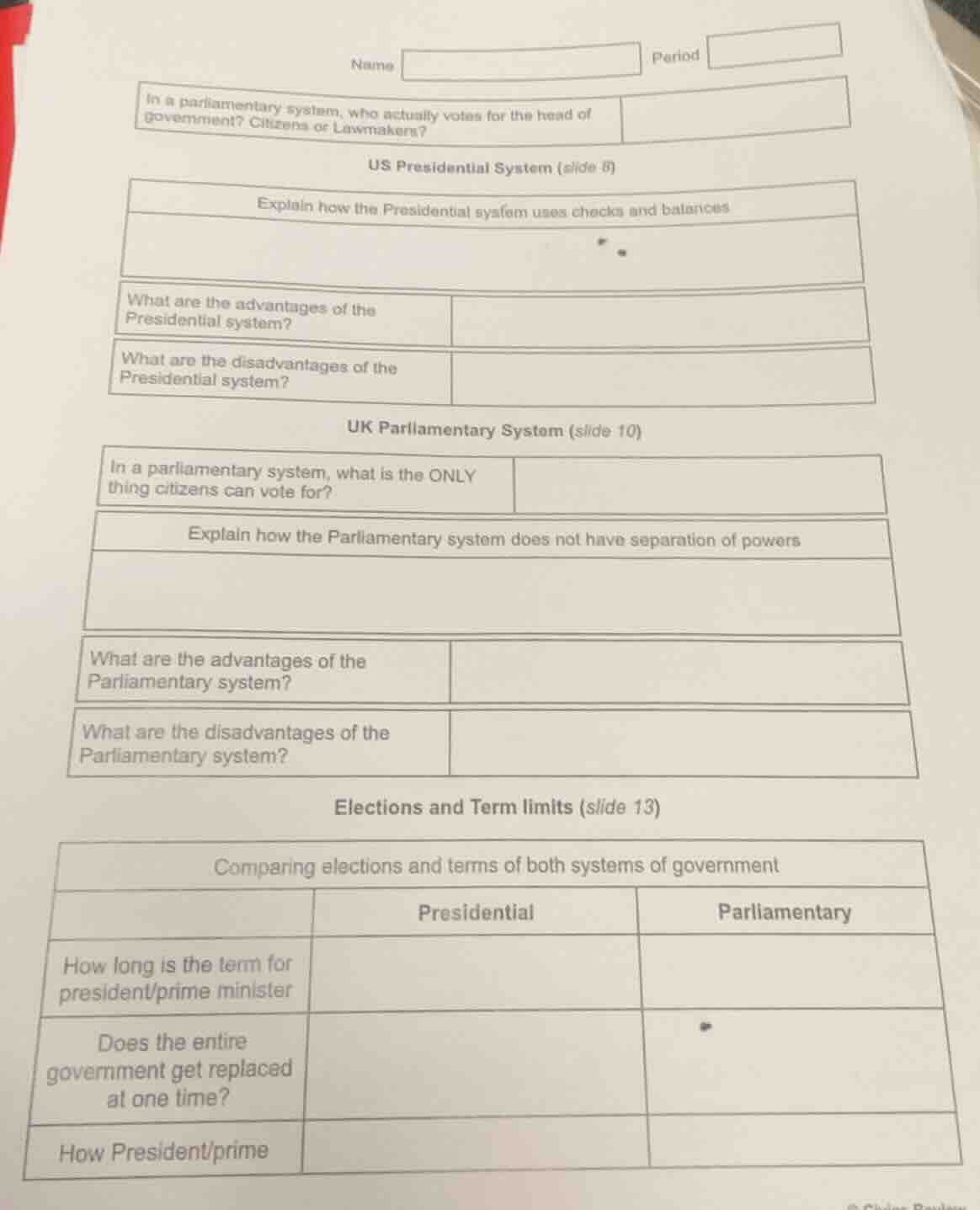
in a parliamentary system, who actually votes for the head of government? citizens or lawmakers?
us presidential system (slide 9)
explain how the presidential system uses checks and balances
what are the advantages of the presidential system?
what are the disadvantages of the presidential system?
uk parliamentary system (slide 10)
in a parliamentary system, what is the only thing citizens can vote for?
explain how the parliamentary system does not have separation of powers
what are the advantages of the parliamentary system?
what are the disadvantages of the parliamentary system?
elections and term limits (slide 13)
comparing elections and terms of both systems of government
presidential
parliamentary
how long is the term for president/prime minister
does the entire government get replaced at one time?
how president/prime
1. In a parliamentary system, who actually votes for the head of government? Citizens or Lawmakers?
In a parliamentary system (e.g., UK), the head of government (Prime Minister) is selected by lawmakers (members of the parliament). Citizens vote for parliament members, and the majority party/coalition in parliament chooses the PM. So lawmakers vote for the head of government.
In the US Presidential system, the three branches (executive: President; legislative: Congress; judicial: Supreme Court) check each other. For example, the President can veto congressional bills, but Congress can override the veto. Congress approves presidential appointments and can impeach the President. The judiciary can declare laws or executive actions unconstitutional. This prevents any one branch from gaining too much power.
Advantages include clear separation of powers (prevents concentration of power), fixed terms (stability, no sudden government collapse), direct election of the President (enhances legitimacy), and the President has defined executive authority, allowing for decisive leadership.

Snap & solve any problem in the app
Get step-by-step solutions on Sovi AI
Photo-based solutions with guided steps
Explore more problems and detailed explanations
Lawmakers