QUESTION IMAGE
Question
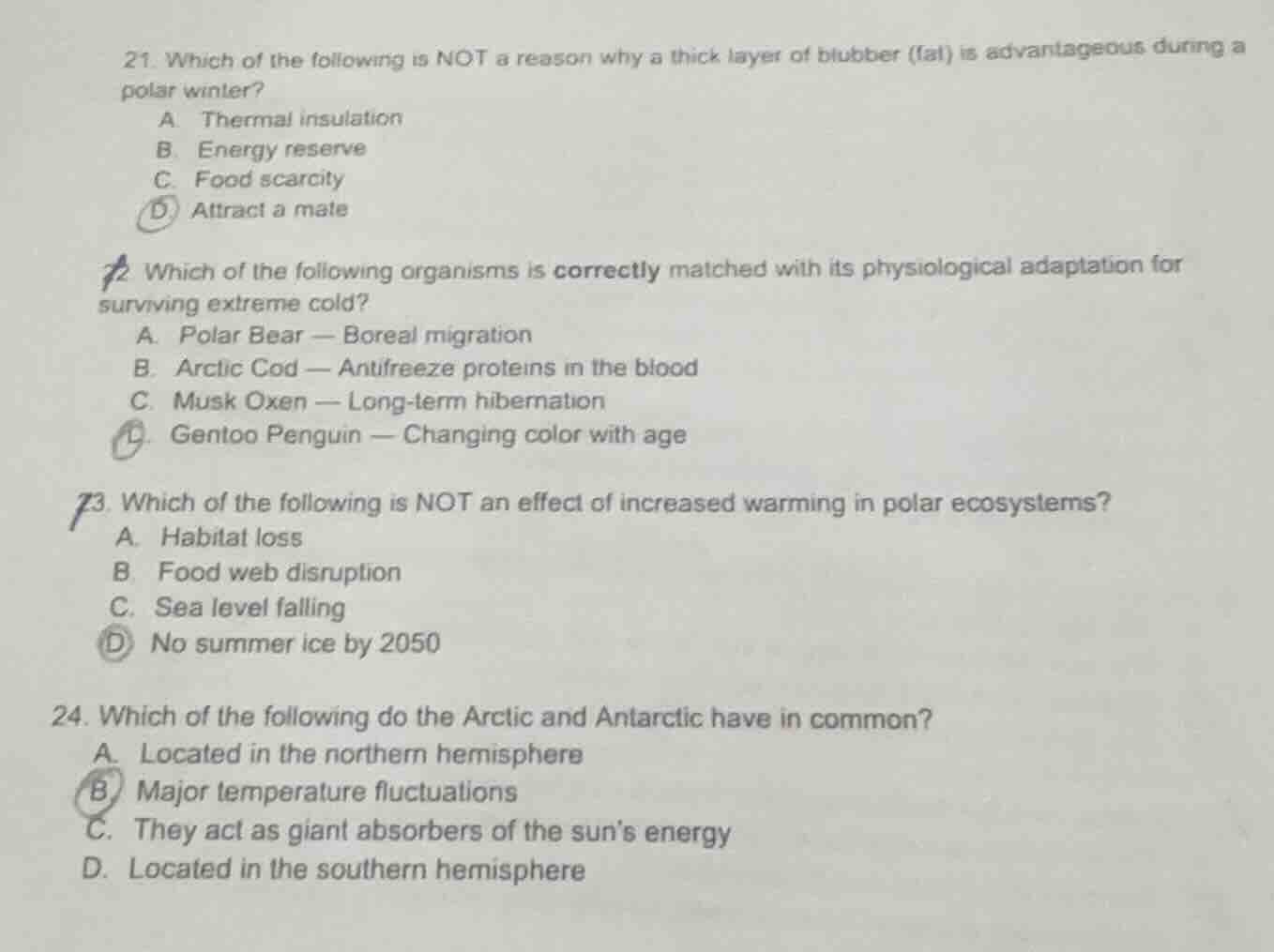
- which of the following is not a reason why a thick layer of blubber (fat) is advantageous during a polar winter?
a. thermal insulation
b. energy reserve
c. food scarcity
d. attract a mate
- which of the following organisms is correctly matched with its physiological adaptation for surviving extreme cold?
a. polar bear — boreal migration
b. arctic cod — antifreeze proteins in the blood
c. musk oxen — long - term hibernation
d. gentoo penguin — changing color with age
- which of the following is not an effect of increased warming in polar ecosystems?
a. habitat loss
b. food web disruption
c. sea level falling
d. no summer ice by 2050
- which of the following do the arctic and antarctic have in common?
a. located in the northern hemisphere
b. major temperature fluctuations
c. they act as giant absorbers of the sun’s energy
d. located in the southern hemisphere
Brief Explanations
- Blubber provides thermal insulation (A), acts as an energy reserve (B) for food scarcity (C) in polar winters, but does not function to attract mates.
- Arctic Cod produce antifreeze proteins in blood to survive cold; polar bears do not migrate to boreal regions, musk oxen do not hibernate long-term, and gentoo penguin color change is not a cold adaptation.
- Increased warming causes habitat loss, food web disruption, and projected no summer ice by 2050; it causes sea level rise, not falling.
- Both Arctic and Antarctic act as solar energy absorbers; Arctic is northern hemisphere, Antarctic is southern, and Antarctic has minimal temperature fluctuations.

Snap & solve any problem in the app
Get step-by-step solutions on Sovi AI
Photo-based solutions with guided steps
Explore more problems and detailed explanations
- D. Attract a mate
- B. Arctic Cod — Antifreeze proteins in the blood
- C. Sea level falling
- C. They act as giant absorbers of the sun's energy