QUESTION IMAGE
Question
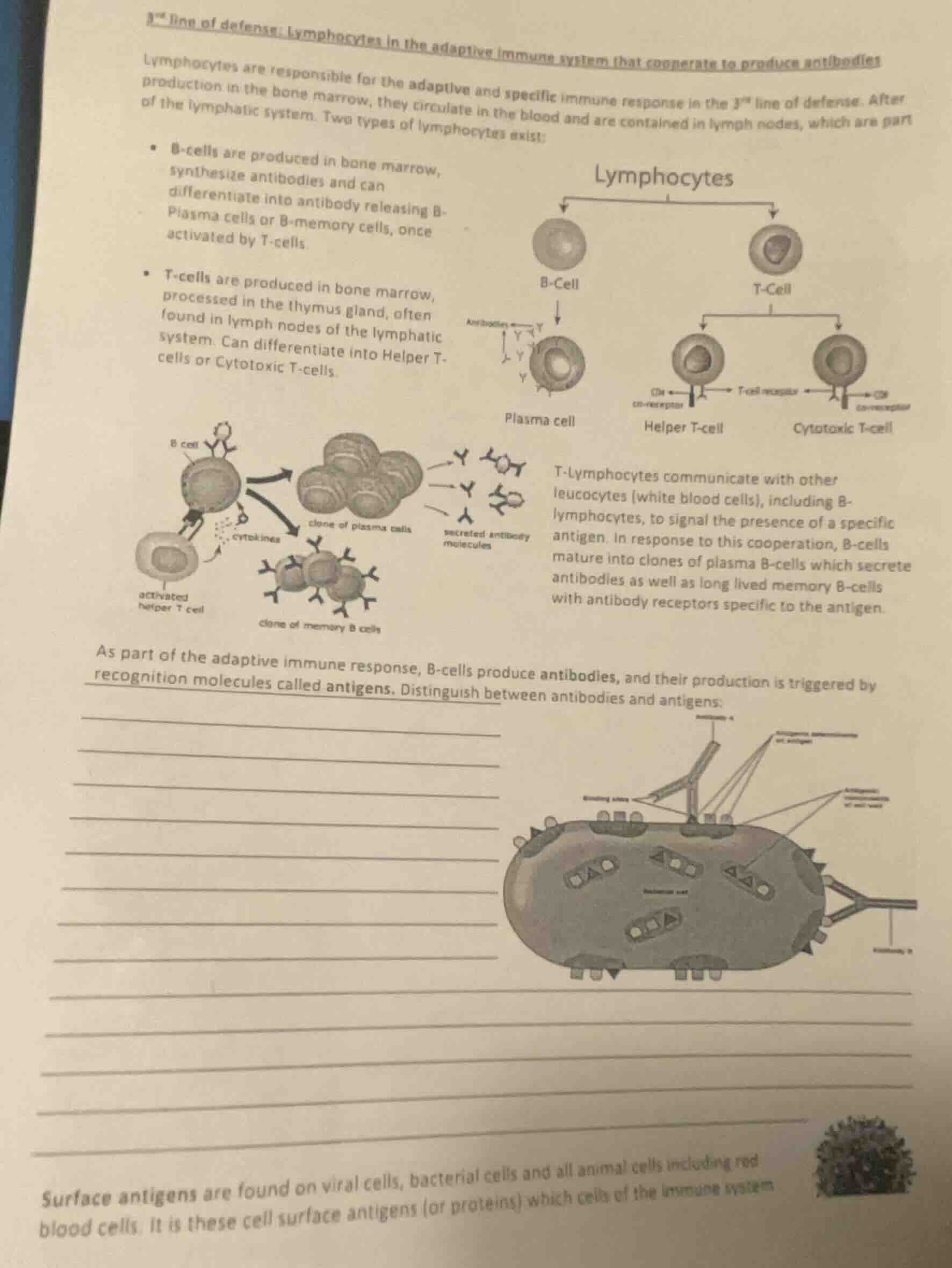
3rd line of defense: lymphocytes in the adaptive immune system that cooperate to produce antibodieslymphocytes are responsible for the adaptive and specific immune response in the 3rd line of defense. after production in the bone marrow, they circulate in the blood and are contained in lymph nodes, which are part of the lymphatic system. two types of lymphocytes exist:• b-cells are produced in bone marrow,synthesize antibodies and candifferentiate into antibody releasing b-plasma cells or b-memory cells, onceactivated by t-cells.• t-cells are produced in bone marrow,processed in the thymus gland, oftenfound in lymph nodes of the lymphaticsystem. can differentiate into helper t-cells or cytotoxic t-cells.t-lymphocytes communicate with otherleucocytes (white blood cells), including b-lymphocytes, to signal the presence of a specificantigen. in response to this cooperation, b-cellsmature into clones of plasma b-cells which secreteantibodies as well as long lived memory b-cellswith antibody receptors specific to the antigen.as part of the adaptive immune response, b-cells produce antibodies, and their production is triggered by recognition molecules called antigens. distinguish between antibodies and antigens:surface antigens are found on viral cells, bacterial cells and all animal cells including red blood cells. it is these cell surface antigens (or proteins) which cells of the immune system
Antigens are foreign (or sometimes self) molecules/proteins (often on cell surfaces like bacteria, viruses, or body cells) that trigger an adaptive immune response. Antibodies are Y-shaped proteins produced by mature B-cells (plasma cells) in response to antigens; they bind specifically to antigens to neutralize or mark them for destruction by the immune system.

Snap & solve any problem in the app
Get step-by-step solutions on Sovi AI
Photo-based solutions with guided steps
Explore more problems and detailed explanations
- Antigens: Foreign (or self) molecules/proteins that initiate an immune response, often found on the surface of pathogens, viruses, or body cells.
- Antibodies: Y-shaped proteins made by plasma B-cells that bind to specific antigens to neutralize or target them for immune destruction, produced as a response to antigen detection.