QUESTION IMAGE
Question
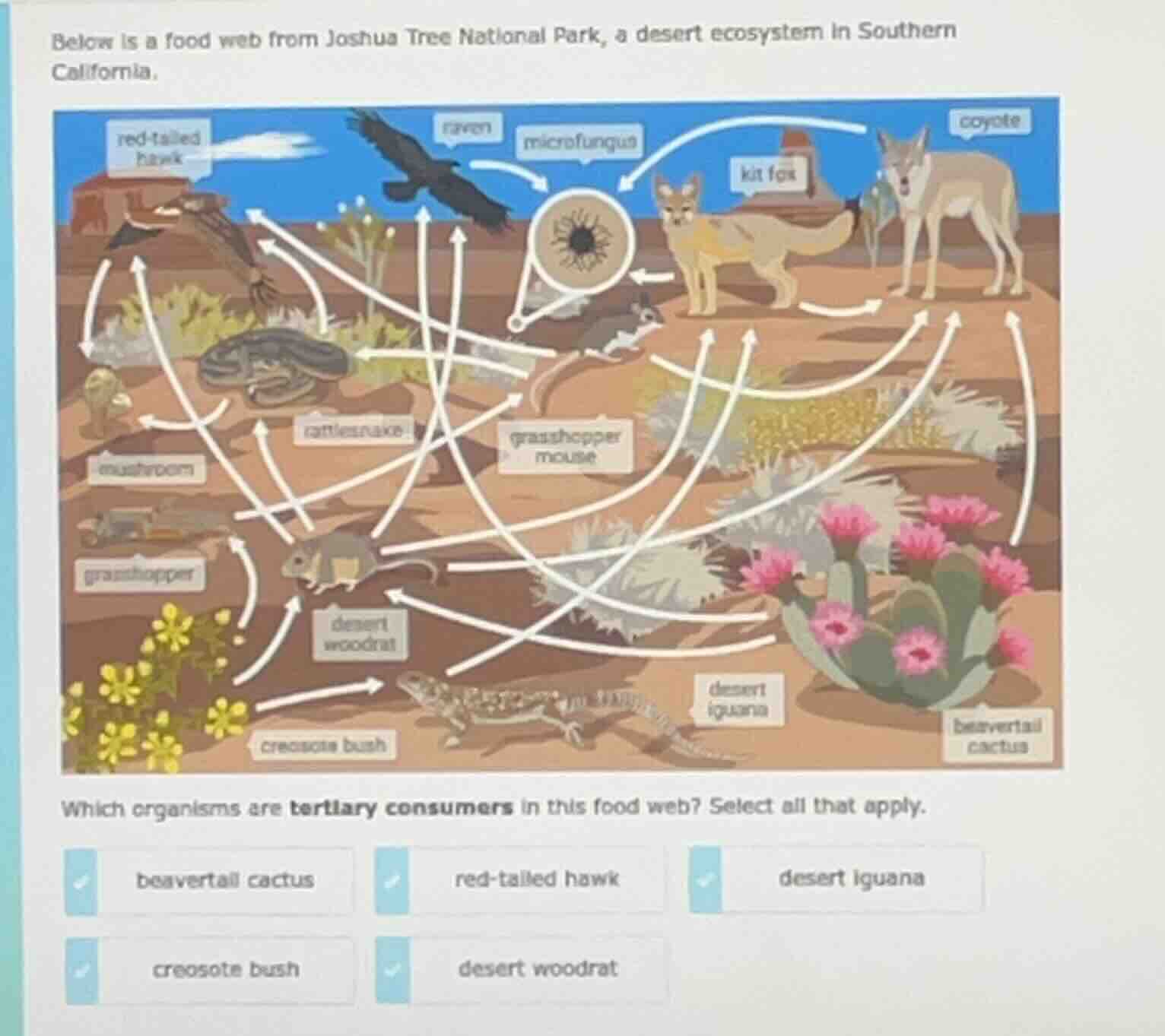
below is a food web from joshua tree national park, a desert ecosystem in southern california. which organisms are tertiary consumers in this food web? select all that apply. beavertail cactus red - tailed hawk desert iguana creosote bush desert woodrat
To determine tertiary consumers, we first recall:
- Producers (e.g., cactus, bush) make their own food.
- Primary consumers eat producers.
- Secondary consumers eat primary consumers.
- Tertiary consumers eat secondary consumers (they are top - level or near - top predators in the food web).
Now let's analyze each option:
- beavertail cactus: It is a producer (makes food via photosynthesis), so not a tertiary consumer.
- red - tailed hawk: Hawks are predators. In a desert food web, they can eat secondary consumers (like snakes or small mammals that eat primary consumers), so it is a tertiary consumer.
- desert iguana: Iguanas typically eat plants (producers) or small insects (primary consumers), so they are primary or secondary consumers, not tertiary.
- creosote bush: It is a producer, so not a tertiary consumer.
- desert woodrat: Woodrats eat plants (producers) or fungi, so they are primary consumers, not tertiary.
Tertiary consumers eat secondary consumers. The red - tailed hawk preys on secondary consumers (e.g., snakes, small mammals that consume primary consumers), while the other options are producers (beavertail cactus, creosote bush) or lower - level consumers (desert iguana, desert woodrat).

Snap & solve any problem in the app
Get step-by-step solutions on Sovi AI
Photo-based solutions with guided steps
Explore more problems and detailed explanations
red - tailed hawk