QUESTION IMAGE
Question
body systems quiz 1
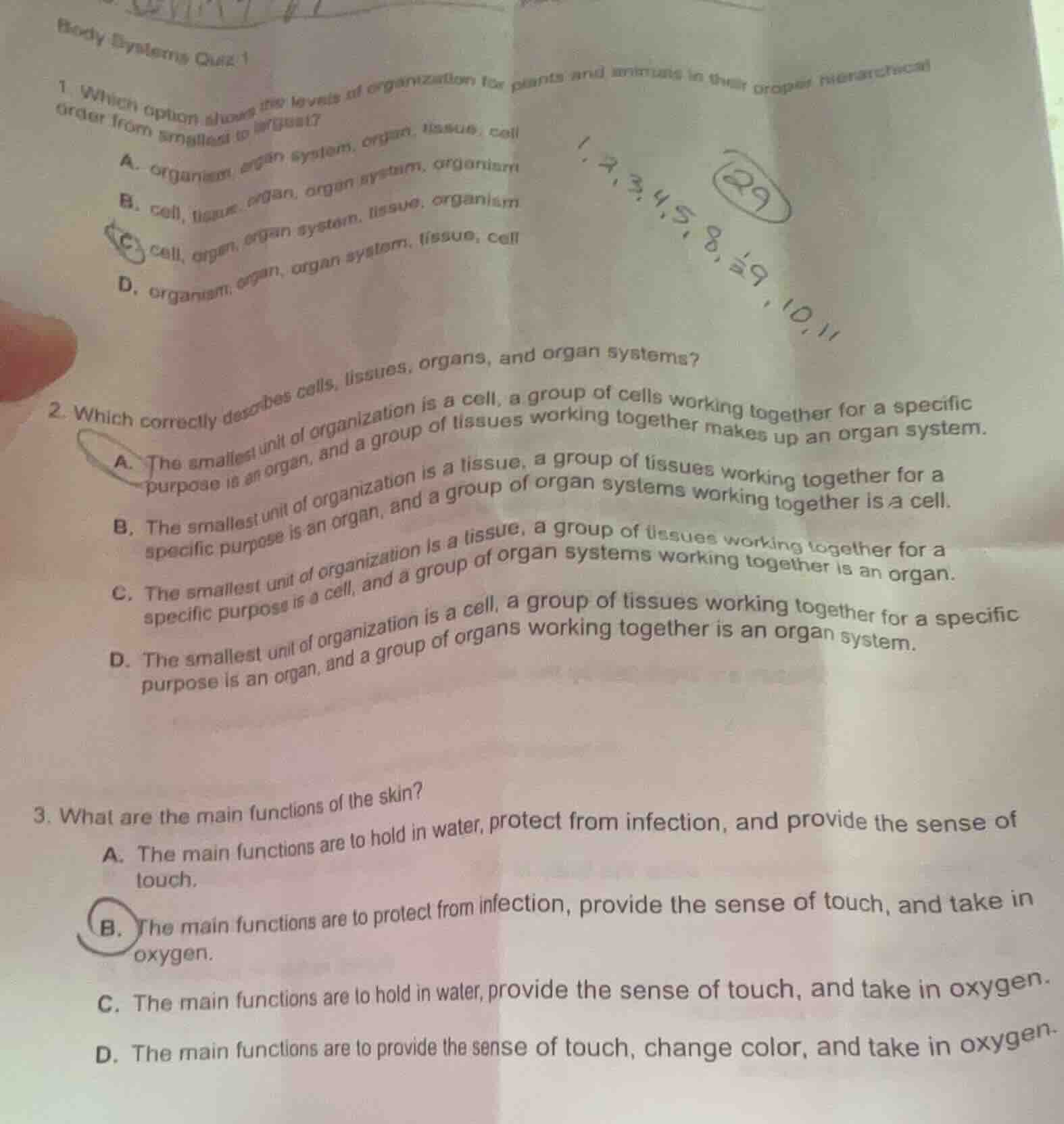
- which option shows the levels of organization for plants and animals in their proper hierarchical order from smallest to largest?
a. organism, organ system, organ, tissue, cell
b. cell, tissue, organ, organ system, organism
c. cell, organ, organ system, tissue, organism
d. organism, organ, organ system, tissue, cell
- which correctly describes cells, tissues, organs, and organ systems?
a. the smallest unit of organization is a cell, a group of cells working together for a specific purpose is an organ, and a group of tissues working together makes up an organ system.
b. the smallest unit of organization is a tissue, a group of tissues working together for a specific purpose is an organ, and a group of organ systems working together is a cell.
c. the smallest unit of organization is a tissue, a group of tissues working together for a specific purpose is a cell, and a group of organ systems working together is an organ.
d. the smallest unit of organization is a cell, a group of tissues working together for a specific purpose is an organ, and a group of organs working together is an organ system.
- what are the main functions of the skin?
a. the main functions are to hold in water, protect from infection, and provide the sense of touch.
b. the main functions are to protect from infection, provide the sense of touch, and take in oxygen.
c. the main functions are to hold in water, provide the sense of touch, and take in oxygen.
d. the main functions are to provide the sense of touch, change color, and take in oxygen.
- For question 1, the hierarchical order of biological organization from smallest to largest starts with the basic unit (cell), then groups of cells form tissues, tissues form organs, organs form organ systems, and these make up the whole organism.
- For question 2, cells are the smallest organizational unit. Tissues are groups of specialized cells working together, organs are groups of tissues, and organ systems are groups of organs that work together for body functions.
- For question 3, the skin retains body water, acts as a barrier against pathogens (infection protection), and contains sensory receptors for touch. The skin does not take in oxygen (that is the role of respiratory structures) or change color as a main function (except in specific organisms, not a universal main function).

Snap & solve any problem in the app
Get step-by-step solutions on Sovi AI
Photo-based solutions with guided steps
Explore more problems and detailed explanations
- B. cell, tissue, organ, organ system, organism
- D. The smallest unit of organization is a cell, a group of tissues working together for a specific purpose is an organ, and a group of organs working together is an organ system.
- A. The main functions are to hold in water, protect from infection, and provide the sense of touch.