QUESTION IMAGE
Question
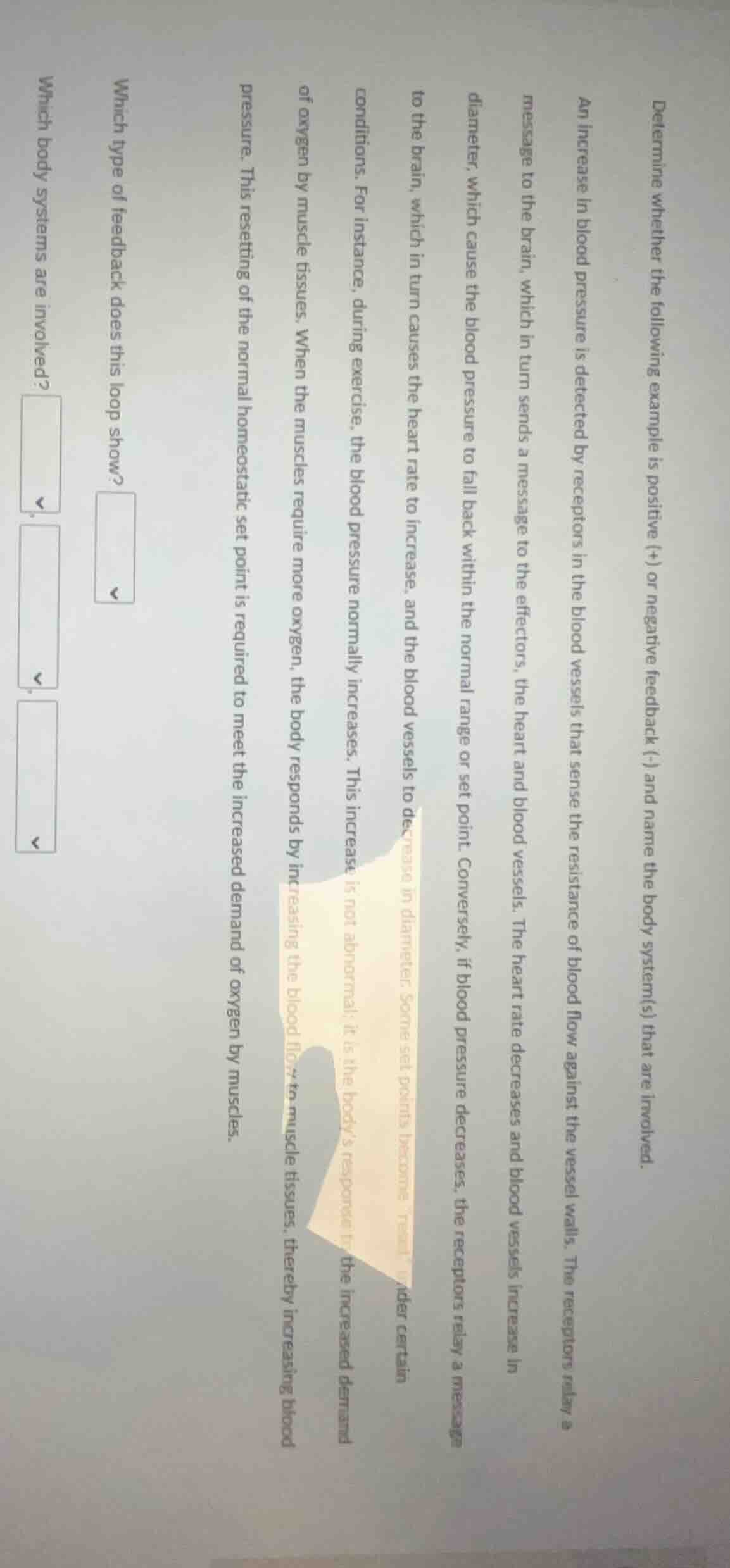
determine whether the following example is positive (+) or negative feedback (-) and name the body system(s) that are involved.
an increase in blood pressure is detected by receptors in the blood vessels that sense the resistance of blood flow against the vessel walls. the receptors relay a message to the brain, which in turn sends a message to the effectors, the heart and blood vessels. the heart rate decreases and blood vessels increase in diameter, which cause the blood pressure to fall back within the normal range or set point. conversely, if blood pressure decreases, the receptors relay a message to the brain, which in turn causes the heart rate to increase, and the blood vessels to decrease in diameter. some set points become reset under certain conditions. for instance, during exercise, the blood pressure normally increases. this increase is not abnormal; it is the body’s response to the increased demand of oxygen by muscle tissues. when the muscles require more oxygen, the body responds by increasing the blood flow to muscle tissues, thereby increasing blood pressure. this resetting of the normal homeostatic set point is required to meet the increased demand of oxygen by muscles.
which type of feedback does this loop show?
which body systems are involved?
- The blood pressure regulation loop reverses the initial change (high pressure triggers responses to lower it, low pressure triggers responses to raise it) to return to a set point, which defines negative feedback.
- The nervous system carries signals between receptors, the brain, and effectors. The circulatory (cardiovascular) system includes the heart, blood vessels, and blood that carries out the pressure adjustments and oxygen delivery.

Snap & solve any problem in the app
Get step-by-step solutions on Sovi AI
Photo-based solutions with guided steps
Explore more problems and detailed explanations
- This loop shows negative (-) feedback.
- The involved body systems are the nervous system, circulatory (cardiovascular) system, and muscular system.