QUESTION IMAGE
Question
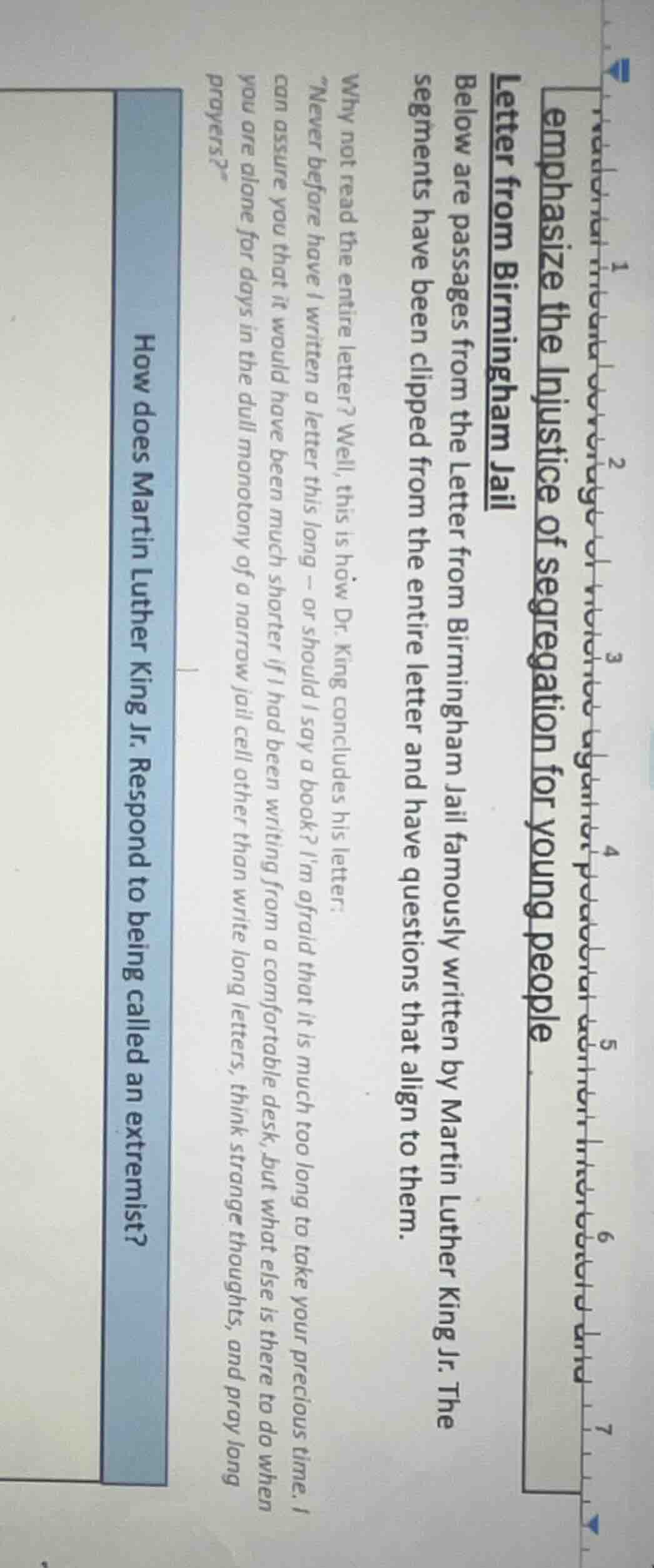
emphasize the injustice of segregation for young people
letter from birmingham jail
below are passages from the letter from birmingham jail famously written by martin luther king jr. the segments have been clipped from the entire letter and have questions that align to them.
why not read the entire letter? well, this is how dr. king concludes his letter:
ever before have i written a letter this long -- or should i say a book? im afraid that it is much too long to take your precious time. i can assure you that it would have been much shorter if i had been writing from a comfortable desk, but what else is there to do when you are alone for days in the dull monotony of a narrow jail cell other than write long letters, think strange thoughts, and pray long prayers?\
how does martin luther king jr. respond to being called an extremist?
- For the first task (emphasize segregation injustice for young people): King uses vivid, personal examples of Black children's trauma—like being denied access to amusement parks, learning of their second-class status, and internalizing shame. He frames segregation as a system that robs young people of dignity, childhood joy, and equal opportunity, making its injustice tangible and deeply personal.
- For the second task (response to being called an extremist): King reclaims the label of "extremist" positively. He compares himself to historical "extremists for love and justice" like Jesus, Amos, and Abraham Lincoln, distinguishing between harmful extremists of hate and necessary extremists of morality. He argues that the nation's salvation lies in the latter, framing his radical push for equality as a moral duty rather than a flaw.
- For the letter's closing: King explains the length of the letter as a product of his isolated, monotonous jail conditions—with no other activity but writing, thinking, and praying, he had the time and need to elaborate fully on his arguments.

Snap & solve any problem in the app
Get step-by-step solutions on Sovi AI
Photo-based solutions with guided steps
Explore more problems and detailed explanations
- King highlights segregation's injustice for young people by describing the pain of Black children who are excluded from public spaces, told they are "not good enough," and robbed of innocent joy, framing the system as a direct assault on their dignity and future.
- King responds to being called an extremist by redefining the term: he embraces being an "extremist for love and justice," aligning himself with moral giants like Jesus and Lincoln, and argues that such extremism is needed to fix the nation's racial injustice.
- King explains his long letter by noting the dull monotony of jail life—trapped in a small cell with no other activities, he had no choice but to write at length, as it was his main outlet for thought and connection.