QUESTION IMAGE
Question
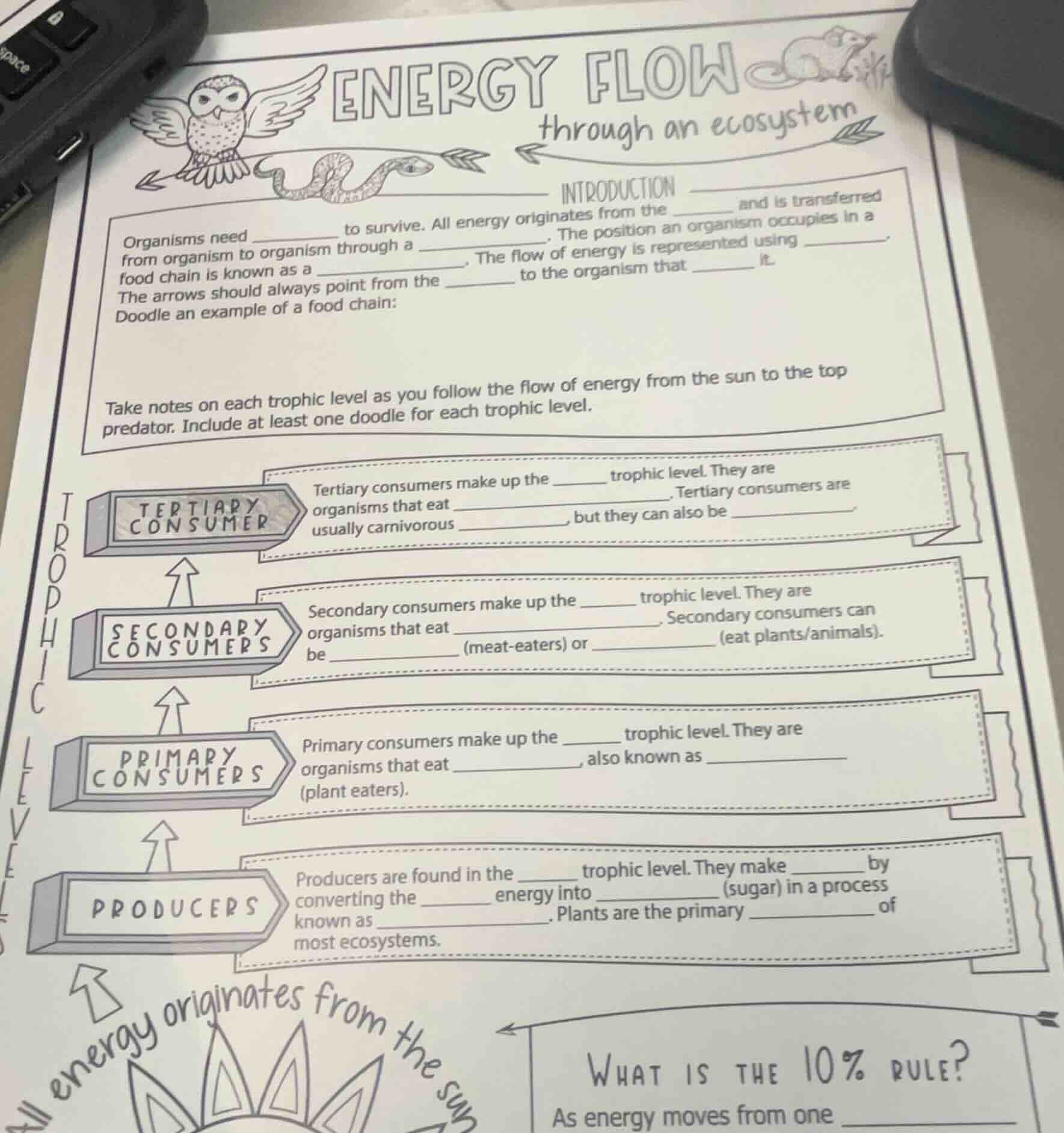
energy flowthrough an ecosystemintroductionorganisms need ________ to survive. all energy originates from the ____ and is transferredfrom organism to organism through a ___________. the position an organism occupies in afood chain is known as a ___________. the flow of energy is represented using ______.the arrows should always point from the ____ to the organism that ____ it.doodle an example of a food chain:take notes on each trophic level as you follow the flow of energy from the sun to the toppredator. include at least one doodle for each trophic level.tertiary consumertertiary consumers make up the __ trophic level. they areorganisms that eat ________________. tertiary consumers areusually carnivorous __________, but they can also be ___________.secondary consumerssecondary consumers make up the __ trophic level. they areorganisms that eat ________________. secondary consumers canbe ___________ (meat-eaters) or ___________ (eat plants/animals).primary consumersprimary consumers make up the __ trophic level. they areorganisms that eat ___________, also known as ___________(plant eaters).producersproducers are found in the __ trophic level. they make ____ byconverting the __ energy into ___________ (sugar) in a processknown as ________________. plants are the primary ___________ ofmost ecosystems.all energy originates from the sunwhat is the 10% rule?as energy moves from one _____________
Step1: Fill in introduction section
Organisms need energy to survive. All energy originates from the sun and is transferred from organism to organism through a food chain/web. The position an organism occupies in a food chain is known as a trophic level. The flow of energy is represented using arrows. The arrows should always point from the prey/food source to the organism that eats/consumes it.
Example food chain doodle: Sun → Grass → Rabbit → Owl (with simple drawings of each organism)
Step2: Fill in Producers section
Producers are found in the 1st (first) trophic level. They make food/energy by converting the sun's light energy into glucose (sugar) in a process known as photosynthesis. Plants are the primary producers of most ecosystems.
Doodle example: A simple drawing of grass or a tree
Step3: Fill in Primary Consumers section
Primary consumers make up the 2nd (second) trophic level. They are organisms that eat producers/plants, also known as herbivores (plant eaters).
Doodle example: A simple drawing of a rabbit or caterpillar
Step4: Fill in Secondary Consumers section
Secondary consumers make up the 3rd (third) trophic level. They are organisms that eat primary consumers/herbivores. Secondary consumers can be carnivores (meat-eaters) or omnivores (eat plants/animals).
Doodle example: A simple drawing of a snake or fox
Step5: Fill in Tertiary Consumers section
Tertiary consumers make up the 4th (fourth) trophic level. They are organisms that eat secondary consumers. Tertiary consumers are usually carnivorous top predators, but they can also be omnivores.
Doodle example: A simple drawing of an owl or eagle
Step6: Fill in 10% Rule section
What is the 10% Rule?
As energy moves from one trophic level to the next, only about 10% of the energy is passed on to the higher level; the remaining 90% is lost as heat or used for the organism's life processes.

Snap & solve any problem in the app
Get step-by-step solutions on Sovi AI
Photo-based solutions with guided steps
Explore more problems and detailed explanations
Introduction Completed:
Organisms need energy to survive. All energy originates from the sun and is transferred from organism to organism through a food chain. The position an organism occupies in a food chain is known as a trophic level. The flow of energy is represented using arrows. The arrows should always point from the food source to the organism that consumes it.
Example food chain: Sun → Grass → Rabbit → Owl (with corresponding doodles)
Trophic Levels Completed:
- Producers: 1st trophic level. They make food by converting solar energy into glucose via photosynthesis. Plants are the primary producers of most ecosystems. (Doodle: grass)
- Primary Consumers: 2nd trophic level. They eat producers, also known as herbivores. (Doodle: rabbit)
- Secondary Consumers: 3rd trophic level. They eat primary consumers. They can be carnivores or omnivores. (Doodle: snake)
- Tertiary Consumers: 4th trophic level. They eat secondary consumers. They are usually top predators, but can also be omnivores. (Doodle: owl)
10% Rule Completed:
As energy moves from one trophic level to another, only ~10% of energy is transferred to the next level; the rest is lost as heat or used for the organism's metabolism.