QUESTION IMAGE
Question
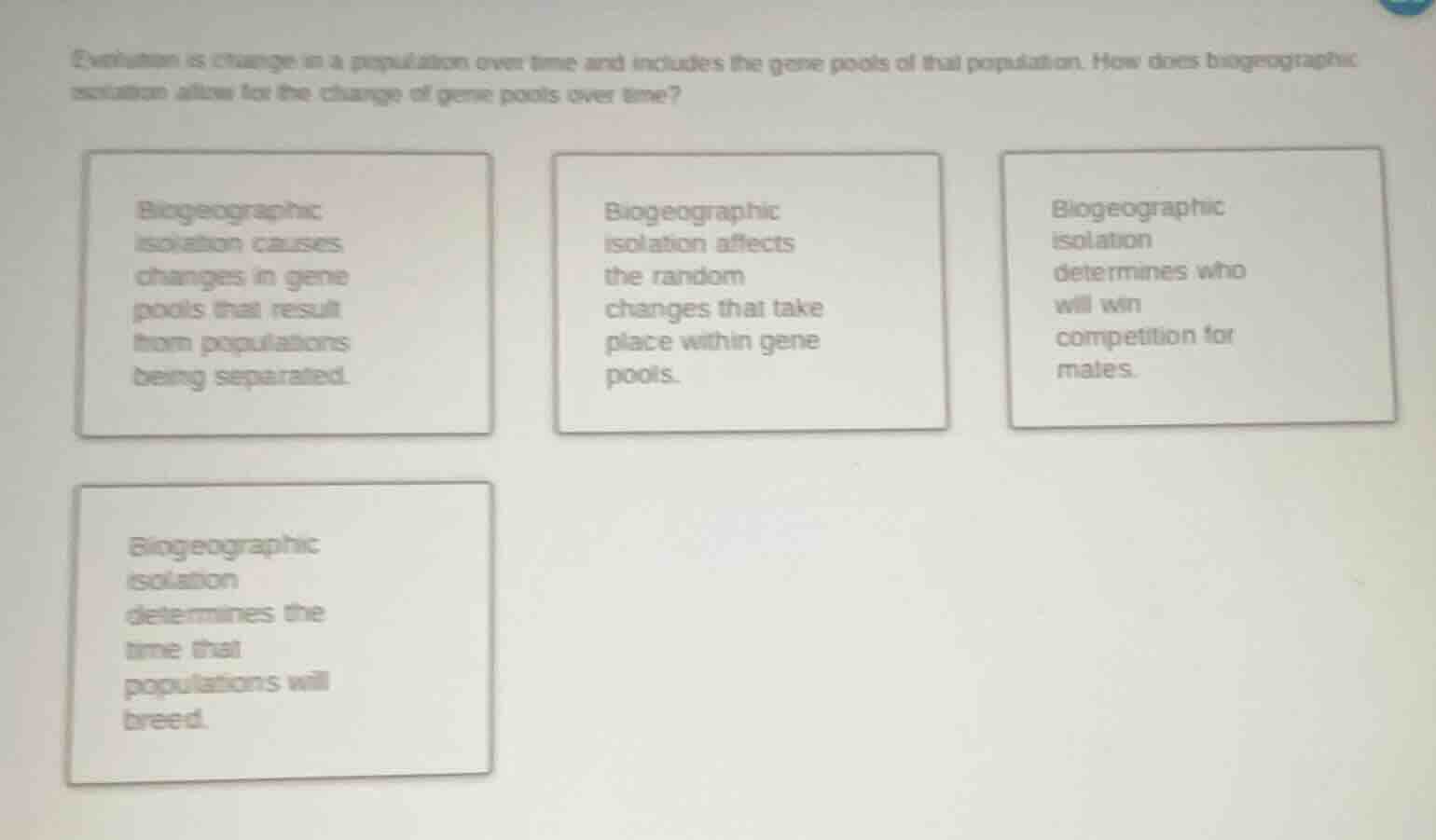
evolution is change in a population over time and includes the gene pools of that population. how does biogeographic isolation allow for the change of gene pools over time? biogeographic isolation causes changes in gene pools that result from populations being separated. biogeographic isolation affects the random changes that take place within gene pools. biogeographic isolation determines who will win competition for mates. biogeographic isolation determines the time that populations will breed.
To determine the correct answer, we analyze each option:
- Option 1: Biogeographic isolation separates populations. When populations are separated, their gene pools can change independently due to different environmental pressures, mutations, and genetic drift. This matches how biogeographic isolation leads to gene pool changes over time.
- Option 2: Random changes within gene pools (like genetic drift) are not directly caused by biogeographic isolation; isolation affects gene pools by separating populations, not by directly influencing random changes within a single gene pool.
- Option 3: Biogeographic isolation is about geographic separation, not competition for mates (which is more related to sexual selection within a population).
- Option 4: Biogeographic isolation doesn't determine breeding time; it's about geographic separation preventing gene flow between populations.

Snap & solve any problem in the app
Get step-by-step solutions on Sovi AI
Photo-based solutions with guided steps
Explore more problems and detailed explanations
The correct option is: "Biogeographic isolation causes changes in gene pools that result from populations being separated." (the first option in the top - left box)