QUESTION IMAGE
Question
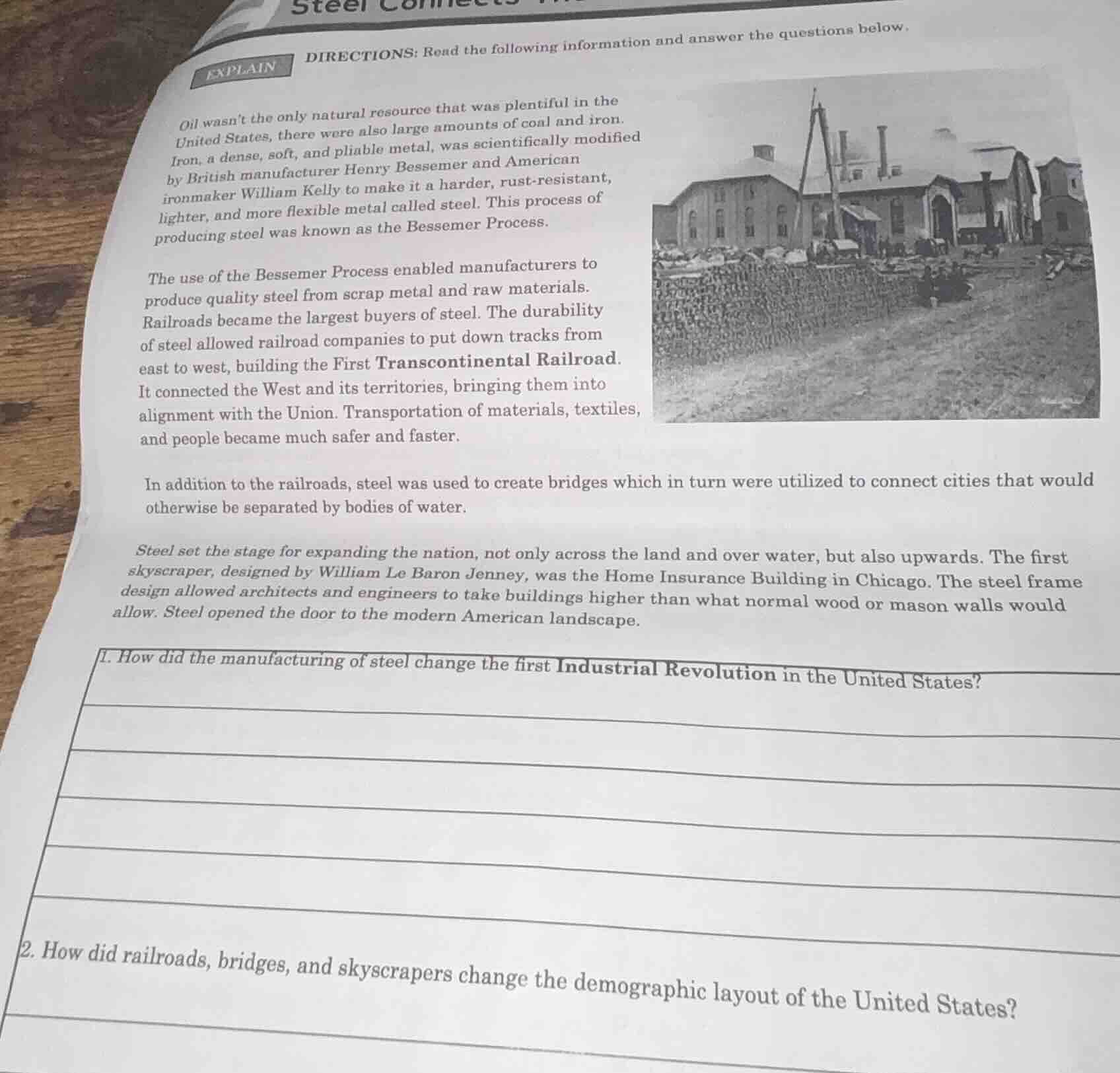
explaindirections: read the following information and answer the questions below.oil wasnt the only natural resource that was plentiful in theunited states, there were also large amounts of coal and iron.iron, a dense, soft, and pliable metal, was scientifically modifiedby british manufacturer henry bessemer and americanironmaker william kelly to make it a harder, rust-resistant,lighter, and more flexible metal called steel. this process ofproducing steel was known as the bessemer process.the use of the bessemer process enabled manufacturers toproduce quality steel from scrap metal and raw materials.railroads became the largest buyers of steel. the durabilityof steel allowed railroad companies to put down tracks fromeast to west, building the first transcontinental railroad.it connected the west and its territories, bringing them intoalignment with the union. transportation of materials, textiles,and people became much safer and faster.in addition to the railroads, steel was used to create bridges which in turn were utilized to connect cities that would otherwise be separated by bodies of water.steel set the stage for expanding the nation, not only across the land and over water, but also upwards. the firstskyscraper, designed by william le baron jenney, was the home insurance building in chicago. the steel framedesign allowed architects and engineers to take buildings higher than what normal wood or mason walls wouldallow. steel opened the door to the modern american landscape.1. how did the manufacturing of steel change the first industrial revolution in the united states?2. how did railroads, bridges, and skyscrapers change the demographic layout of the united states?
- For the first question: The Bessemer Process made steel production efficient, creating a durable, rust-resistant metal. This enabled large-scale railroad construction (like the First Transcontinental Railroad) for faster, safer transport of goods/people. Steel also enabled bridge construction to connect separated cities and steel-frame skyscrapers, transforming the built environment and industrial capacity of the U.S. during the Industrial Revolution.
- For the second question: Railroads connected the East and West, encouraging migration to Western territories and integrating them with the Union. Bridges linked cities separated by water, expanding access and encouraging population movement between these areas. Steel-frame skyscrapers allowed dense urban development, drawing people to cities and fueling urbanization, shifting population from rural areas to concentrated urban centers.

Snap & solve any problem in the app
Get step-by-step solutions on Sovi AI
Photo-based solutions with guided steps
Explore more problems and detailed explanations
- The manufacturing of steel (via the Bessemer Process) revolutionized the U.S. Industrial Revolution by creating a strong, versatile metal. It enabled the construction of the First Transcontinental Railroad, which improved national transportation of materials, textiles, and people by making it faster and safer. It also allowed for the building of water-crossing bridges and steel-frame skyscrapers, transforming the nation's infrastructure and enabling urban and geographic expansion.
- Railroads connected the East and West, driving migration to Western territories and integrating these regions with the rest of the U.S. Bridges linked cities separated by bodies of water, facilitating population movement and growth in previously isolated areas. Skyscrapers enabled dense urban development, drawing large numbers of people to cities and accelerating urbanization, shifting the U.S. population from predominantly rural to more concentrated urban centers.