QUESTION IMAGE
Question
extension questions
- people may need a replacement body part for a number of reasons. currently, the main sources of
ew\ organs are other human beings. one of the first steps in determining if an available organ will be a match is to know the blood types of the donor and the recipient. predict what would happen to the recipient and the new organ if this critical step was skipped or done incorrectly. use the terms antigen and antibody in your explanation.
- another marker, rh factor, is also used to type blood because it, too, is found on human red blood cells and causes antigen/antibody reactions. these reactions are separate from the so-called abo reactions described in this activity. in the rh-factor system, the rh antigen is either present or absent, leading to designations of rh-positive (rh⁺, antigen present) or rh-negative (rh⁻, antigen absent). thus, a person can be o⁺ or o⁻, a⁺ or a⁻, and so on. a person with o-negative blood can only receive o⁻ blood. explain this limitation.
model 1 - red blood cells and antibodies
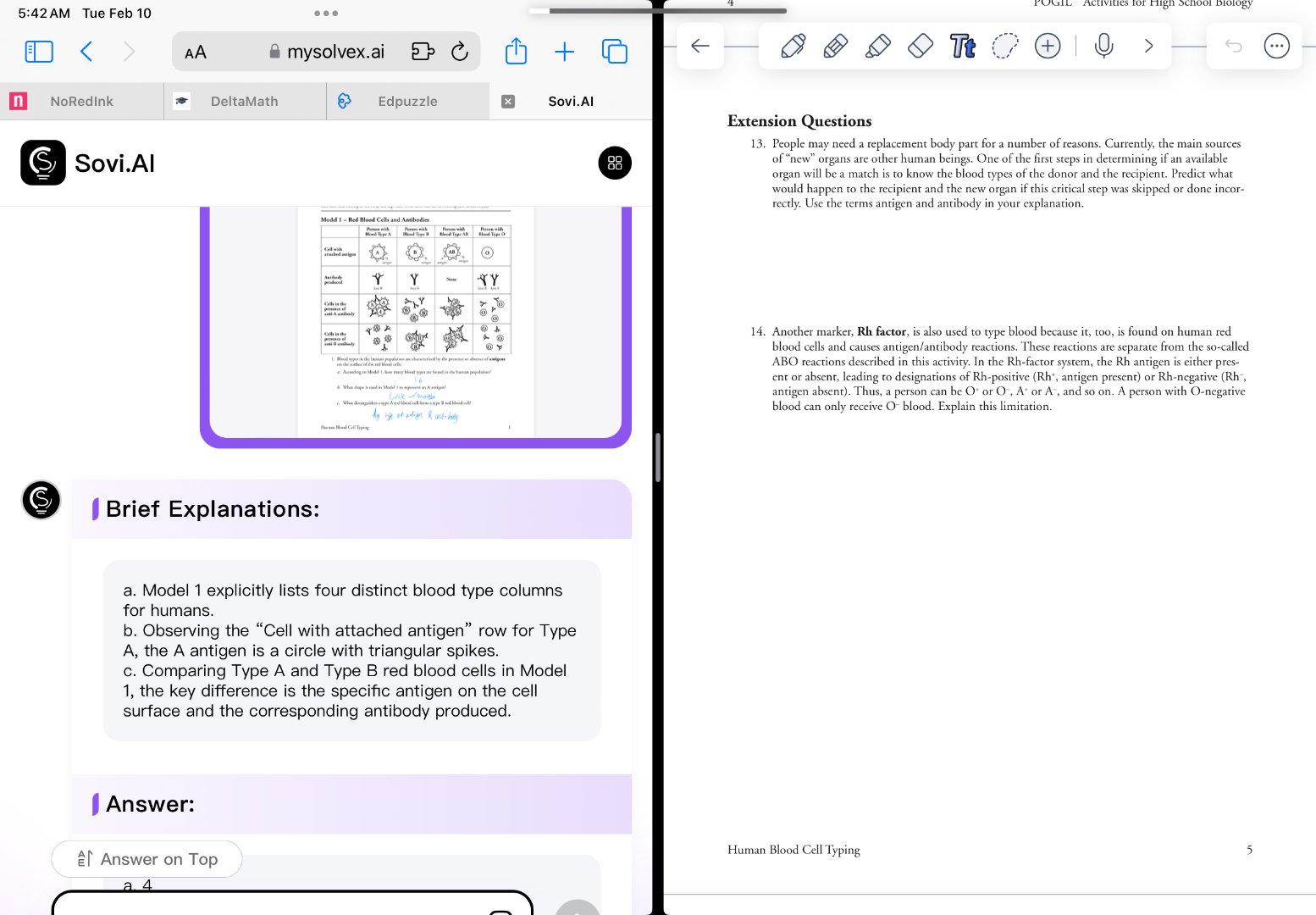
model content includes rows: cell with attached antigen, antibody produced, cells in the presence of antibody, cells in the absence of antibody; columns: person with blood type a, person with blood type b, person with blood type ab, person with blood type o, with corresponding diagrams and notations
- blood types in the human population are characterized by the presence or absence of antigens
- according to model 1, how many blood types are found in the human population?
- what shape is used in model 1 to represent an a antigen?
- what distinguishes a type a red blood cell from a type b red blood cell?
brief explanations:
a. model 1 explicitly lists four distinct blood type columns for humans.
b. observing the \cell with attached antigen\ row for type a, the a antigen is a circle with triangular spikes.
c. comparing type a and type b red blood cells in model 1, the key difference is the specific antigen on the cell surface and the corresponding antibody produced.
answer:
- Relies on the core antigen-antibody immune response: foreign antigens trigger antibody binding and immune attack, leading to organ rejection.
- O-negative individuals have antibodies against all common blood antigens, so only antigen-free O-negative blood avoids an immune reaction.

Snap & solve any problem in the app
Get step-by-step solutions on Sovi AI
Photo-based solutions with guided steps
Explore more problems and detailed explanations
- If blood type matching is skipped/incorrect: The recipient's immune system will recognize antigens on the new organ (from the donor) as foreign. The recipient's antibodies will bind to these foreign antigens, triggering an immune response that attacks and rejects the new organ, leading to organ failure and severe harm to the recipient.
- O-negative blood has no A, B, or Rh antigens on its red blood cells, but an O-negative person has anti-A, anti-B, and anti-Rh antibodies in their blood. If they receive any blood other than O-negative (which has A, B, and/or Rh antigens), their pre-existing antibodies will bind to these foreign antigens on the donor's red blood cells, causing a dangerous immune reaction (hemolysis) that can be life-threatening.