QUESTION IMAGE
Question
extension questions
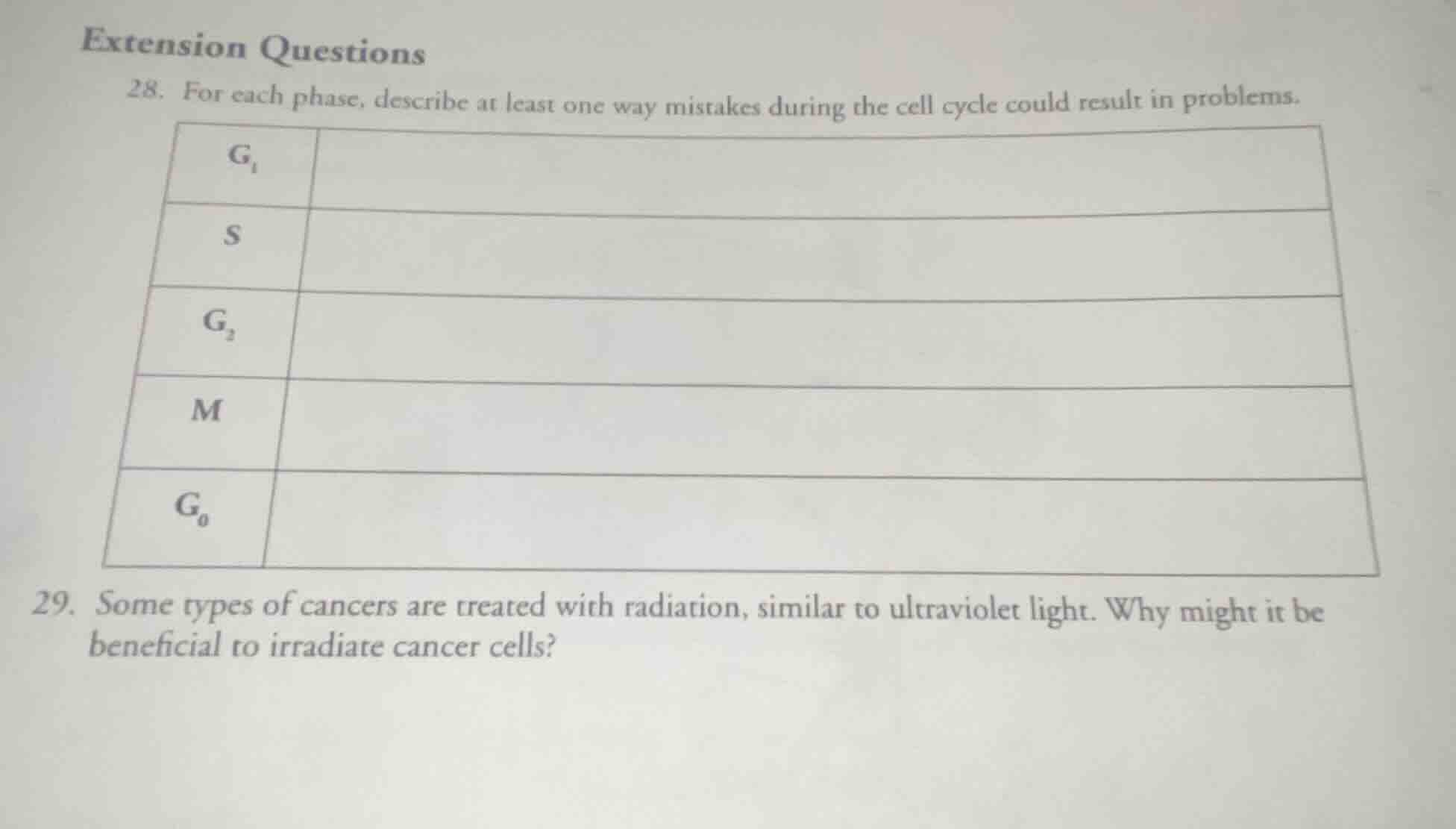
- for each phase, describe at least one way mistakes during the cell cycle could result in problems.
| g₁ | |
|---|---|
| g₂ | |
| m | |
| g₀ |
- some types of cancers are treated with radiation, similar to ultraviolet light. why might it be beneficial to irradiate cancer cells?
Brief Explanations
For Question 28:
- G₁: This phase involves cell growth and checkpoint checks for damage. A mistake here means damaged cells proceed to divide.
- S: This phase is for DNA replication. Errors here create mutated DNA in daughter cells.
- G₂: This phase checks replicated DNA for damage. A mistake lets damaged DNA enter mitosis.
- M: This phase is mitosis/division. Errors here cause unequal chromosome distribution.
- G₀: This is a resting phase. A mistake here makes non-dividing cells re-enter the cycle abnormally.
For Question 29:
Cancer cells divide rapidly, spending more time in DNA synthesis/mitosis phases. Radiation damages DNA; cancer cells struggle to repair this damage, triggering cell death, while healthy, slower-dividing cells can repair damage more effectively.

Snap & solve any problem in the app
Get step-by-step solutions on Sovi AI
Photo-based solutions with guided steps
Explore more problems and detailed explanations
Question 28:
| Phase | Problem from Mistake |
|---|---|
| S | Mutated DNA sequences are passed to daughter cells, leading to genetic abnormalities or dysfunctional cells. |
| G₂ | Cells with unrepaired DNA damage enter mitosis, resulting in daughter cells with broken or incomplete chromosomes. |
| M | Chromosomes fail to separate evenly (nondisjunction), creating aneuploid cells with abnormal chromosome counts (e.g., Down syndrome from failed M phase separation). |
| G₀ | Terminally differentiated cells (e.g., nerve cells) re-enter the cell cycle inappropriately, leading to abnormal cell growth and potential tumor formation. |
Question 29:
Radiation damages the DNA of rapidly dividing cancer cells. Unlike healthy cells (which divide slowly and have efficient DNA repair mechanisms), cancer cells often have impaired DNA repair pathways, so the damage leads to cell cycle arrest or programmed cell death (apoptosis), reducing the number of cancerous cells.