QUESTION IMAGE
Question
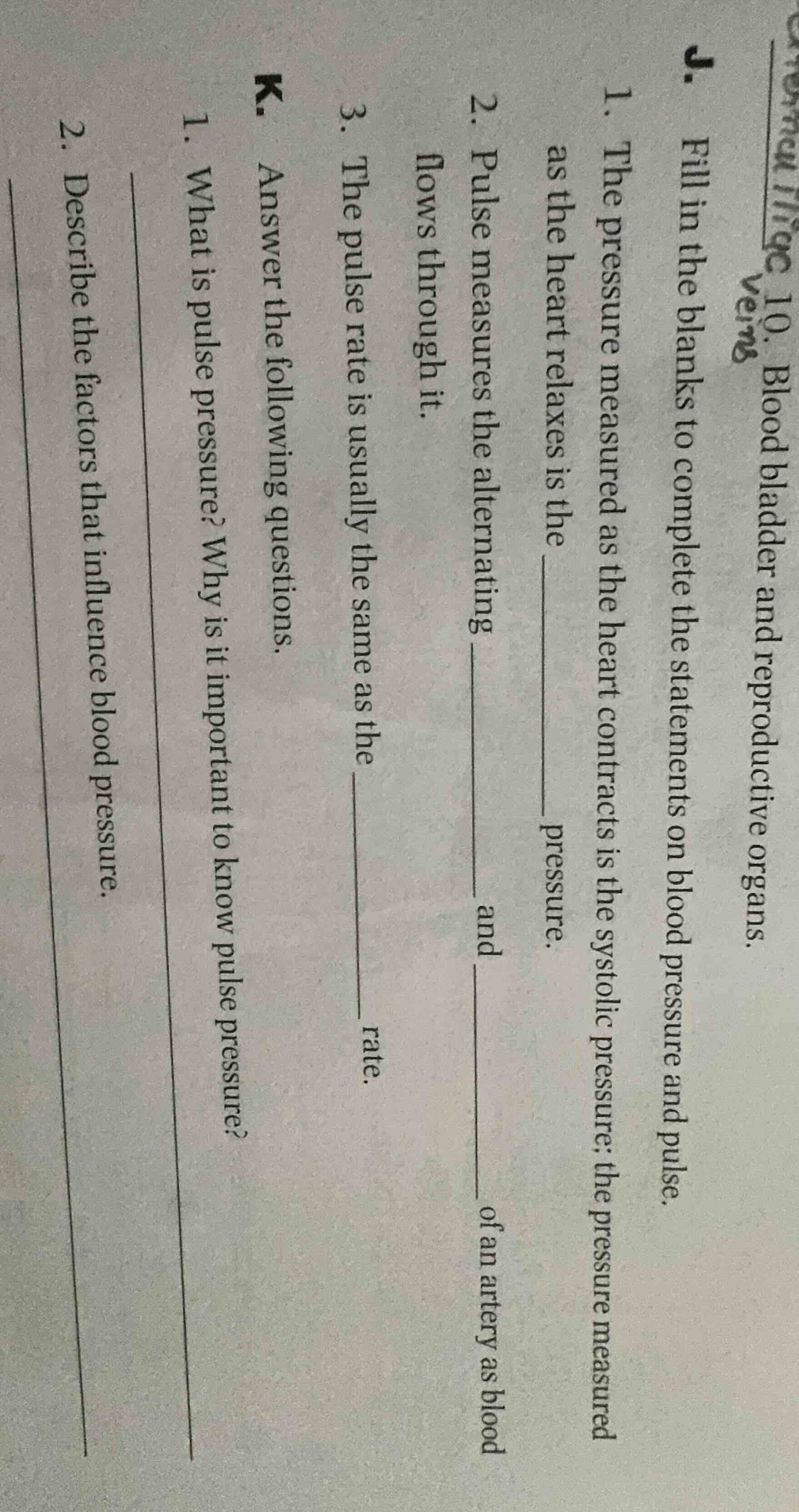
j. fill in the blanks to complete the statements on blood pressure and pulse. 1. the pressure measured as the heart contracts is the systolic pressure; the pressure measured as the heart relaxes is the ____ pressure. 2. pulse measures the alternating __ and __ of an artery as blood flows through it. 3. the pulse rate is usually the same as the ____ rate. k. answer the following questions. 1. what is pulse pressure? why is it important to know pulse pressure? 2. describe the factors that influence blood pressure.
Brief Explanations
For Section J:
- Diastolic pressure is defined as blood pressure when the heart relaxes, while systolic is during contraction.
- A pulse is the rhythmic expansion and recoil of artery walls as blood is pumped through them.
- The pulse rate matches the heart rate, as each heartbeat creates a pulse.
For Section K:
- Pulse pressure is the difference between systolic and diastolic blood pressure. It is important because it reflects how well the heart is pumping and the stiffness of artery walls, serving as an indicator of cardiovascular health.
- Factors influencing blood pressure include cardiac output (heart rate and stroke volume), blood volume, peripheral resistance (artery width and blood viscosity), and hormone levels (like adrenaline).

Snap & solve any problem in the app
Get step-by-step solutions on Sovi AI
Photo-based solutions with guided steps
Explore more problems and detailed explanations
Section J
- diastolic
- expansion; recoil
- heart
Section K
- Pulse pressure is the difference between systolic and diastolic blood pressure ($\text{Pulse Pressure} = \text{Systolic Pressure} - \text{Diastolic Pressure}$). It is important because it signals the heart's pumping efficiency and arterial health, helping detect issues like stiff arteries or heart dysfunction.
- Key factors include:
- Cardiac output (heart rate × stroke volume)
- Total blood volume in the circulatory system
- Peripheral resistance (artery diameter, blood viscosity)
- Hormonal signals (e.g., adrenaline, aldosterone)
- Lifestyle factors (diet, exercise, stress)