QUESTION IMAGE
Question
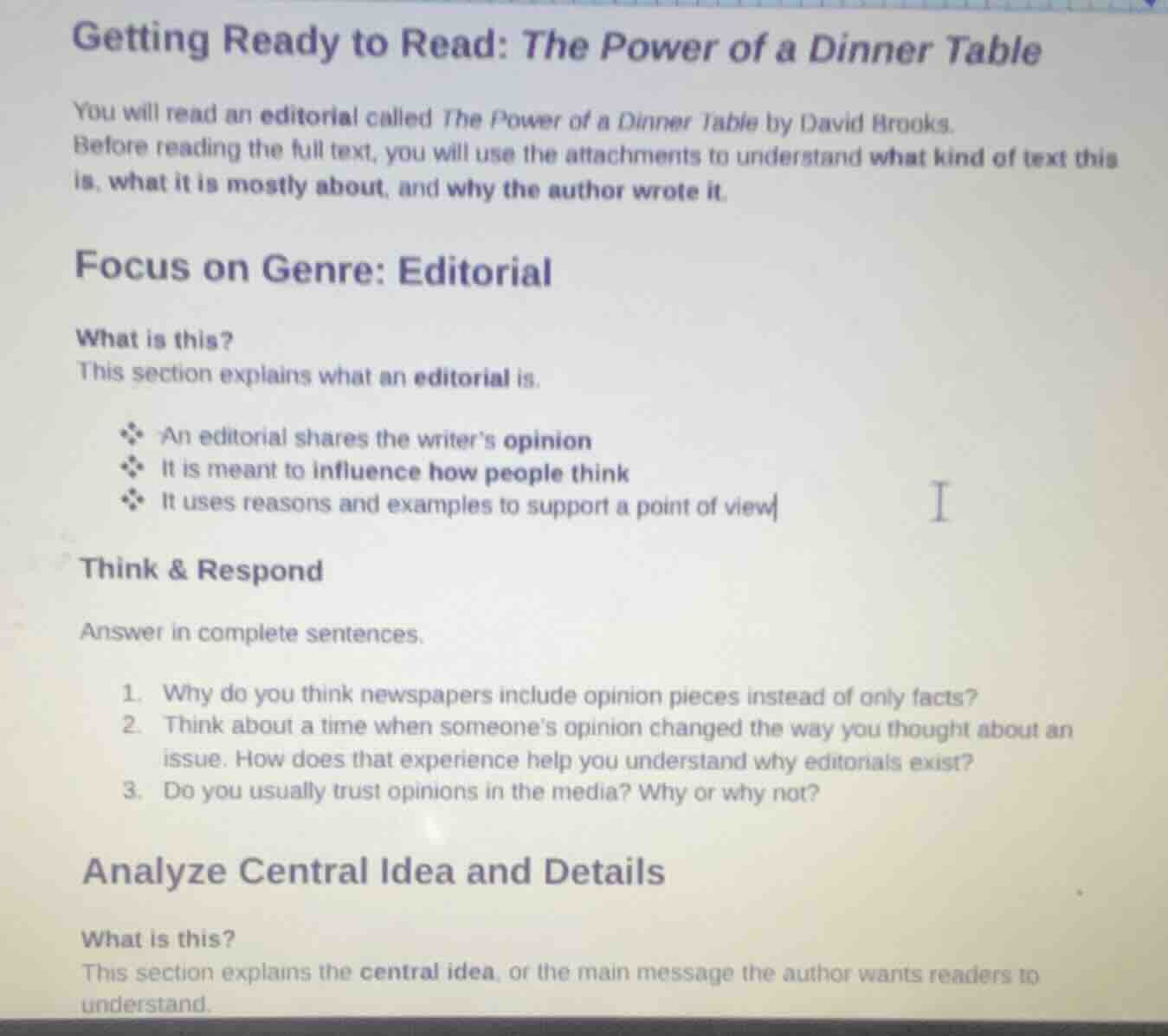
getting ready to read: the power of a dinner table
you will read an editorial called the power of a dinner table by david brooks.
before reading the full text, you will use the attachments to understand what kind of text this
is, what it is mostly about, and why the author wrote it.
focus on genre: editorial
what is this?
this section explains what an editorial is.
❖ an editorial shares the writers opinion
❖ it is meant to influence how people think
❖ it uses reasons and examples to support a point of view
think & respond
answer in complete sentences.
- why do you think newspapers include opinion pieces instead of only facts?
- think about a time when someones opinion changed the way you thought about an
issue. how does that experience help you understand why editorials exist?
- do you usually trust opinions in the media? why or why not?
analyze central idea and details
what is this?
this section explains the central idea, or the main message the author wants readers to
understand.
- For the first question: Newspapers include opinion pieces to offer diverse perspectives, encourage critical thinking, and give readers context beyond just factual reporting, helping them engage more deeply with issues.
- For the second question: When someone's opinion changes your thinking, it shows how persuasive viewpoints can shift understanding, which mirrors the purpose of editorials—to shape public thought through reasoned opinions.
- For the third question: Trust in media opinions depends on factors like the source's credibility, transparency, and alignment with evidence; consistent, well-supported opinions from reputable outlets are more likely to be trusted.

Snap & solve any problem in the app
Get step-by-step solutions on Sovi AI
Photo-based solutions with guided steps
Explore more problems and detailed explanations
- Newspapers include opinion pieces alongside facts because they provide diverse perspectives, encourage readers to think critically about issues, and add contextual analysis that pure factual reporting cannot offer, fostering a more nuanced public understanding of current events.
- Once, a teacher's opinion about the importance of local community involvement changed my view that only large-scale actions matter. This experience helps me understand editorials exist because well-reasoned opinions can shift people's perspectives and encourage them to consider new ways of looking at issues, just as my teacher's perspective did for me.
- I usually trust opinions in the media only if they come from reputable, fact-checked sources that clearly support their claims with evidence. I do not trust opinions from anonymous or biased sources that ignore counterarguments, as they are more likely to be based on agenda rather than thoughtful analysis.