QUESTION IMAGE
Question
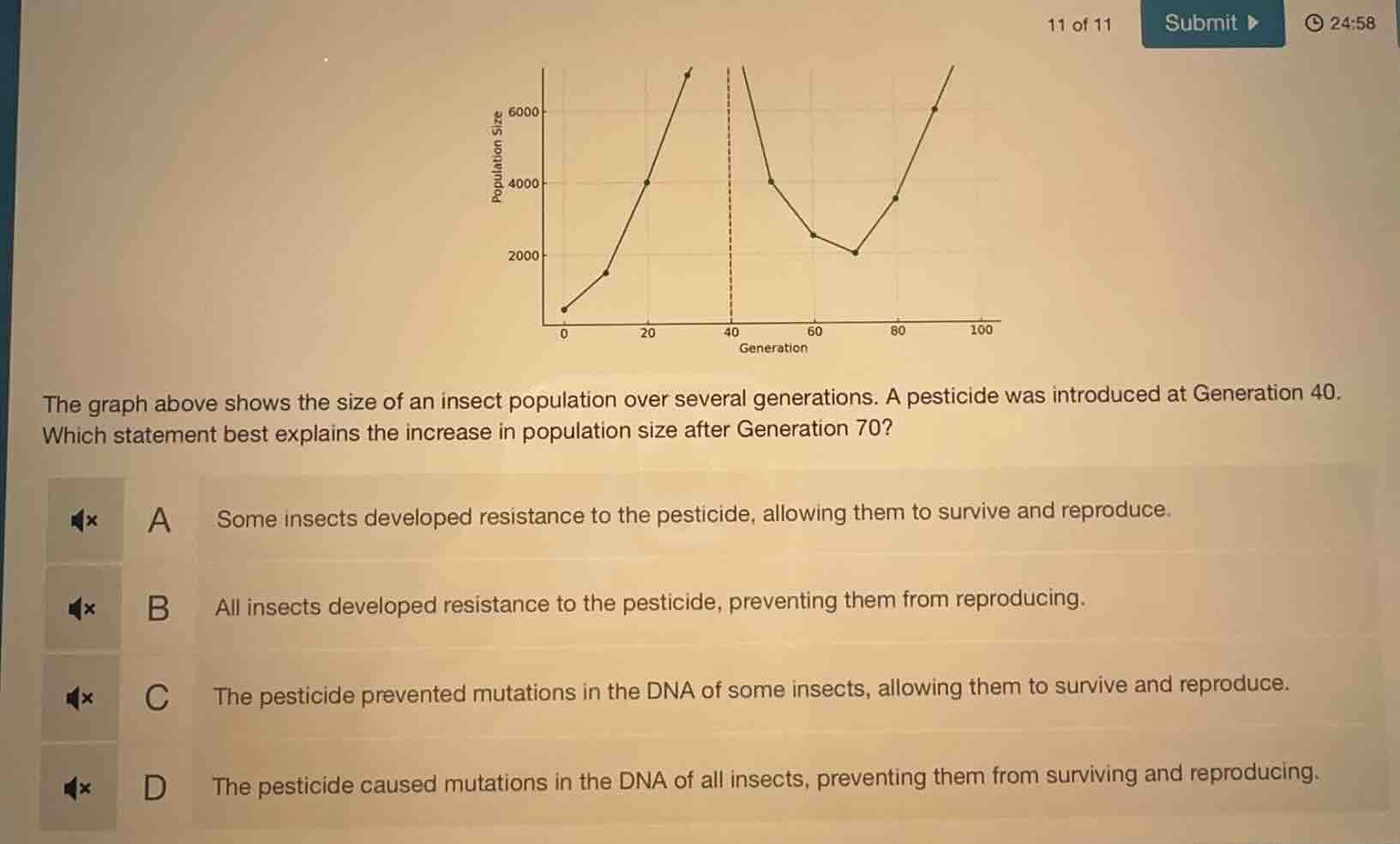
the graph above shows the size of an insect population over several generations. a pesticide was introduced at generation 40. which statement best explains the increase in population size after generation 70? a some insects developed resistance to the pesticide, allowing them to survive and reproduce. b all insects developed resistance to the pesticide, preventing them from reproducing. c the pesticide prevented mutations in the dna of some insects, allowing them to survive and reproduce. d the pesticide caused mutations in the dna of all insects, preventing them from surviving and reproducing.
To solve this, we analyze each option:
- Option A: After pesticide introduction (Gen 40), some insects with resistance genes survive, reproduce, and over time (after Gen 70) their population (with resistance) increases. This matches natural selection (insects with favorable traits - resistance - survive and reproduce).
- Option B: "All insects" developing resistance is unlikely, and "preventing reproduction" contradicts population increase.
- Option C: Pesticides don't "prevent mutations" to help survival; mutations are random, and resistance comes from existing or new favorable mutations, not prevention by pesticide.
- Option D: "All insects" having mutations preventing survival/reproduction would decrease population, not increase.

Snap & solve any problem in the app
Get step-by-step solutions on Sovi AI
Photo-based solutions with guided steps
Explore more problems and detailed explanations
A. Some insects developed resistance to the pesticide, allowing them to survive and reproduce.