QUESTION IMAGE
Question
history of plastics
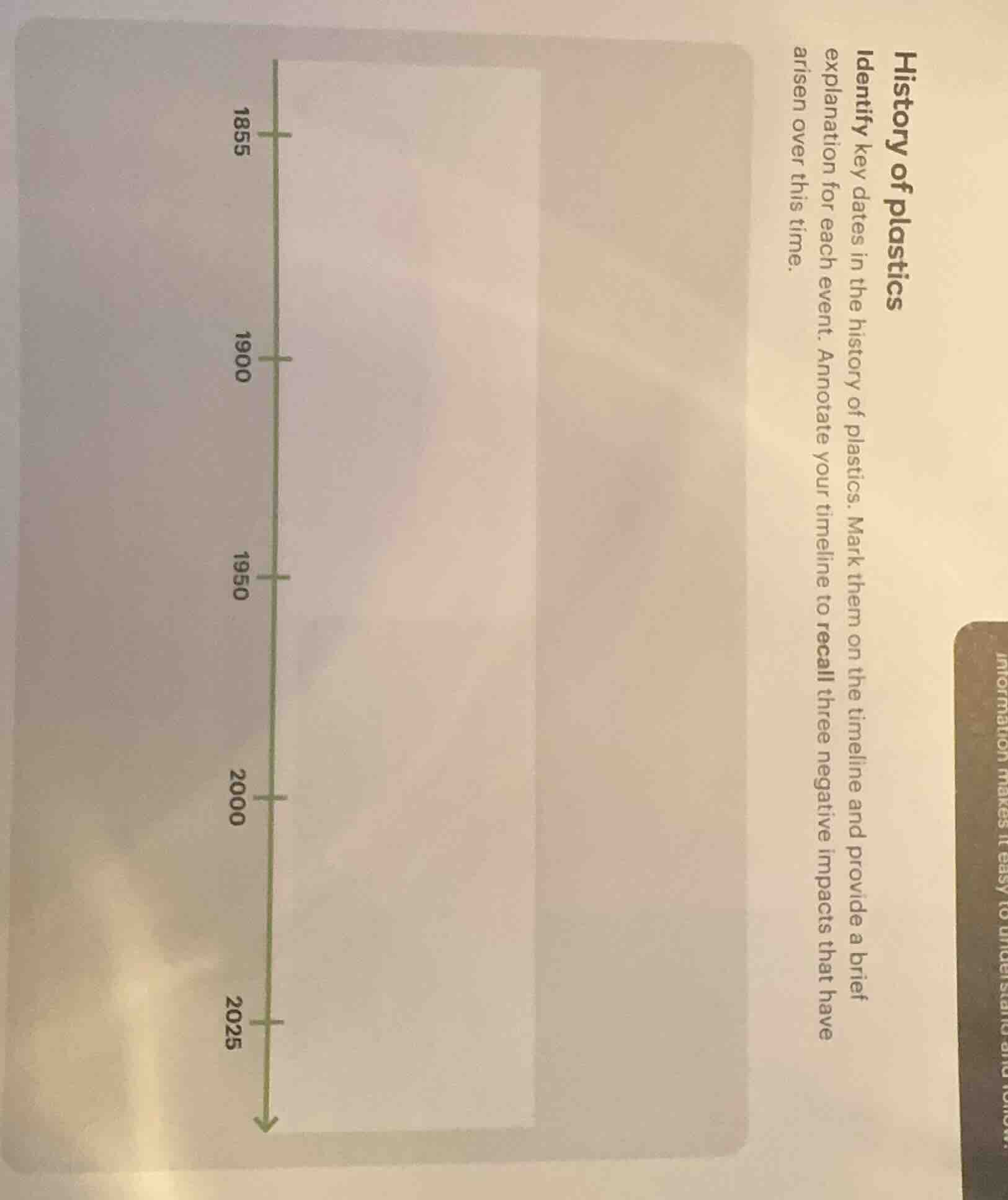
identify key dates in the history of plastics. mark them on the timeline and provide a brief
explanation for each event. annotate your timeline to recall three negative impacts that have
arisen over this time.
Brief Explanations
- Key Dates & Events:
- 1855: Alexander Parkes invents Parkesine, the first man-made plastic, derived from cellulose; it was a moldable, semi-transparent material intended as an ivory substitute.
- 1907: Leo Baekeland creates Bakelite, the first fully synthetic plastic, which is heat-resistant and non-conductive, revolutionizing industrial and consumer goods manufacturing.
- 1950s: Mass production of polyethylene, polypropylene, and PET begins, driven by post-WWII industrial growth; these lightweight, low-cost plastics become ubiquitous in packaging and consumer products.
- 2000s: Global plastic production surpasses 200 million tons annually, with single-use plastics dominating markets, leading to widespread waste concerns.
- Negative Impacts:
- Marine Pollution: Plastic waste accumulates in oceans, harming marine life via ingestion or entanglement, and forming large garbage patches.
- Soil & Ecosystem Degradation: Microplastics from broken-down plastics contaminate soil, disrupting soil structure and harming terrestrial organisms.
- Human Health Risks: Chemical additives in plastics (e.g., BPA) can leach into food/water, potentially causing hormonal disruptions and other health issues.

Snap & solve any problem in the app
Get step-by-step solutions on Sovi AI
Photo-based solutions with guided steps
Explore more problems and detailed explanations
Annotated Timeline:
| Year | Event & Explanation |
|---|---|
| 1907 | Creation of Bakelite: First fully synthetic plastic, heat/chemical-resistant, industrial staple. |
| 1950s | Mass production of polyethylene/polypropylene: Low-cost, lightweight plastics for packaging/consumer goods. |
| 2000s | Global plastic production exceeds 200M tons/year: Single-use plastics drive waste crisis. |
Key Negative Impacts:
- Marine plastic pollution harming aquatic life
- Microplastic contamination degrading soil ecosystems
- Leached plastic chemicals posing human health risks