QUESTION IMAGE
Question
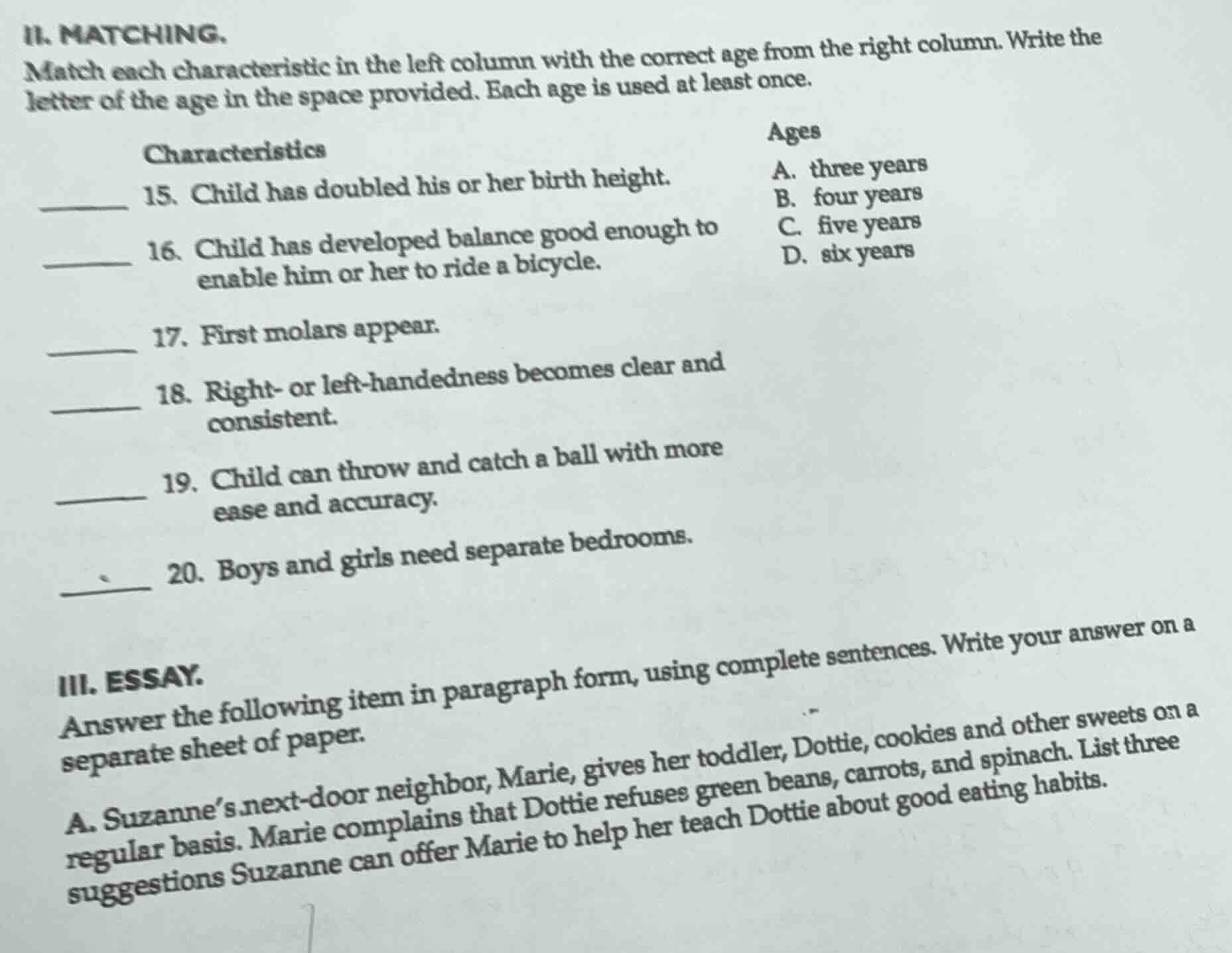
ii. matching.
match each characteristic in the left column with the correct age from the right column. write the letter of the age in the space provided. each age is used at least once.
characteristics
______ 15. child has doubled his or her birth height.
______ 16. child has developed balance good enough to enable him or her to ride a bicycle.
______ 17. first molars appear.
______ 18. right- or left-handedness becomes clear and consistent.
______ 19. child can throw and catch a ball with more ease and accuracy.
______ 20. boys and girls need separate bedrooms.
ages
a. three years
b. four years
c. five years
d. six years
iii. essay.
answer the following item in paragraph form, using complete sentences. write your answer on a separate sheet of paper.
a. suzanne’s next - door neighbor, marie, gives her toddler, dottie, cookies and other sweets on a regular basis. marie complains that dottie refuses green beans, carrots, and spinach. list three suggestions suzanne can offer marie to help her teach dottie about good eating habits.
Matching Section:
- By age 4, a child typically doubles their birth height.
- Most children develop the balance to ride a bicycle by age 5.
- First molars (baby molars) usually erupt around age 3.
- Handedness (right or left) becomes consistent by age 4.
- By age 6, children can throw and catch a ball with improved ease and accuracy.
- Around age 5, children begin developing modesty, making separate bedrooms for boys and girls appropriate.
Essay Section:
- Offer variety with preferred foods: Marie can mix small amounts of disliked veggies (like green beans) with Dottie's favorite sweet or familiar foods, gradually increasing the veggie portion as Dottie gets used to the taste.
- Make food fun and interactive: Marie can let Dottie help prepare veggies (e.g., tearing spinach, arranging carrot sticks) or cut them into fun shapes, which often increases a toddler's willingness to try new foods.
- Set a consistent example and routine: Marie can eat the same veggies alongside Dottie to model positive eating habits, and establish regular meal times without using sweets as a reward, which can reduce Dottie's preference for sugary foods.

Snap & solve any problem in the app
Get step-by-step solutions on Sovi AI
Photo-based solutions with guided steps
Explore more problems and detailed explanations
Matching Answers:
- B. four years
- C. five years
- A. three years
- B. four years
- D. six years
- C. five years
Essay Answers:
- Mix small portions of disliked vegetables with Dottie's preferred sweet or familiar foods, gradually increasing the vegetable serving over time to help her adjust to the new flavors.
- Involve Dottie in vegetable preparation (such as rinsing carrots or tearing spinach leaves) or cut vegetables into playful shapes to make them more engaging and increase her willingness to try them.
- Eat the same vegetables alongside Dottie to model positive eating behavior, and avoid using sweets as a reward for eating veggies, which can reinforce the idea that sweets are a "prize" over healthy foods.