QUESTION IMAGE
Question
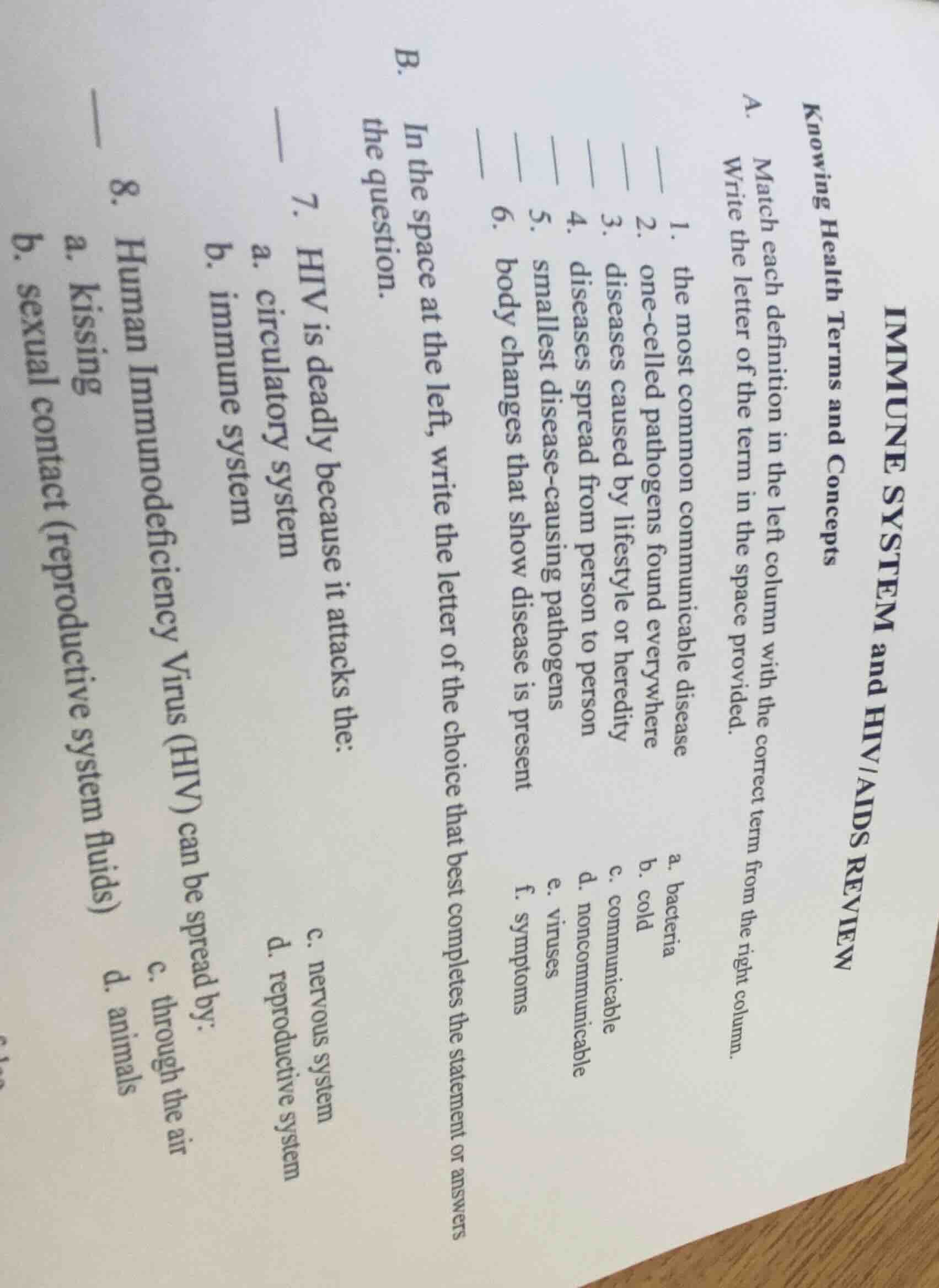
immune system and hiv/aids review
knowing health terms and concepts
a. match each definition in the left column with the correct term from the right column.
write the letter of the term in the space provided.
___ 1. the most common communicable disease a. bacteria
___ 2. one-celled pathogens found everywhere b. cold
___ 3. diseases caused by lifestyle or heredity c. communicable
___ 4. diseases spread from person to person d. noncommunicable
___ 5. smallest disease-causing pathogens e. viruses
___ 6. body changes that show disease is present f. symptoms
b. in the space at the left, write the letter of the choice that best completes the statement or answers
the question.
___ 7. hiv is deadly because it attacks the:
a. circulatory system c. nervous system
b. immune system d. reproductive system
___ 8. human immunodeficiency virus (hiv) can be spread by:
a. kissing c. through the air
b. sexual contact (reproductive system fluids) d. animals
Part A Matching:
- The cold is the most widespread communicable disease.
- Bacteria are single-celled pathogens found nearly everywhere.
- Noncommunicable diseases stem from lifestyle or heredity, not person-to-person spread.
- Communicable diseases are passed between people.
- Viruses are the smallest disease-causing pathogens.
- Symptoms are the body's observable changes indicating disease.
Part B Multiple Choice:
- HIV targets and damages the immune system, weakening the body's ability to fight infections, leading to life-threatening illness.
- HIV is primarily spread through contact with infected reproductive system fluids during sexual activity; casual contact like kissing, airborne transmission, or animal contact does not spread HIV.

Snap & solve any problem in the app
Get step-by-step solutions on Sovi AI
Photo-based solutions with guided steps
Explore more problems and detailed explanations
Part A
- b. cold
- a. bacteria
- d. noncommunicable
- c. communicable
- e. viruses
- f. symptoms
Part B
- b. immune system
- b. sexual contact (reproductive system fluids)