QUESTION IMAGE
Question
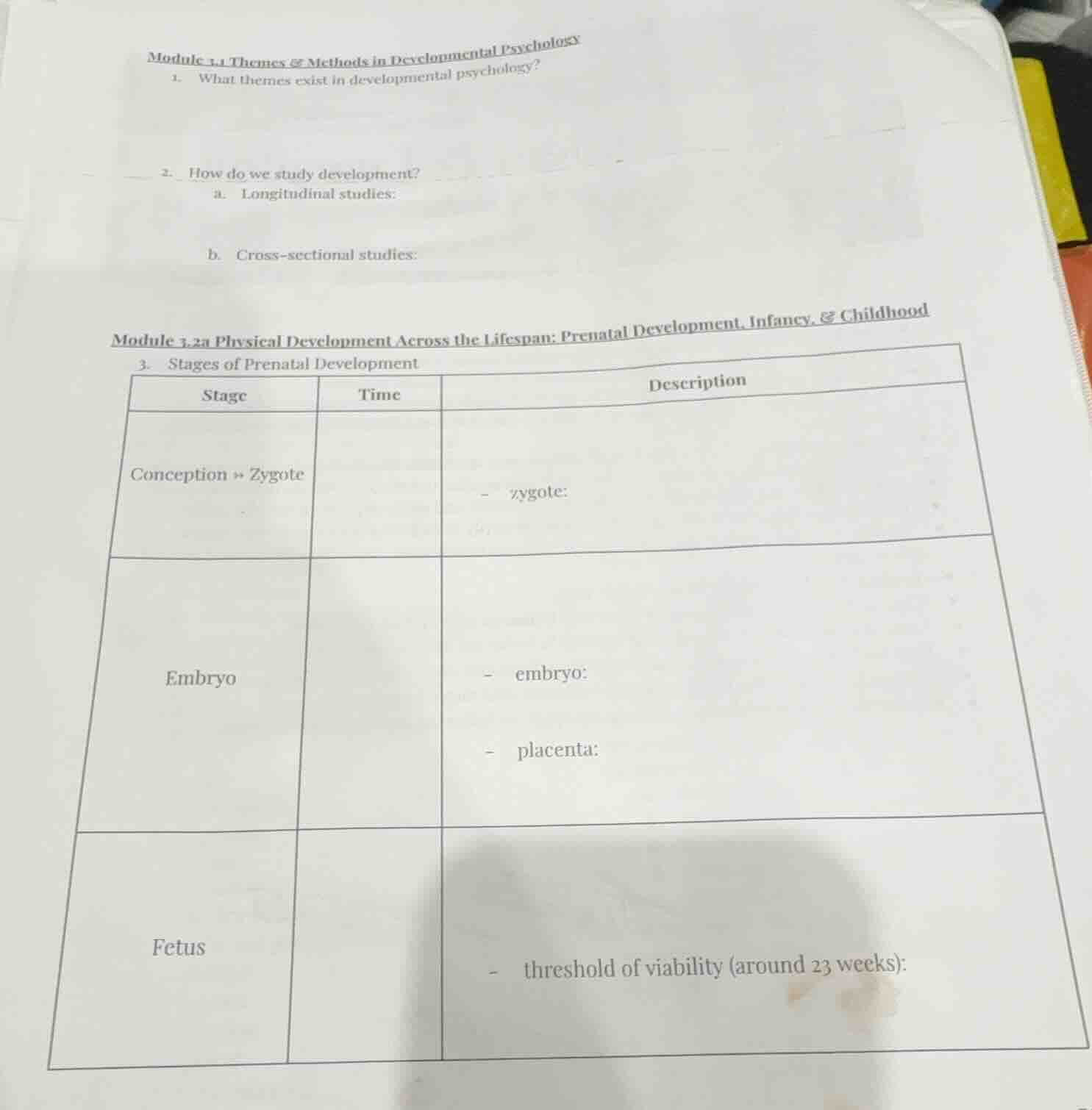
module 1.1 themes & methods in developmental psychology
- what themes exist in developmental psychology?
- how do we study development?
a. longitudinal studies:
b. cross - sectional studies:
module 1.2a physical development across the lifespan: prenatal development, infancy, & childhood
- stages of prenatal development
| stage | time | description |
|---|---|---|
| embryo | - embryo: |
- placenta: |
| fetus | - threshold of viability (around 23 weeks): |
Brief Explanations
- For the themes in developmental psychology, core established themes cover key developmental tensions and focuses.
- For research methods, longitudinal and cross-sectional are primary developmental study designs, each with distinct approaches.
- For prenatal stages, each stage has a defined timeline and key structural/functional traits.

Snap & solve any problem in the app
Get step-by-step solutions on Sovi AI
Photo-based solutions with guided steps
Explore more problems and detailed explanations
- What themes exist in developmental psychology?
- Nature vs. Nurture: Influence of genetics vs. environment
- Continuity vs. Discontinuity: Gradual vs. stage-based growth
- Stability vs. Change: Trait consistency over time
- Universal vs. Context-Specific Development: Shared vs. culture/context-unique growth
- Multidirectional Development: Some skills grow, others decline
- How do we study development?
a. Longitudinal studies:
- Follow a single group repeatedly over time to track individual development changes.
b. Cross-sectional studies:
- Compare different age groups at a single point in time to identify age-related differences.
- Stages of Prenatal Development
| Stage | Time | Description |
|---|---|---|
| Embryo | Weeks 3-8 (post-conception) | - embryo: The developing organism; major organs and bodily structures (nervous system, heart, limbs) begin to form.<br>- placenta: A specialized organ that forms to transfer nutrients, oxygen, and waste between mother and embryo. |
| Fetus | Weeks 9 to birth | - threshold of viability (around 23 weeks): The earliest point when the fetus has a chance of surviving outside the uterus, as key organs (lungs, brain) are developed enough to sustain basic life functions; the fetus continues to grow in size and refine organ function until birth. |