QUESTION IMAGE
Question
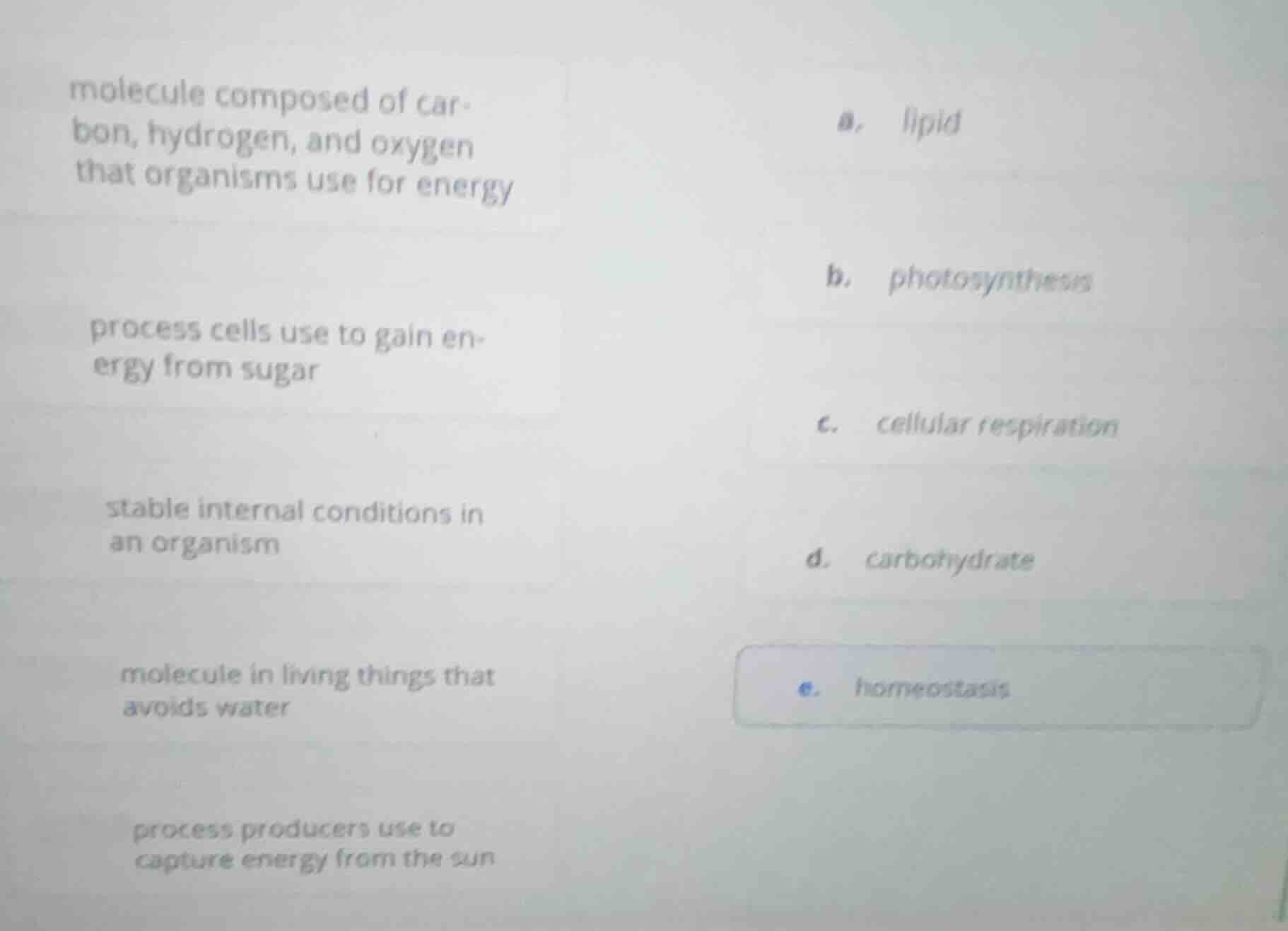
molecule composed of carbon, hydrogen, and oxygen that organisms use for energy
a. lipid
process cells use to gain energy from sugar
b. photosynthesis
stable internal conditions in an organism
c. cellular respiration
molecule in living things that avoids water
d. carbohydrate
process producers use to capture energy from the sun
e. homeostasis
Brief Explanations
- For "molecule composed of carbon, hydrogen, and oxygen that organisms use for energy", carbohydrates (d) fit as they are energy - giving molecules with C, H, O.
- For "process cells use to gain energy from sugar", cellular respiration (c) is the process where cells break down sugar for energy.
- For "stable internal conditions in an organism", homeostasis (e) is the term for this stable state.
- For "molecule in living things that avoids water", lipids (a) are hydrophobic (water - avoiding) molecules.
- For "process producers use to capture energy from the sun", photosynthesis (b) is how producers (like plants) capture solar energy.

Snap & solve any problem in the app
Get step-by-step solutions on Sovi AI
Photo-based solutions with guided steps
Explore more problems and detailed explanations
- "molecule composed of carbon, hydrogen, and oxygen that organisms use for energy" - d. carbohydrate
- "process cells use to gain energy from sugar" - c. cellular respiration
- "stable internal conditions in an organism" - e. homeostasis
- "molecule in living things that avoids water" - a. lipid
- "process producers use to capture energy from the sun" - b. photosynthesis