QUESTION IMAGE
Question
4 multiple choice 1 point
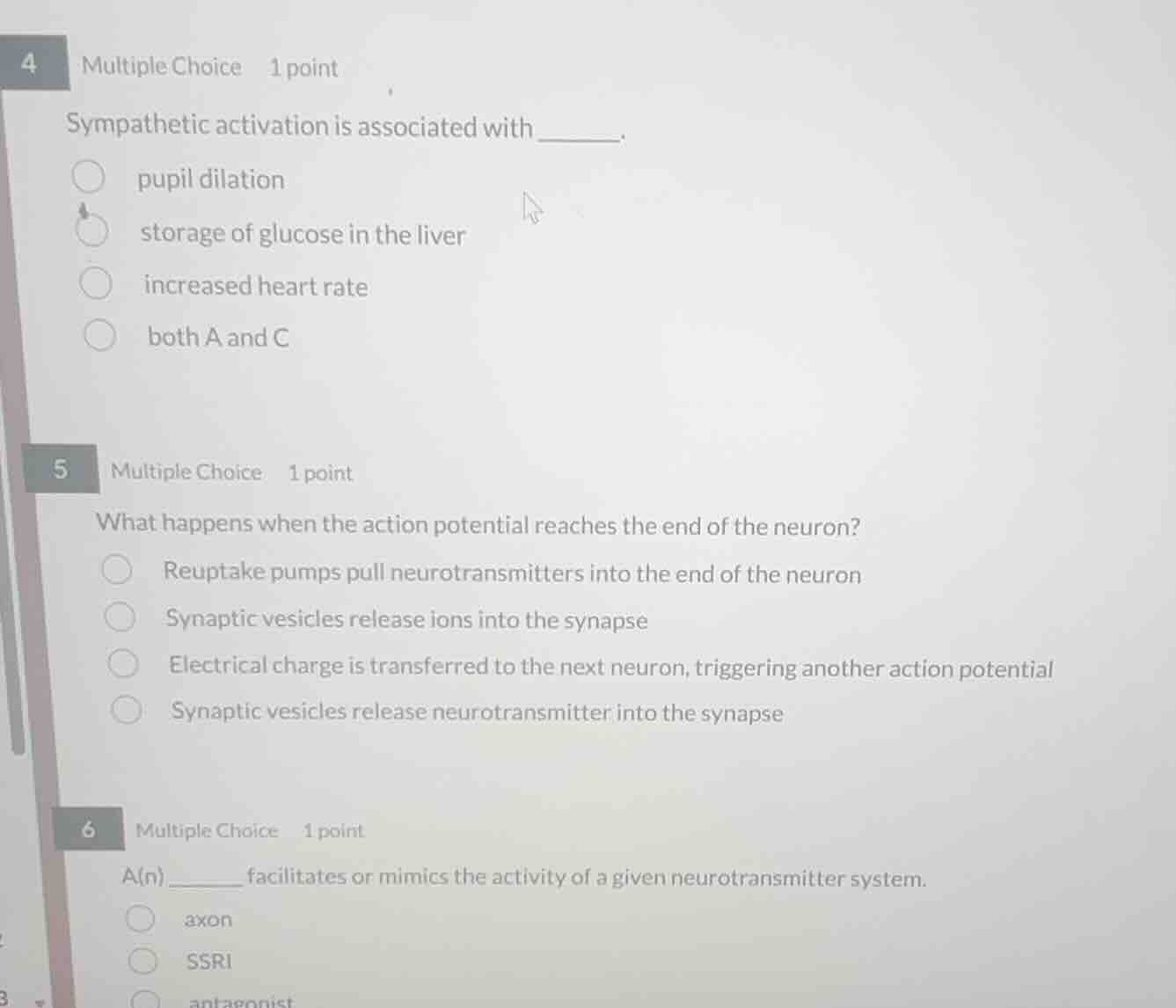
sympathetic activation is associated with ______.
○ pupil dilation
○ storage of glucose in the liver
○ increased heart rate
○ both a and c
5 multiple choice 1 point
what happens when the action potential reaches the end of the neuron?
○ reuptake pumps pull neurotransmitters into the end of the neuron
○ synaptic vesicles release ions into the synapse
○ electrical charge is transferred to the next neuron, triggering another action potential
○ synaptic vesicles release neurotransmitter into the synapse
6 multiple choice 1 point
a(n) ______ facilitates or mimics the activity of a given neurotransmitter system.
○ axon
○ ssri
○ antagonist
Question 4
The sympathetic nervous system's activation (fight - or - flight response) causes pupil dilation (to let in more light for better vision) and increased heart rate (to pump more blood). Storing glucose in the liver is a parasympathetic (rest - and - digest) function. So both A (pupil dilation) and C (increased heart rate) are associated with sympathetic activation.
When an action potential reaches the end of a neuron (axon terminal), synaptic vesicles fuse with the membrane and release neurotransmitters into the synapse. Reuptake happens after neurotransmitters are in the synapse, synaptic vesicles don't release ions, and electrical charge isn't directly transferred (neurotransmitters are the chemical messengers).
An agonist is a substance that facilitates or mimics the activity of a neurotransmitter system. An axon is a neuron structure, SSRI is a specific drug class, and antagonist opposes neurotransmitter activity.

Snap & solve any problem in the app
Get step-by-step solutions on Sovi AI
Photo-based solutions with guided steps
Explore more problems and detailed explanations
D. both A and C