QUESTION IMAGE
Question
name: shelon... period:
feedback loops: glucose and glucagon
the control of blood sugar (glucose) by insulin is a good example of a negative feedback mechanism. when blood sugar rises, receptors in the body sense a change. the pancreas secretes insulin into the blood to cause body cells to take up glucose. examine the graphic below to understand how this feedback loop works.
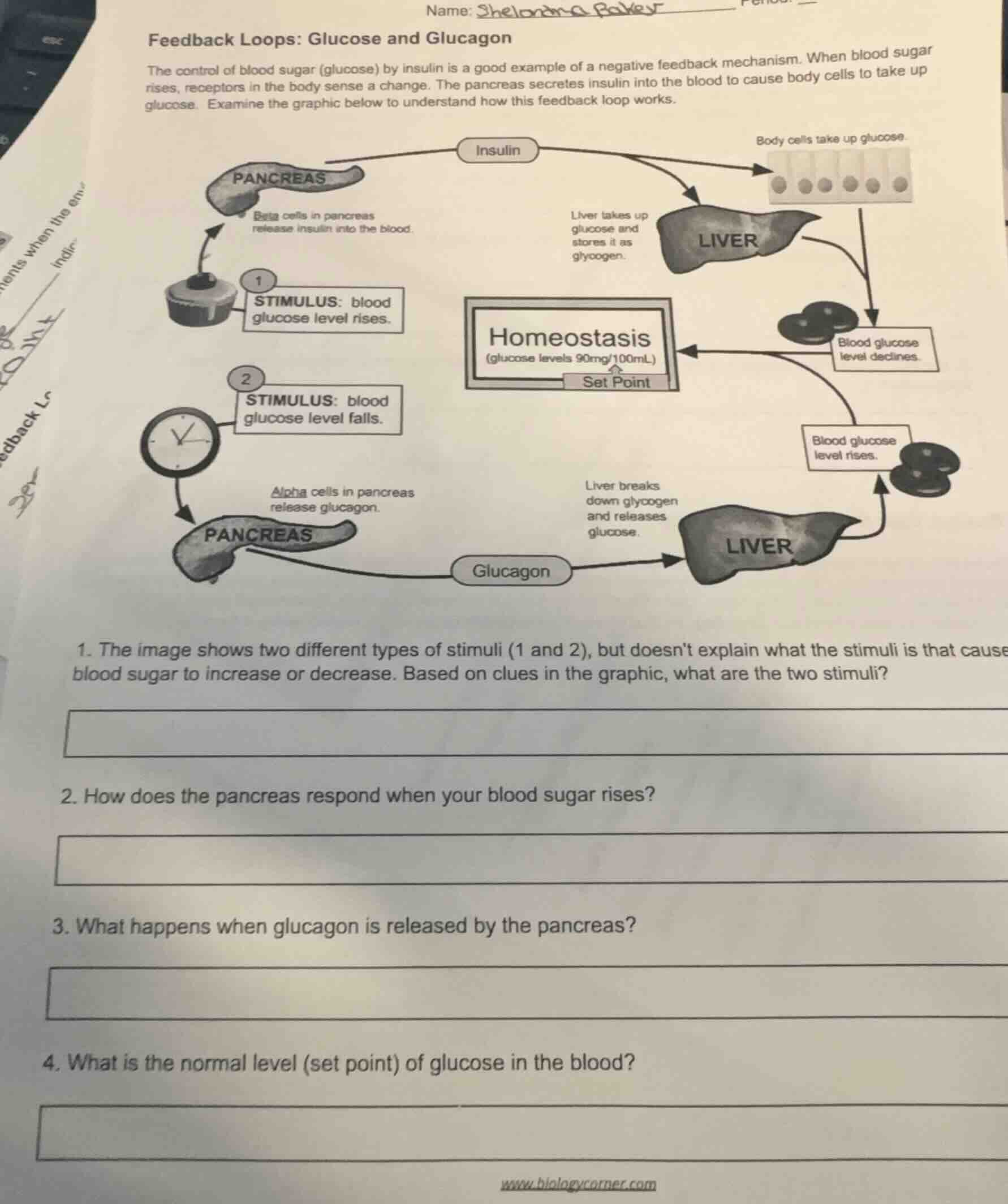
image of feedback loop involving pancreas, insulin, glucagon, liver, body cells, and homeostasis set point
- the image shows two different types of stimuli (1 and 2), but doesnt explain what the stimuli is that cause blood sugar to increase or decrease. based on clues in the graphic, what are the two stimuli?
blank line
- how does the pancreas respond when your blood sugar rises?
blank line
- what happens when glucagon is released by the pancreas?
blank line
- what is the normal level (set point) of glucose in the blood?
blank line
www.biologycorner.com
Question 1
To determine the stimuli, we analyze the graphic. Stimulus 1 (blood glucose rise) is likely from eating (e.g., the cake image), introducing glucose. Stimulus 2 (blood glucose fall) is likely from time - related factors like fasting (the clock image), as time without eating causes glucose to drop.
From the graphic, when blood sugar rises, the pancreas has beta cells that release insulin. Insulin's role is to make body cells (including the liver) take up glucose, reducing blood sugar.
The graphic shows that when glucagon is released by the pancreas (from alpha cells), it acts on the liver. The liver breaks down glycogen (stored glucose) and releases glucose into the blood, which increases the blood glucose level.

Snap & solve any problem in the app
Get step-by-step solutions on Sovi AI
Photo-based solutions with guided steps
Explore more problems and detailed explanations
Stimulus 1 (blood glucose level rises): Eating (e.g., consuming food like the cake shown, which introduces glucose into the body). Stimulus 2 (blood glucose level falls): Fasting or time - related lack of food intake (suggested by the clock, indicating time has passed since eating, leading to glucose being used and levels dropping).