QUESTION IMAGE
Question
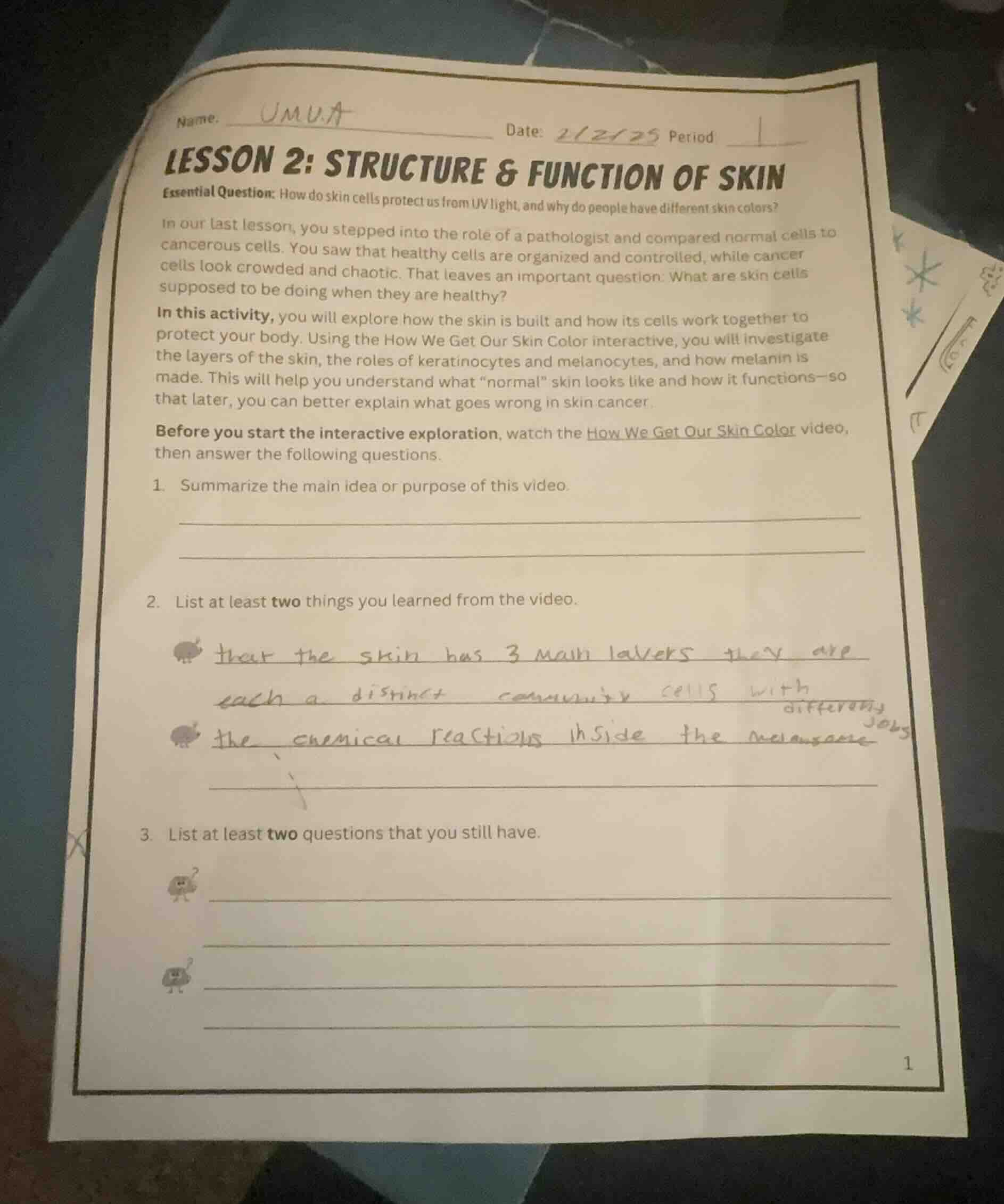
name: umua date: 2/21/25 period 1
lesson 2: structure & function of skin
essential question: how do skin cells protect us from uv light, and why do people have different skin colors?
in our last lesson, you stepped into the role of a pathologist and compared normal cells to cancerous cells. you saw that healthy cells are organized and controlled, while cancer cells look crowded and chaotic. that leaves an important question: what are skin cells supposed to be doing when they are healthy?
in this activity, you will explore how the skin is built and how its cells work together to protect your body. using the how we get our skin color interactive, you will investigate the layers of the skin, the roles of keratinocytes and melanocytes, and how melanin is made. this will help you understand what
ormal\ skin looks like and how it functions—so that later, you can better explain what goes wrong in skin cancer.
before you start the interactive exploration, watch the how we get our skin color video, then answer the following questions.
- summarize the main idea or purpose of this video.
- list at least two things you learned from the video.
- list at least two questions that you still have.
- The video's main goal is to explain the biological basis of skin color, including how skin cells (like melanocytes) produce melanin, how melanin protects against UV light, and the reasons for variation in human skin colors.
- Based on standard content for this topic, completed learned points and example remaining questions are provided.
- For question 3, the questions reflect common lingering inquiries after learning the basics of skin structure, function, and skin color.

Snap & solve any problem in the app
Get step-by-step solutions on Sovi AI
Photo-based solutions with guided steps
Explore more problems and detailed explanations
- The main purpose of the video is to explain how skin produces melanin to protect against UV radiation, and the biological reasons why humans have different skin colors.
- - The skin has 3 main layers, each a distinct community of cells with different jobs
- Melanocytes produce melanin, a pigment that absorbs UV light to protect skin cells' DNA
- - Does the amount of melanin produced change over a person's lifetime, and if so, what triggers those changes?
- Are there other factors besides UV exposure that affect how much melanin our skin makes?