QUESTION IMAGE
Question
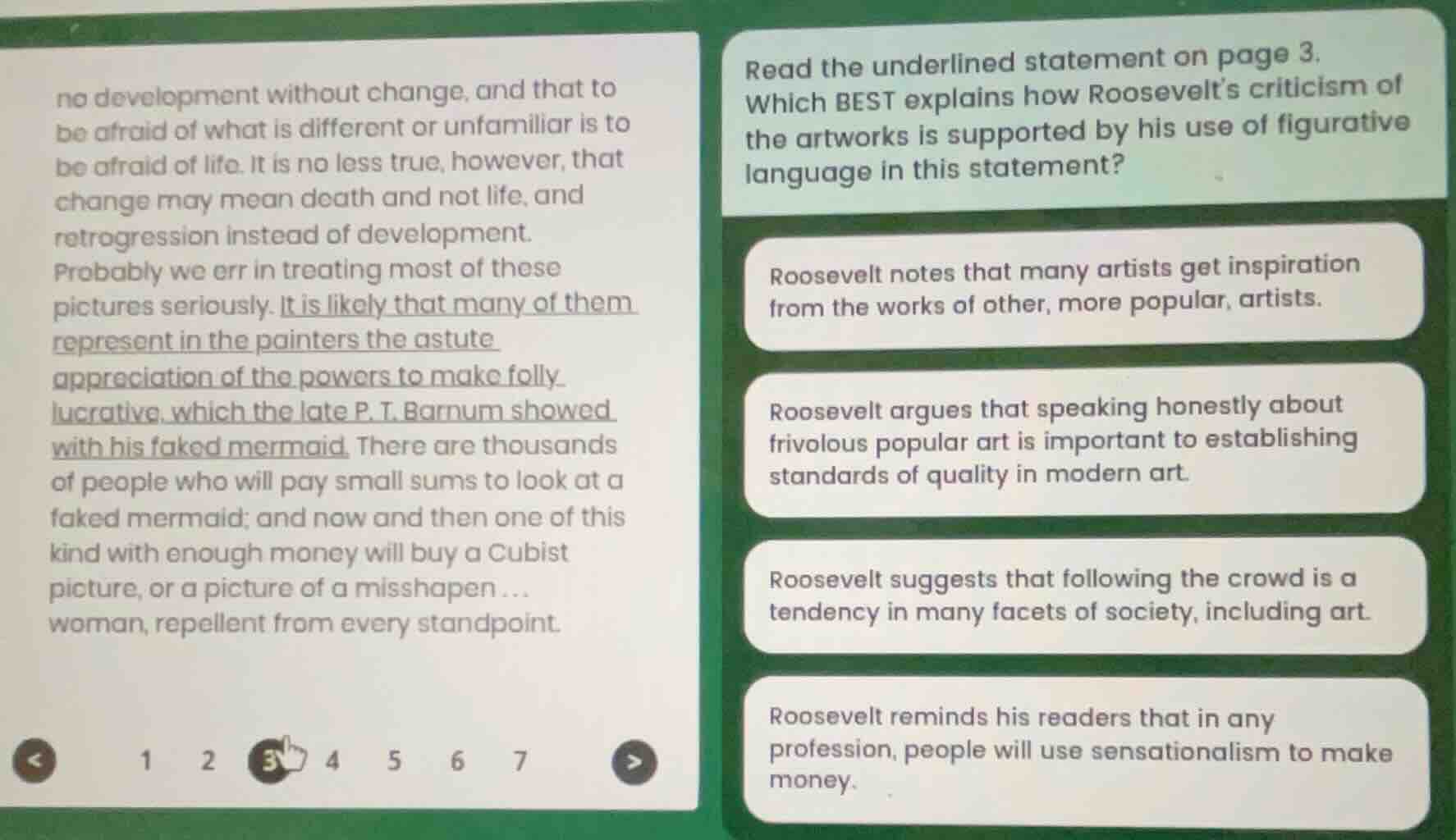
no development without change, and that to be afraid of what is different or unfamiliar is to be afraid of life. it is no less true, however, that change may mean death and not life, and retrogression instead of development. probably we err in treating most of these pictures seriously. it is likely that many of them represent in the painters the astute appreciation of the powers to make folly lucrative, which the late p. t. barnum showed with his faked mermaid. there are thousands of people who will pay small sums to look at a faked mermaid; and now and then one of this kind with enough money will buy a cubist picture, or a picture of a misshapen... woman, repellent from every standpoint. read the underlined statement on page 3. which best explains how roosevelt’s criticism of the artworks is supported by his use of figurative language in this statement? roosevelt notes that many artists get inspiration from the works of other, more popular, artists. roosevelt argues that speaking honestly about frivolous popular art is important to establishing standards of quality in modern art. roosevelt suggests that following the crowd is a tendency in many facets of society, including art. roosevelt reminds his readers that in any profession, people will use sensationalism to make money.
Roosevelt uses the figurative reference to P.T. Barnum's faked mermaid—an example of using sensational, silly content to profit—to compare to the artworks he criticizes. This links the art to the idea of using sensationalism for financial gain, matching the last option. The other options do not connect to the figurative language (the faked mermaid example) in the underlined text.

Snap & solve any problem in the app
Get step-by-step solutions on Sovi AI
Photo-based solutions with guided steps
Explore more problems and detailed explanations
Roosevelt reminds his readers that in any profession, people will use sensationalism to make money.