QUESTION IMAGE
Question
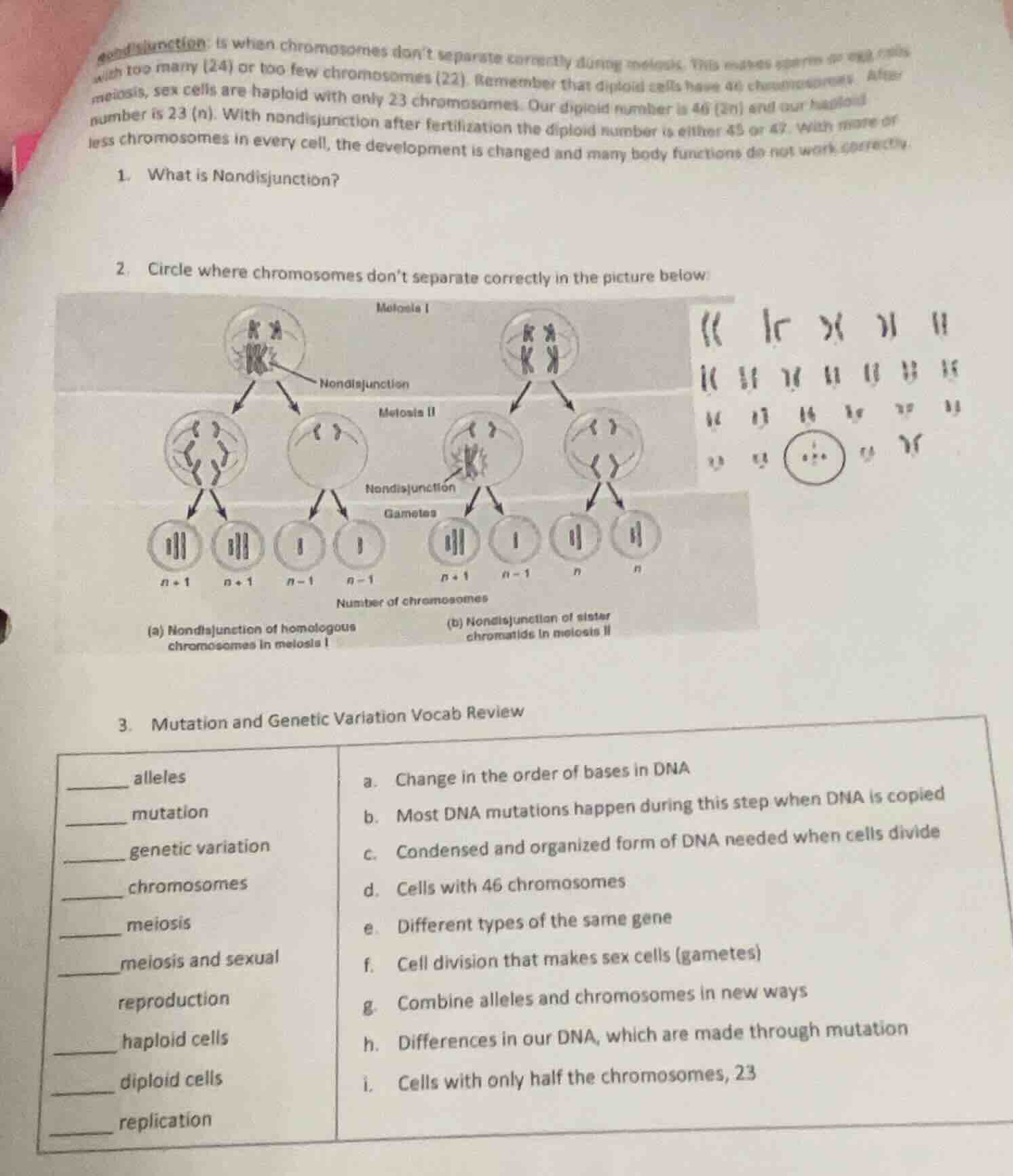
nondisjunction: is when chromosomes dont separate correctly during meiosis. this makes sperm or egg cells with too many (24) or too few chromosomes (22). remember that diploid cells have 46 chromosomes. after meiosis, sex cells are haploid with only 23 chromosomes. our diploid number is 46 (2n) and our haploid number is 23 (n). with nondisjunction after fertilization the diploid number is either 45 or 47. with more or less chromosomes in every cell, the development is changed and many body functions do not work correctly.1. what is nondisjunction?2. circle where chromosomes dont separate correctly in the picture below:meiosis inondisjunctionmeiosis iinondisjunctiongametes$n+1$ $n+1$ $n-1$ $n-1$ $n+1$ $n-1$ $n$ $n$number of chromosomes(a) nondisjunction of homologous chromosomes in meiosis i(b) nondisjunction of sister chromatids in meiosis ii3. mutation and genetic variation vocab review___ alleles_ mutation_ genetic variation_ chromosomes_ meiosis_meiosis and sexual reproduction_ haploid cells_ diploid cells___ replicationa. change in the order of bases in dnab. most dna mutations happen during this step when dna is copiedc. condensed and organized form of dna needed when cells divided. cells with 46 chromosomese. different types of the same genef. cell division that makes sex cells (gametes)g. combine alleles and chromosomes in new waysh. differences in our dna, which are made through mutationi. cells with only half the chromosomes, 23
- Se basa en la definición proporcionada en el texto superior de la hoja.
- Se identifican los puntos donde las cromátidas o cromosomas homólogos no se separan como corresponde en las fases de la meiosis.
- Se empareja cada término de vocabulario con su definición correcta según conceptos básicos de genética y biología celular.

Snap & solve any problem in the app
Get step-by-step solutions on Sovi AI
Photo-based solutions with guided steps
Explore more problems and detailed explanations
- Nondisjunction is the failure of chromosomes to separate correctly during meiosis, resulting in sex cells (gametes) with too many (24) or too few (22) chromosomes. After fertilization, this leads to a diploid number of 45 or 47, altering development and body function.
- - En la parte (a) (Meiosis I): Circuler la flecha etiquetada "Nondisjunction" que apunta a la separación incorrecta de cromosomas homólogos.
- En la parte (b) (Meiosis II): Circuler la flecha etiquetada "Nondisjunction" que apunta a la separación incorrecta de cromátidas hermanas.
- - alleles: e. Different types of the same gene
- mutation: a. Change in the order of bases in DNA
- genetic variation: h. Differences in our DNA, which are made through mutation
- chromosomes: c. Condensed and organized form of DNA needed when cells divide
- meiosis: f. Cell division that makes sex cells (gametes)
- meiosis and sexual reproduction: g. Combine alleles and chromosomes in new ways
- haploid cells: i. Cells with only half the chromosomes, 23
- diploid cells: d. Cells with 46 chromosomes
- replication: b. Most DNA mutations happen during this step when DNA is copied