QUESTION IMAGE
Question
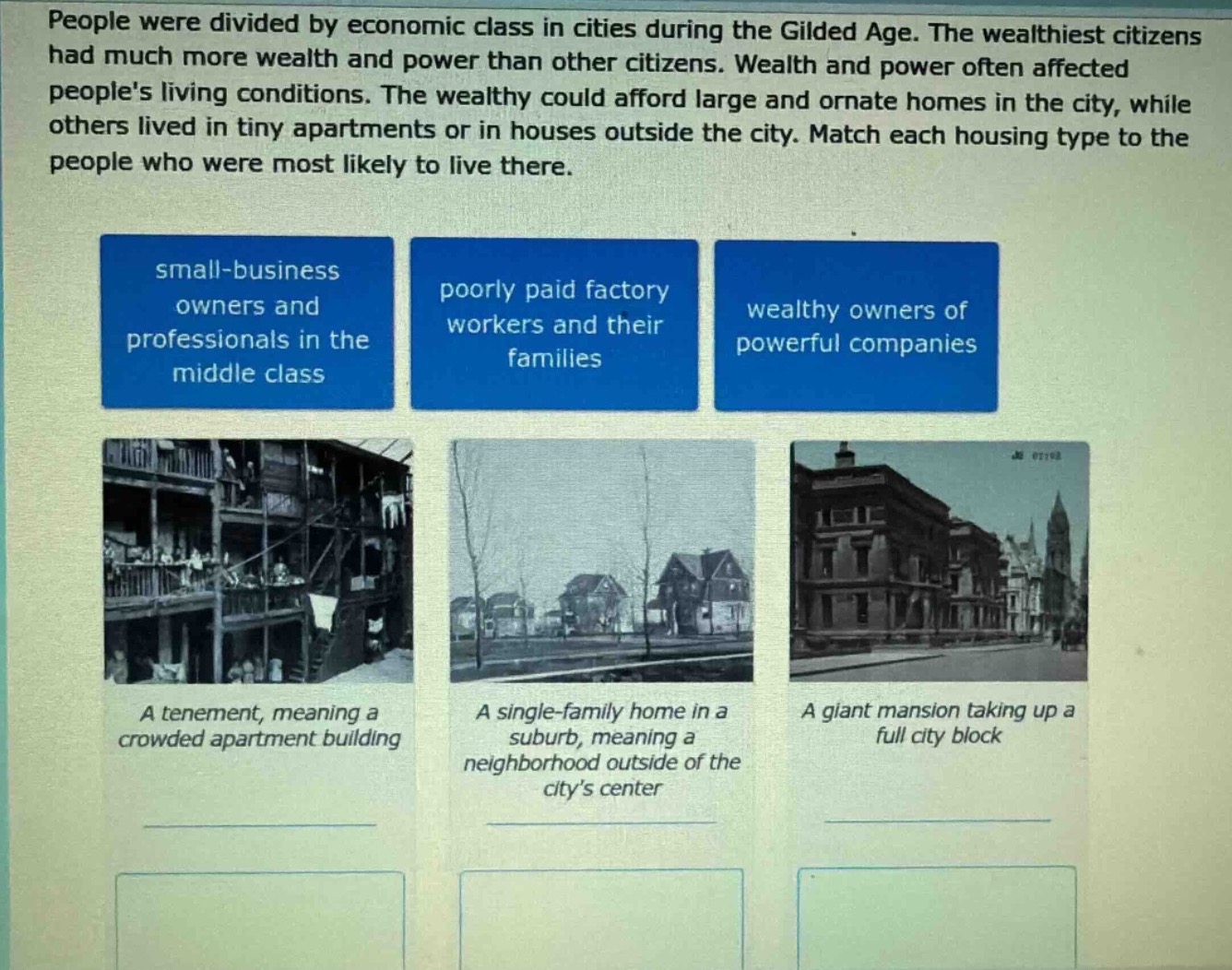
people were divided by economic class in cities during the gilded age. the wealthiest citizens had much more wealth and power than other citizens. wealth and power often affected peoples living conditions. the wealthy could afford large and ornate homes in the city, while others lived in tiny apartments or in houses outside the city. match each housing type to the people who were most likely to live there.
small - business owners and professionals in the middle class
poorly paid factory workers and their families
wealthy owners of powerful companies
a tenement, meaning a crowded apartment building
a single - family home in a suburb, meaning a neighborhood outside of the citys center
a giant mansion taking up a full city block
- For the tenement (crowded apartment building): Poorly paid factory workers and their families would live here as they couldn't afford better housing due to low income.
- For the single - family home in the suburb: Small - business owners and professionals in the middle class could afford to live in a suburban single - family home, as it's a step up from tenements but not as luxurious as mansions.
- For the giant mansion: Wealthy owners of powerful companies had the wealth and power to afford large, ornate homes like a giant mansion.

Snap & solve any problem in the app
Get step-by-step solutions on Sovi AI
Photo-based solutions with guided steps
Explore more problems and detailed explanations
- A tenement, meaning a crowded apartment building: poorly paid factory workers and their families
- A single - family home in a suburb, meaning a neighborhood outside of the city’s center: small - business owners and professionals in the middle class
- A giant mansion taking up a full city block: wealthy owners of powerful companies