QUESTION IMAGE
Question
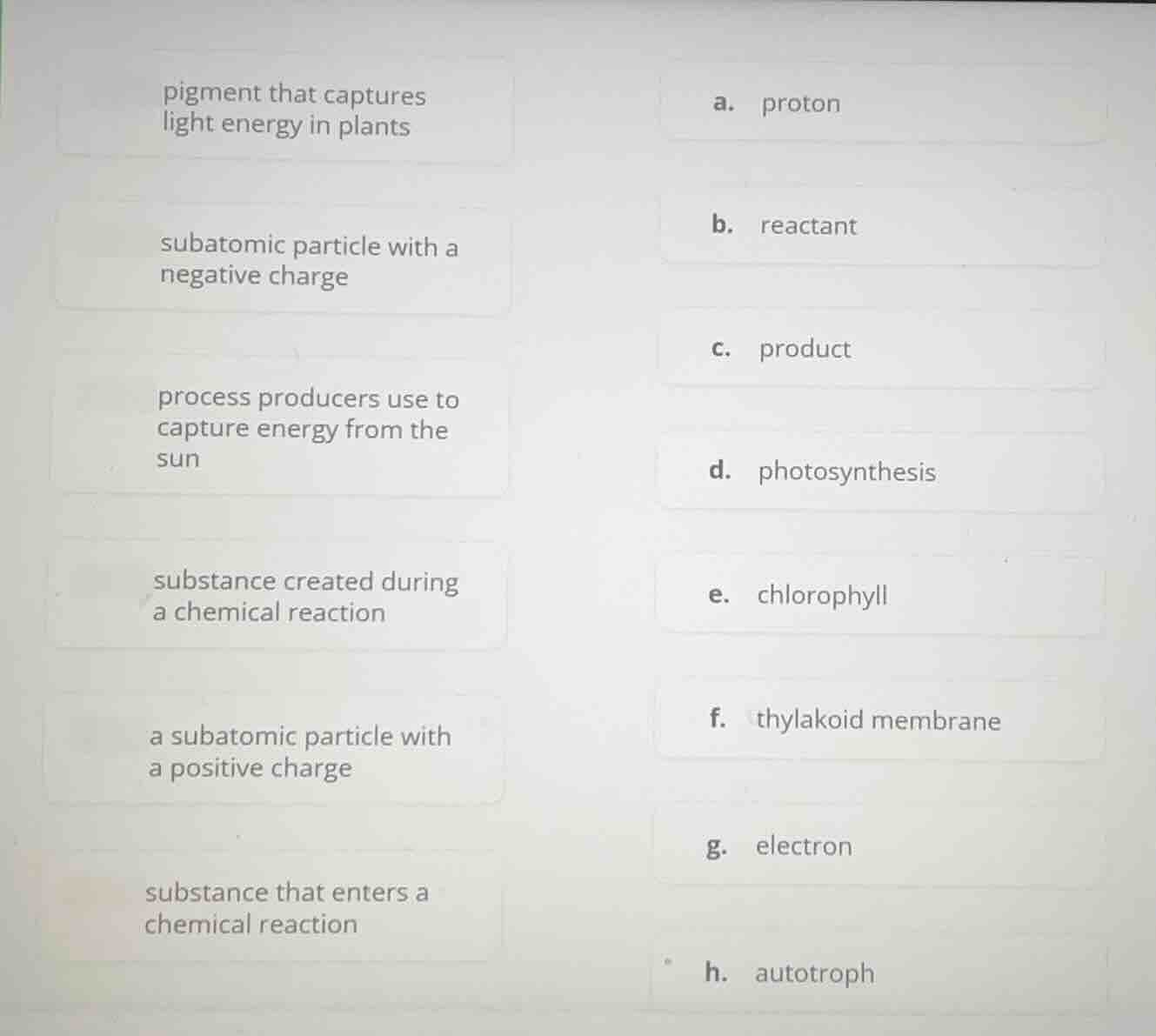
pigment that captures light energy in plants
a. proton
subatomic particle with a negative charge
b. reactant
process producers use to capture energy from the sun
c. product
substance created during a chemical reaction
d. photosynthesis
a subatomic particle with a positive charge
e. chlorophyll
substance that enters a chemical reaction
f. thylakoid membrane
g. electron
h. autotroph
Brief Explanations
Each left-hand definition is matched to the correct term from the right-hand column based on biological and chemical definitions:
- Chlorophyll is the plant pigment that absorbs light energy for photosynthesis.
- An electron is a subatomic particle with a negative electrical charge.
- Photosynthesis is the process where producers (plants/autotrophs) capture sunlight energy to make food.
- A product is the substance formed as the end result of a chemical reaction.
- A proton is a subatomic particle with a positive electrical charge.
- A reactant is the substance that is used at the start of a chemical reaction.

Snap & solve any problem in the app
Get step-by-step solutions on Sovi AI
Photo-based solutions with guided steps
Explore more problems and detailed explanations
- pigment that captures light energy in plants: e. chlorophyll
- subatomic particle with a negative charge: g. electron
- process producers use to capture energy from the sun: d. photosynthesis
- substance created during a chemical reaction: c. product
- a subatomic particle with a positive charge: a. proton
- substance that enters a chemical reaction: b. reactant