QUESTION IMAGE
Question
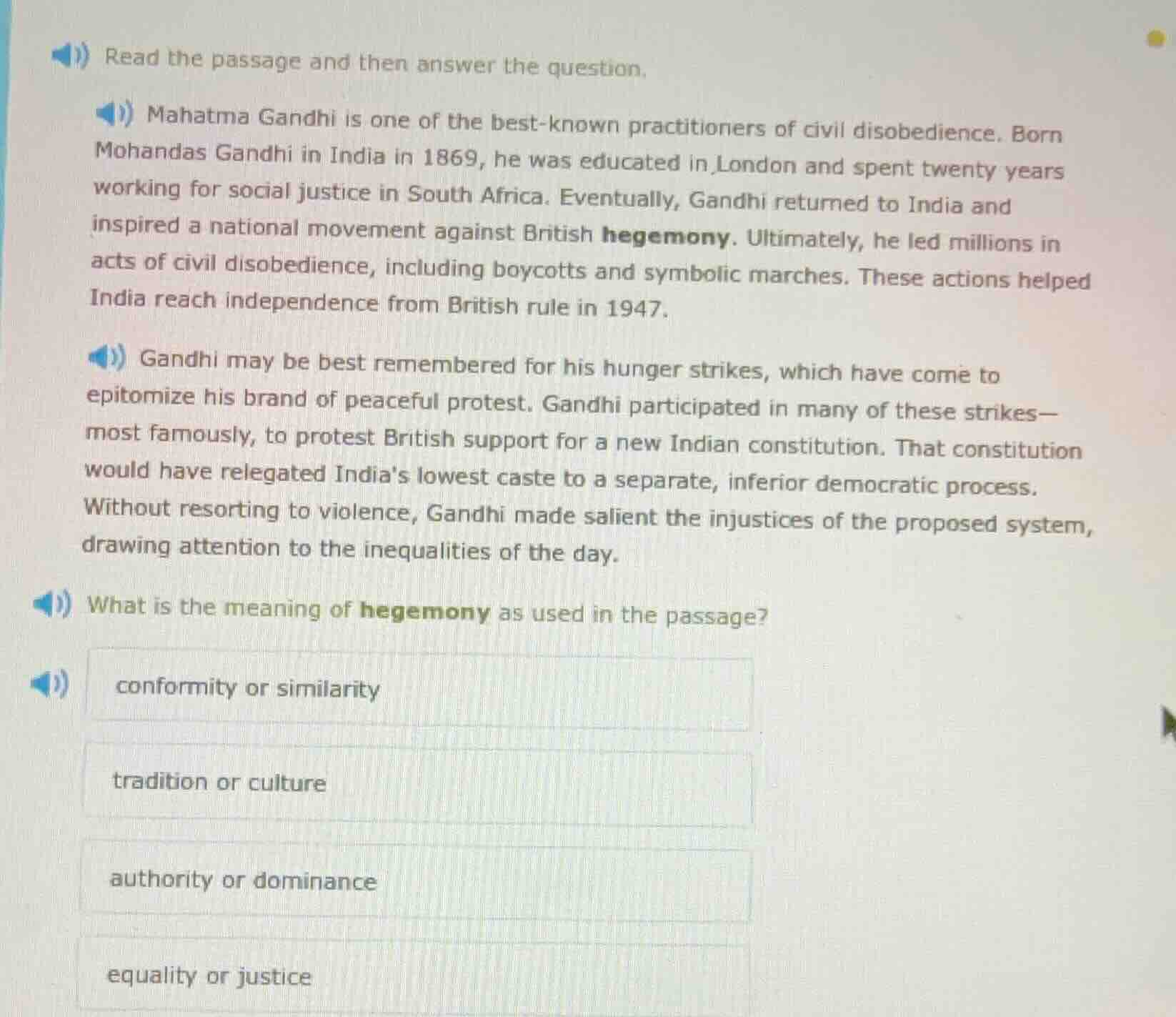
read the passage and then answer the question. mahatma gandhi is one of the best - known practitioners of civil disobedience. born mohandas gandhi in india in 1869, he was educated in london and spent twenty years working for social justice in south africa. eventually, gandhi returned to india and inspired a national movement against british hegemony. ultimately, he led millions in acts of civil disobedience, including boycotts and symbolic marches. these actions helped india reach independence from british rule in 1947. gandhi may be best remembered for his hunger strikes, which have come to epitomize his brand of peaceful protest. gandhi participated in many of these strikes—most famously, to protest british support for a new indian constitution. that constitution would have relegated indias lowest caste to a separate, inferior democratic process. without resorting to violence, gandhi made salient the injustices of the proposed system, drawing attention to the inequalities of the day. what is the meaning of hegemony as used in the passage? conformity or similarity tradition or culture authority or dominance equality or justice
The passage states Gandhi led a movement against British hegemony, which ended with India gaining independence from British rule. This context shows hegemony refers to the British's controlling power over India. Among the options, "authority or dominance" matches this controlling rule.

Snap & solve any problem in the app
Get step-by-step solutions on Sovi AI
Photo-based solutions with guided steps
Explore more problems and detailed explanations
authority or dominance