QUESTION IMAGE
Question
understanding random sampling
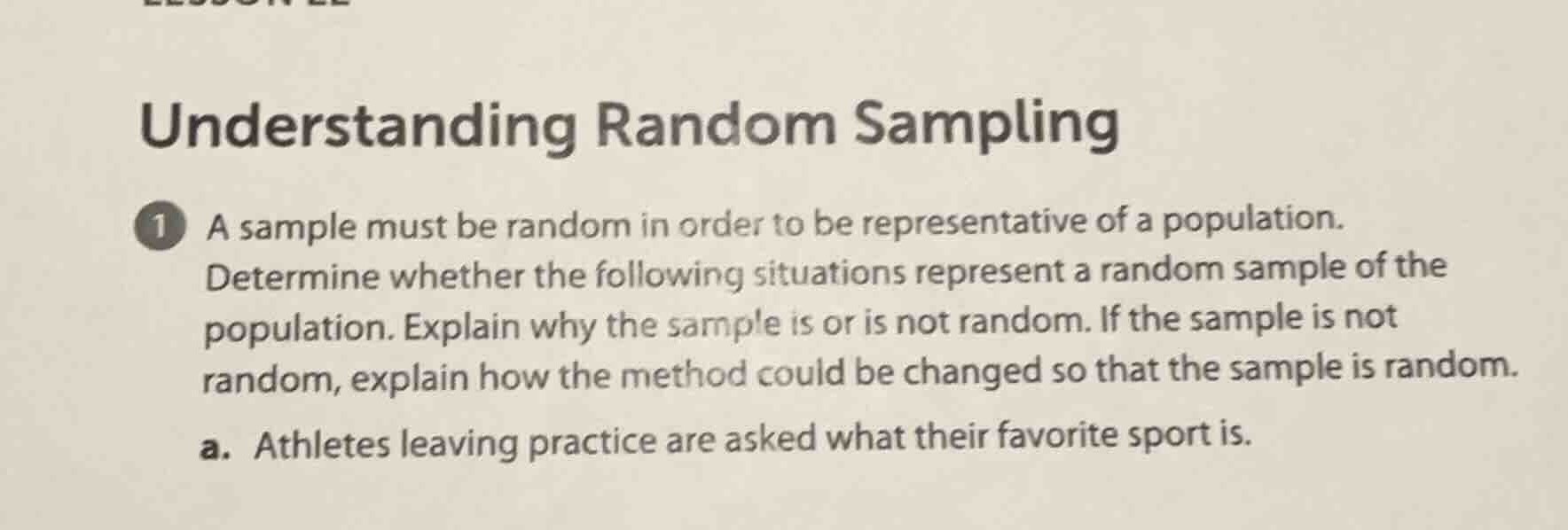
1 a sample must be random in order to be representative of a population. determine whether the following situations represent a random sample of the population. explain why the sample is or is not random. if the sample is not random, explain how the method could be changed so that the sample is random.
a. athletes leaving practice are asked what their favorite sport is.
Brief Explanations
- Is it a random sample? No.
- Why? The sample consists of athletes leaving practice. This group is not representative of all athletes (or the relevant population of athletes) because it only includes those who have just finished practice. Athletes who don't attend practice, or attend different practices, or have different schedules are excluded. There's a bias here—these athletes might have different preferences related to their practice (e.g., they might favor the sport they just practiced).
- How to make it random? To make it random, we could use a method like assigning each athlete in the entire population (e.g., all athletes in a school, team, or league) a unique number and then using a random number generator to select a sample. Or we could randomly select names from a comprehensive list of all athletes. This way, every athlete has an equal chance of being selected, regardless of their practice schedule or attendance.

Snap & solve any problem in the app
Get step-by-step solutions on Sovi AI
Photo-based solutions with guided steps
Explore more problems and detailed explanations
- Is the sample random? No.
- Why? The sample includes only athletes leaving practice, excluding others (e.g., those not at this practice, with different schedules). This creates bias (e.g., they may favor their practiced sport).
- How to fix it? Use a random selection method (e.g., random number generator, drawing names from a full list of all athletes) to ensure every athlete has an equal chance of being chosen.