QUESTION IMAGE
Question
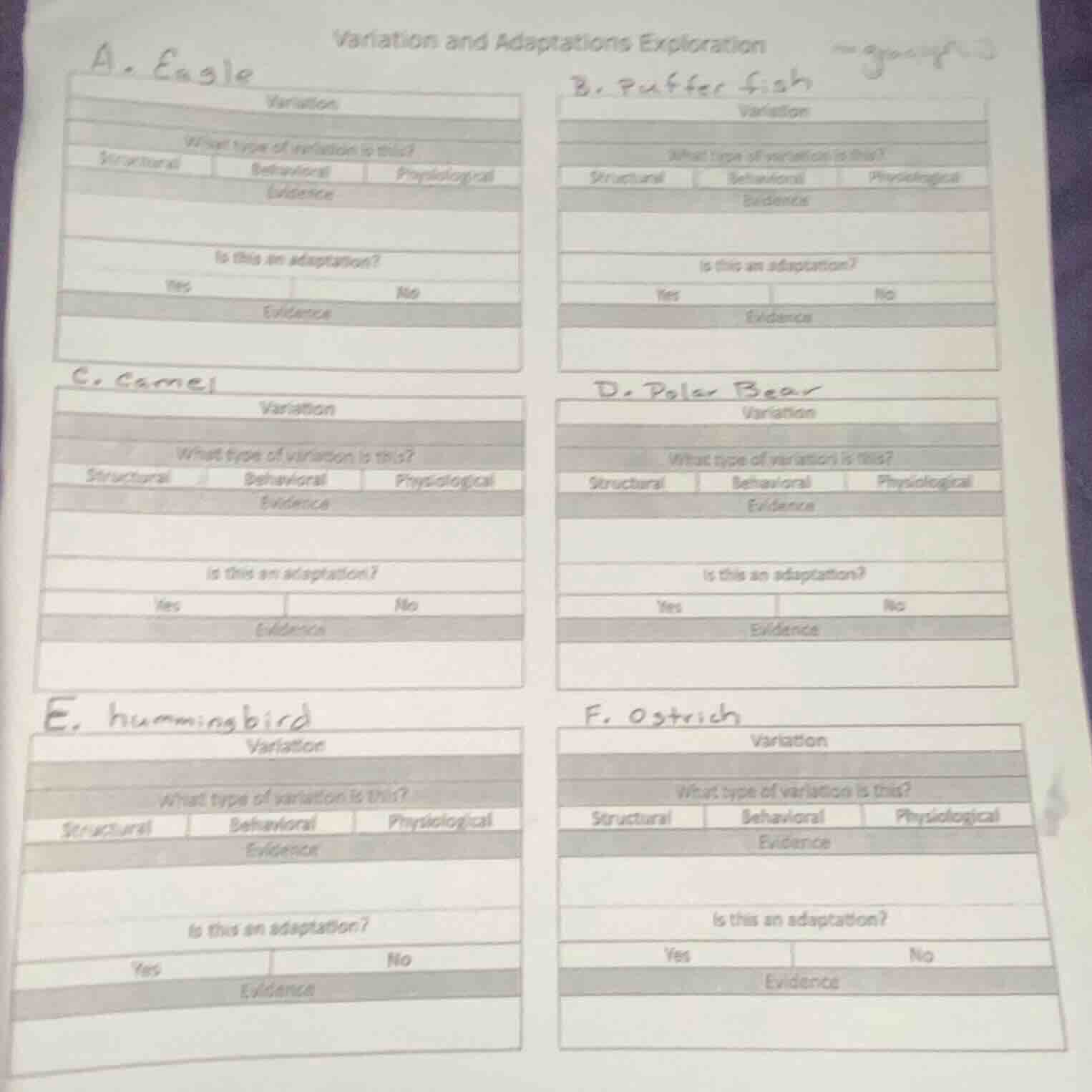
variation and adaptations exploration
a. eagle
variation
what type of variation is this?
structural behavioral physiological
evidence
is this an adaptation?
yes no
evidence
b. puffer fish
variation
what type of variation is this?
structural behavioral physiological
evidence
is this an adaptation?
yes no
evidence
c. camel
variation
what type of variation is this?
structural behavioral physiological
evidence
is this an adaptation?
yes no
evidence
d. polar bear
variation
what type of variation is this?
structural behavioral physiological
evidence
is this an adaptation?
yes no
evidence
e. hummingbird
variation
what type of variation is this?
structural behavioral physiological
evidence
is this an adaptation?
yes no
evidence
f. ostrich
variation
what type of variation is this?
structural behavioral physiological
evidence
is this an adaptation?
yes no
evidence
Each entry identifies a key variation for the animal, classifies its type, confirms it as an adaptation, and provides supporting evidence tied to survival in their habitat.

Snap & solve any problem in the app
Get step-by-step solutions on Sovi AI
Photo-based solutions with guided steps
Explore more problems and detailed explanations
A. Eagle
- Variation: Sharp, curved talons and hooked beak
- What type of variation is this?: Structural
- Evidence: Physical body features for hunting
- Is this an adaptation?: Yes
- Evidence: Talons grip prey; beak tears meat, aiding survival.
B. Puffer Fish
- Variation: Ability to inflate body with water/air
- What type of variation is this?: Physiological
- Evidence: Internal bodily function for defense
- Is this an adaptation?: Yes
- Evidence: Inflation deters predators, reducing risk of being eaten.
C. Camel
- Variation: Humps storing fat reserves
- What type of variation is this?: Structural
- Evidence: Physical body feature for energy storage
- Is this an adaptation?: Yes
- Evidence: Fat converts to water/energy in arid desert environments.
D. Polar Bear
- Variation: Thick white fur and blubber layer
- What type of variation is this?: Structural
- Evidence: Physical body features for insulation/camouflage
- Is this an adaptation?: Yes
- Evidence: Fur camouflages in snow; blubber insulates from cold.
E. Hummingbird
- Variation: Ability to hover and fly backward
- What type of variation is this?: Behavioral
- Evidence: Unique flight movement pattern
- Is this an adaptation?: Yes
- Evidence: Hovering allows access to nectar from flowers for food.
F. Ostrich
- Variation: Powerful long legs for running at high speeds
- What type of variation is this?: Structural
- Evidence: Physical limb feature for locomotion
- Is this an adaptation?: Yes
- Evidence: High speed helps escape predators in open savannas.