QUESTION IMAGE
Question
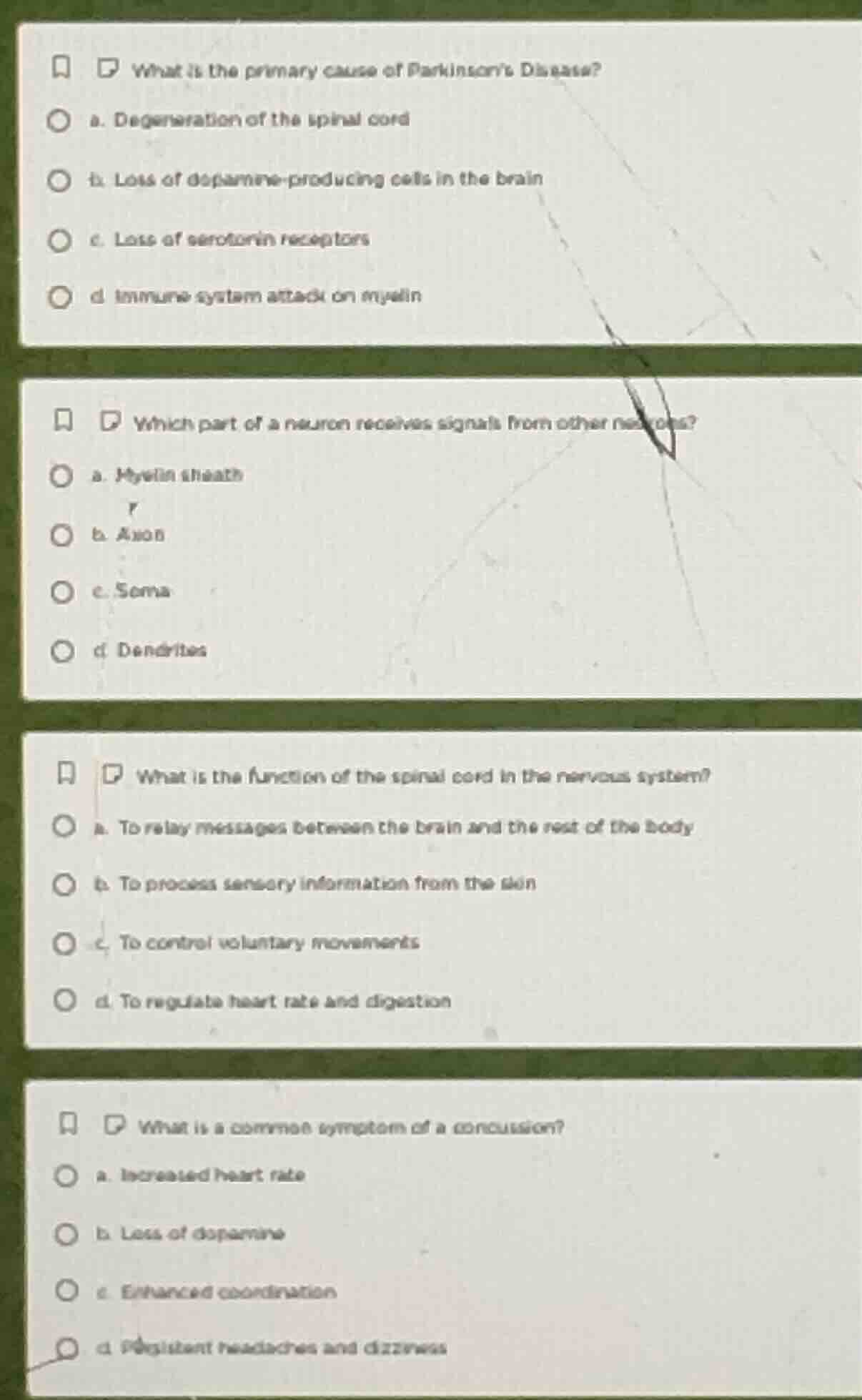
what is the primary cause of parkinson’s disease?
a. degeneration of the spinal cord
b. loss of dopamine - producing cells in the brain
c. loss of serotonin receptors
d. immune system attack on myelin
which part of a neuron receives signals from other neurons?
a. myelin sheath
b. axon
c. soma
d. dendrites
what is the function of the spinal cord in the nervous system?
a. to relay messages between the brain and the rest of the body
b. to process sensory information from the skin
c. to control voluntary movements
d. to regulate heart rate and digestion
what is a common symptom of a concussion?
a. increased heart rate
b. loss of dopamine
c. enhanced coordination
d. persistent headaches and dizziness
- Parkinson's Disease is linked to the loss of dopamine-producing cells in the substantia nigra region of the brain, which disrupts motor function.
- Dendrites are the branched extensions of a neuron that receive chemical signals from other neurons and convert them into electrical signals.
- The spinal cord acts as a communication pathway, relaying motor commands from the brain to the body and sensory information from the body to the brain.
- Concussions, a type of mild traumatic brain injury, commonly cause persistent headaches, dizziness, and other neurological symptoms due to temporary brain dysfunction.

Snap & solve any problem in the app
Get step-by-step solutions on Sovi AI
Photo-based solutions with guided steps
Explore more problems and detailed explanations
- b. Loss of dopamine-producing cells in the brain
- d. Dendrites
- a. To relay messages between the brain and the rest of the body
- d. Persistent headaches and dizziness