QUESTION IMAGE
Question
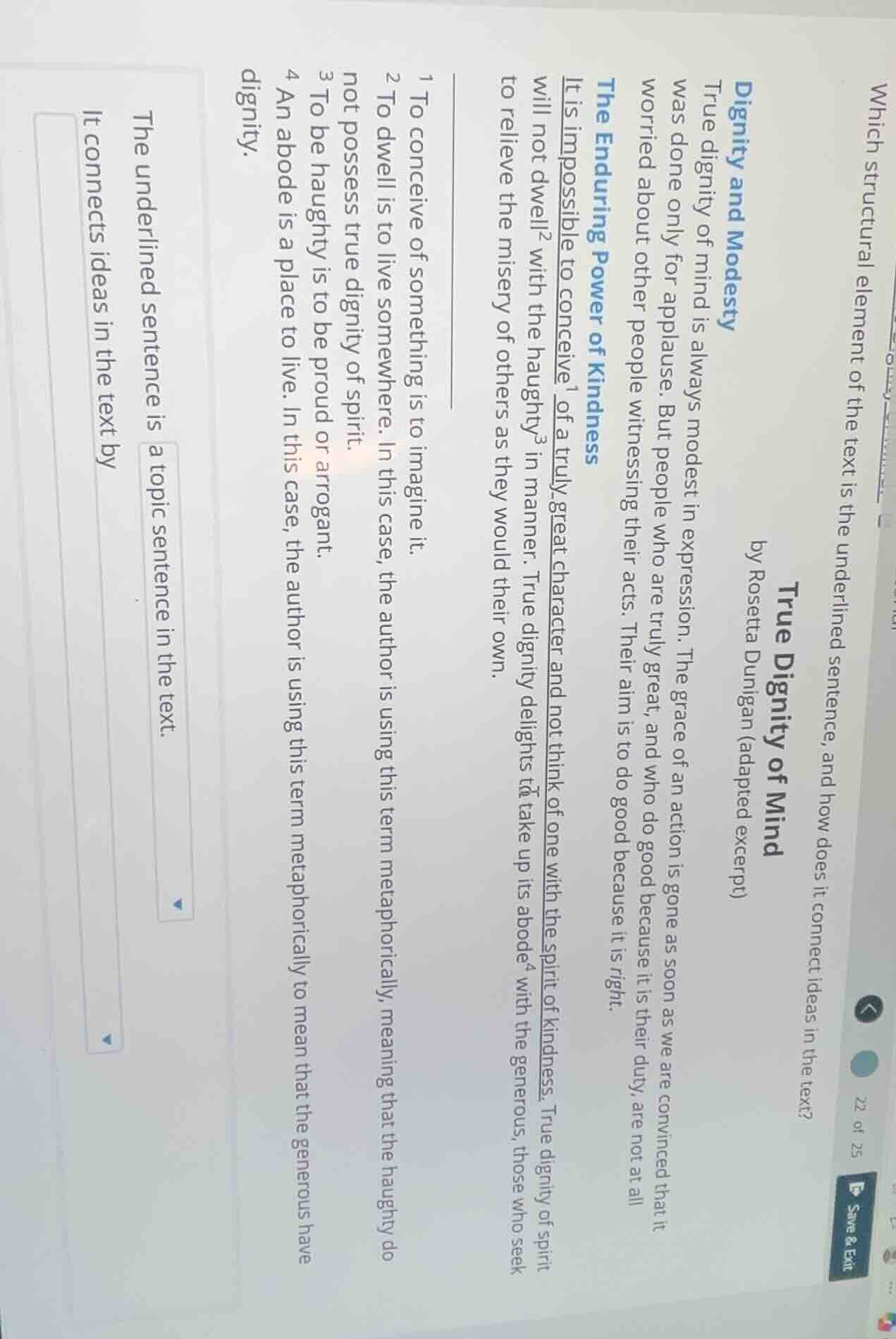
which structural element of the text is the underlined sentence, and how does it connect ideas in the text?
true dignity of mind
by rosetta dunigan (adapted excerpt)
dignity and modesty
true dignity of mind is always modest in expression. the grace of an action is gone as soon as we are convinced that it was done only for applause. but people who are truly great, and who do good because it is their duty, are not at all worried about other people witnessing their acts. their aim is to do good because it is right.
the enduring power of kindness
it is impossible to conceive¹ of a truly great character and not think of one with the spirit of kindness. true dignity of spirit will not dwell² with the haughty³ in manner. true dignity delights to take up its abode⁴ with the generous, those who seek to relieve the misery of others as they would their own.
1 to conceive of something is to imagine it.
2 to dwell is to live somewhere. in this case, the author is using this term metaphorically, meaning that the haughty do not possess true dignity of spirit.
3 to be haughty is to be proud or arrogant.
4 an abode is a place to live. in this case, the author is using this term metaphorically to mean that the generous have dignity.
the underlined sentence is a topic sentence in the text.
it connects ideas in the text by
The underlined sentence is a topic sentence that frames the core claim about true greatness and kindness. It first contrasts the impossibility of pairing arrogance with true greatness, then links true dignity to kindness. The rest of the text expands on this: it elaborates that truly great people act out of duty (not for praise) and live with kindness instead of haughtiness, directly supporting and expanding the ideas introduced in the underlined topic sentence.

Snap & solve any problem in the app
Get step-by-step solutions on Sovi AI
Photo-based solutions with guided steps
Explore more problems and detailed explanations
The underlined sentence is a topic sentence in the text.
It connects ideas in the text by stating the central claim that true greatness is tied to kindness (not arrogance), then the rest of the text elaborates on this: it explains that truly dignified people act out of duty rather than seeking applause, and clarifies that true dignity resides in kind, humble conduct rather than haughty behavior, all expanding on the core idea from the topic sentence.