QUESTION IMAGE
Question
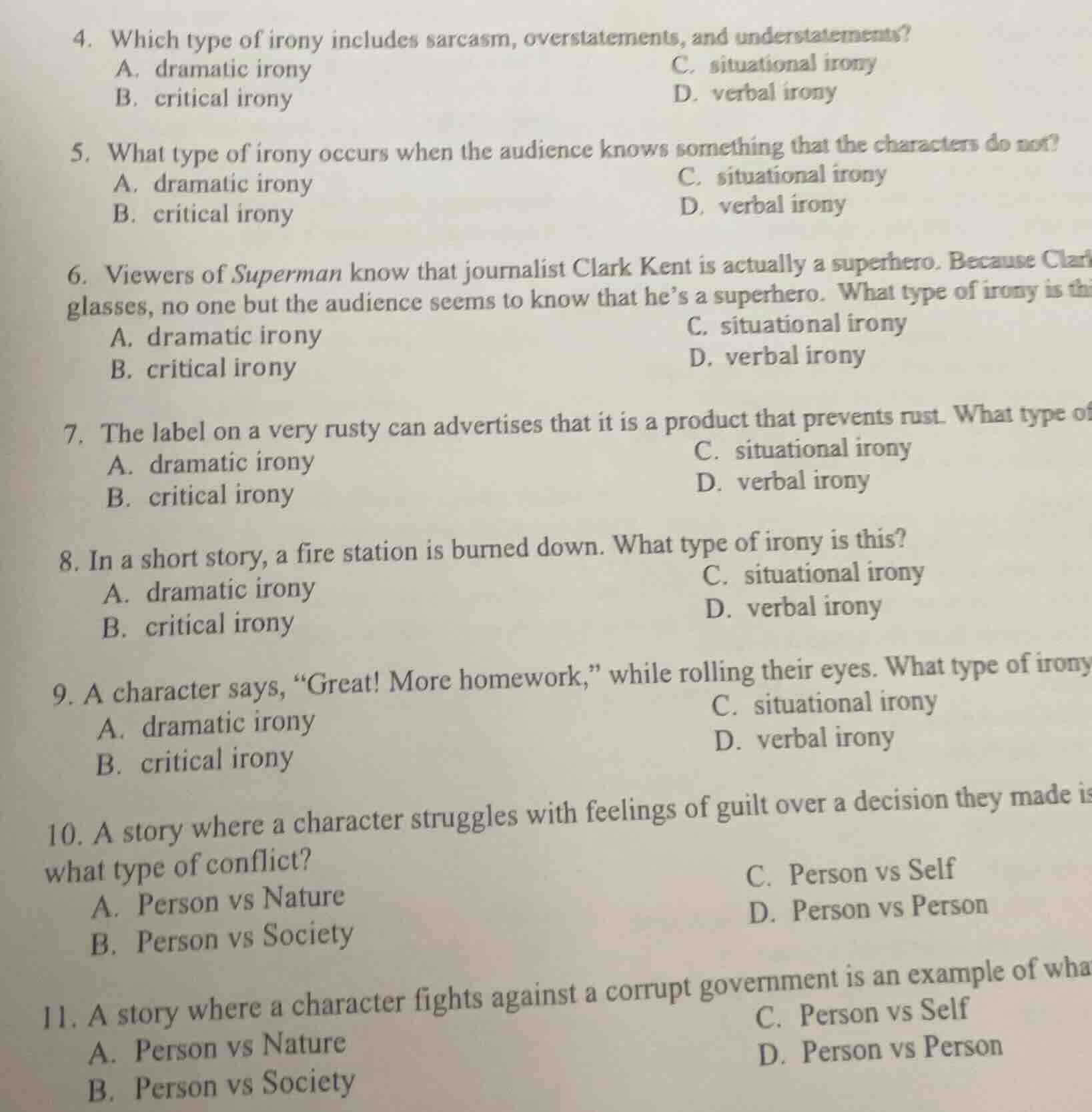
- which type of irony includes sarcasm, overstatements, and understatements?
a. dramatic irony c. situational irony
b. critical irony d. verbal irony
- what type of irony occurs when the audience knows something that the characters do not?
a. dramatic irony c. situational irony
b. critical irony d. verbal irony
- viewers of superman know that journalist clark kent is actually a superhero. because clark wears glasses, no one but the audience seems to know that he’s a superhero. what type of irony is this?
a. dramatic irony c. situational irony
b. critical irony d. verbal irony
- the label on a very rusty can advertises that it is a product that prevents rust. what type of irony is this?
a. dramatic irony c. situational irony
b. critical irony d. verbal irony
- in a short story, a fire station is burned down. what type of irony is this?
a. dramatic irony c. situational irony
b. critical irony d. verbal irony
- a character says, “great! more homework,” while rolling their eyes. what type of irony is this?
a. dramatic irony c. situational irony
b. critical irony d. verbal irony
- a story where a character struggles with feelings of guilt over a decision they made is what type of conflict?
a. person vs nature c. person vs self
b. person vs society d. person vs person
- a story where a character fights against a corrupt government is an example of what type of conflict?
a. person vs nature c. person vs self
b. person vs society d. person vs person
- Verbal irony uses words to mean the opposite, including sarcasm, overstatements, and understatements.
- Dramatic irony relies on the audience having knowledge unknown to the story's characters.
- The audience knows Clark Kent is Superman, but the other characters do not, which fits dramatic irony.
- Situational irony is when the outcome is the opposite of what is expected; a rust can advertising rust prevention is this type.
- A fire station burning down is the opposite of its intended purpose, so it is situational irony.
- The character says "Great! More homework" but means the opposite, which is verbal irony.
- A character struggling with internal guilt is a conflict between the character and their own thoughts, which is Person vs Self.
- Fighting a corrupt government is a conflict between an individual and a societal institution, which is Person vs Society.

Snap & solve any problem in the app
Get step-by-step solutions on Sovi AI
Photo-based solutions with guided steps
Explore more problems and detailed explanations
- D. verbal irony
- A. dramatic irony
- A. dramatic irony
- C. situational irony
- C. situational irony
- D. verbal irony
- C. Person vs Self
- B. Person vs Society