QUESTION IMAGE
Question
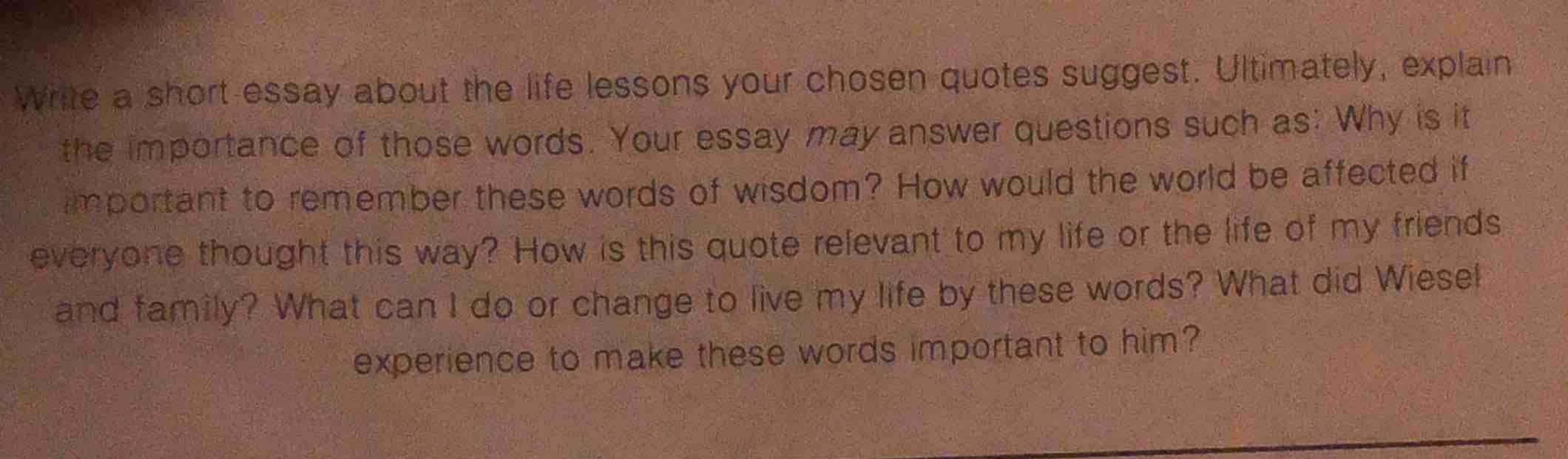
write a short essay about the life lessons your chosen quotes suggest. ultimately, explain the importance of those words. your essay may answer questions such as: why is it important to remember these words of wisdom? how would the world be affected if everyone thought this way? how is this quote relevant to my life or the life of my friends and family? what can i do or change to live my life by these words? what did wiesel experience to make these words important to him?
To complete this essay task, we can follow these steps:
Step 1: Choose a Quote
Select a meaningful quote, for example, Elie Wiesel's "The opposite of love is not hate, it's indifference." This quote is rich with themes of empathy and human connection.
Step 2: Analyze the Life Lesson
The quote suggests that indifference towards the suffering of others is a greater evil than hate. The life lesson here is the importance of caring about others, standing up against injustice, and not turning a blind eye to the pain around us.
Step 3: Explain the Importance
- Personal Relevance: In our daily lives, showing empathy can strengthen relationships. For example, listening to a friend's struggles instead of ignoring them builds trust.
- Global Impact: If everyone embraced this idea, there would be less conflict. People would be more likely to help those in need, whether it's in their community or across the world. Issues like poverty, discrimination, and human rights abuses would be addressed more actively.
- Wiesel's Experience: Wiesel survived the Holocaust, where he witnessed extreme indifference from many towards the suffering of Jews. His experience made him realize that indifference allows evil to thrive, so his words urge us to be compassionate and engaged.
- Personal Change: To live by this quote, we can educate ourselves about global issues, volunteer, and speak up when we see unfairness. Small acts of kindness and advocacy can make a big difference.
Step 4: Structure the Essay
- Introduction: Introduce the quote and its general significance.
- Body Paragraph 1: Discuss the life lesson (importance of empathy over indifference).
- Body Paragraph 2: Explain personal, global, and Wiesel - related importance.
- Body Paragraph 3: Talk about how to apply the quote in daily life.
- Conclusion: Summarize the key points and re - emphasize the value of the quote's wisdom.
For example, a short essay could be:
Title: The Wisdom of "Indifference is the Opposite of Love"
Elie Wiesel once said, "The opposite of love is not hate, it's indifference." This quote holds a profound life lesson about the nature of human connection and moral responsibility.
The lesson from this quote is clear: indifference to the suffering of others is a more destructive force than hate. Hate, at least, acknowledges the existence of others, but indifference ignores their pain entirely. In our lives, this means we must strive to care about those around us. For instance, when a classmate is being bullied, looking away is an act of indifference. But if we show empathy and intervene, we are choosing love over indifference.
Remembering this wisdom is crucial. On a personal level, empathy builds stronger relationships. When we listen to a friend's problems or help a neighbor in need, we create a sense of community. Globally, if everyone rejected indifference, the world would be a more just place. Famine in Africa, discrimination against minorities, and the plight of refugees would be met with more support instead of being ignored. Wiesel's experience in the Holocaust taught him that indifference allowed the Nazis' atrocities to continue. His words are a call to action, born from the horrors he endured.
To live by these words, we can start small. We can learn about social issues, donate to charities, or simply be kind to strangers. By doing so, we not only honor Wiesel's legacy but also make the world a better place, one act of empathy at a time.
This essay follows the steps of choosing a quote, analyzing its lesson,…

Snap & solve any problem in the app
Get step-by-step solutions on Sovi AI
Photo-based solutions with guided steps
Explore more problems and detailed explanations
To complete this essay task, we can follow these steps:
Step 1: Choose a Quote
Select a meaningful quote, for example, Elie Wiesel's "The opposite of love is not hate, it's indifference." This quote is rich with themes of empathy and human connection.
Step 2: Analyze the Life Lesson
The quote suggests that indifference towards the suffering of others is a greater evil than hate. The life lesson here is the importance of caring about others, standing up against injustice, and not turning a blind eye to the pain around us.
Step 3: Explain the Importance
- Personal Relevance: In our daily lives, showing empathy can strengthen relationships. For example, listening to a friend's struggles instead of ignoring them builds trust.
- Global Impact: If everyone embraced this idea, there would be less conflict. People would be more likely to help those in need, whether it's in their community or across the world. Issues like poverty, discrimination, and human rights abuses would be addressed more actively.
- Wiesel's Experience: Wiesel survived the Holocaust, where he witnessed extreme indifference from many towards the suffering of Jews. His experience made him realize that indifference allows evil to thrive, so his words urge us to be compassionate and engaged.
- Personal Change: To live by this quote, we can educate ourselves about global issues, volunteer, and speak up when we see unfairness. Small acts of kindness and advocacy can make a big difference.
Step 4: Structure the Essay
- Introduction: Introduce the quote and its general significance.
- Body Paragraph 1: Discuss the life lesson (importance of empathy over indifference).
- Body Paragraph 2: Explain personal, global, and Wiesel - related importance.
- Body Paragraph 3: Talk about how to apply the quote in daily life.
- Conclusion: Summarize the key points and re - emphasize the value of the quote's wisdom.
For example, a short essay could be:
Title: The Wisdom of "Indifference is the Opposite of Love"
Elie Wiesel once said, "The opposite of love is not hate, it's indifference." This quote holds a profound life lesson about the nature of human connection and moral responsibility.
The lesson from this quote is clear: indifference to the suffering of others is a more destructive force than hate. Hate, at least, acknowledges the existence of others, but indifference ignores their pain entirely. In our lives, this means we must strive to care about those around us. For instance, when a classmate is being bullied, looking away is an act of indifference. But if we show empathy and intervene, we are choosing love over indifference.
Remembering this wisdom is crucial. On a personal level, empathy builds stronger relationships. When we listen to a friend's problems or help a neighbor in need, we create a sense of community. Globally, if everyone rejected indifference, the world would be a more just place. Famine in Africa, discrimination against minorities, and the plight of refugees would be met with more support instead of being ignored. Wiesel's experience in the Holocaust taught him that indifference allowed the Nazis' atrocities to continue. His words are a call to action, born from the horrors he endured.
To live by these words, we can start small. We can learn about social issues, donate to charities, or simply be kind to strangers. By doing so, we not only honor Wiesel's legacy but also make the world a better place, one act of empathy at a time.
This essay follows the steps of choosing a quote, analyzing its lesson, explaining importance, and showing how to apply it, fulfilling the requirements of the task.