QUESTION IMAGE
Question
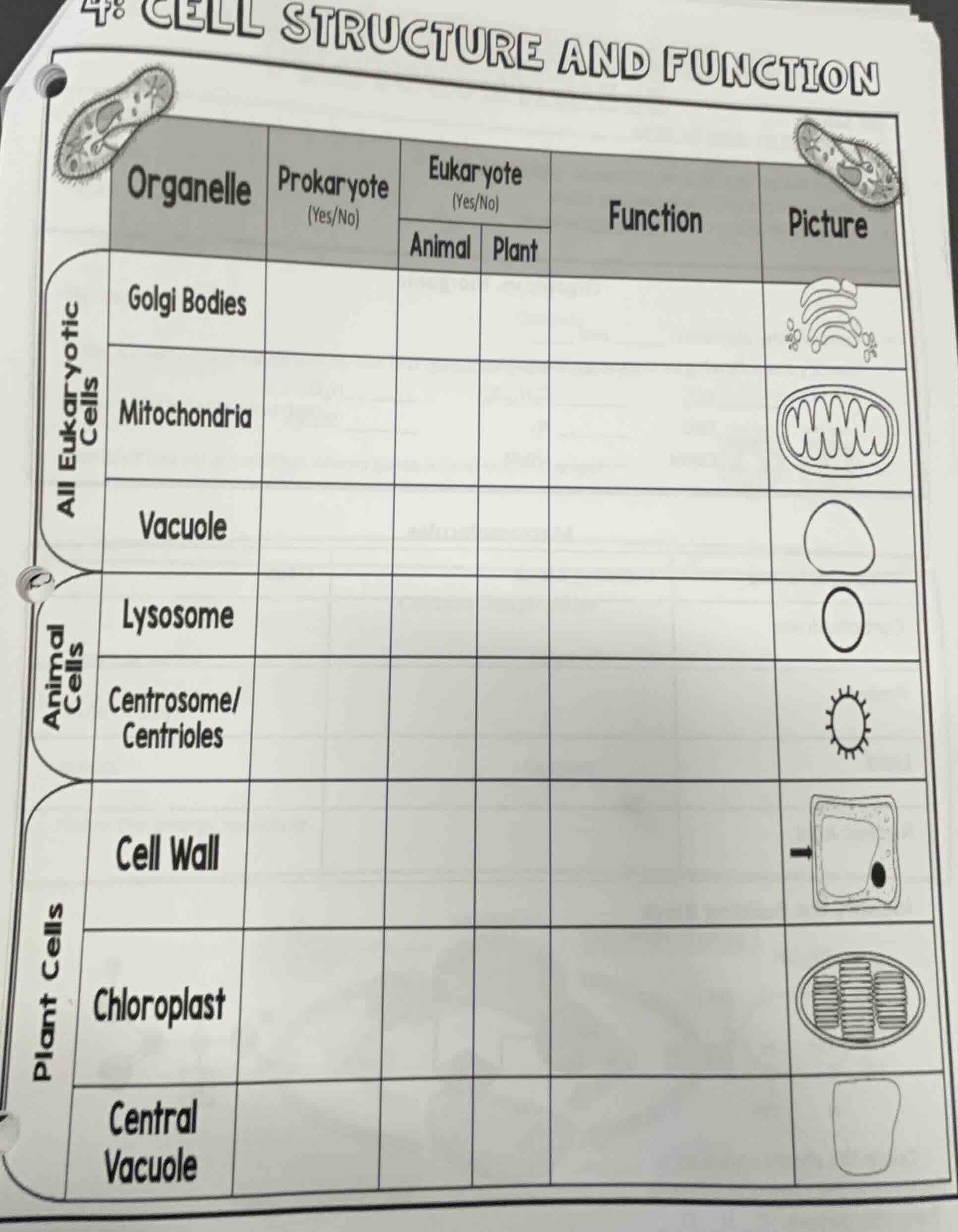
4: cell structure and function
all eukaryotic cells
animal cells
plant cells
organelle
prokaryote (yes/no)
eukaryote (yes/no)
animal
plant
function
picture
golgi bodies
mitochondria
vacuole
lysosome
centrosome/centrioles
cell wall
chloroplast
central vacuole
To fill out the table, we analyze each organelle based on cell biology knowledge:
1. Golgi Bodies
- Prokaryote: No (prokaryotes lack membrane - bound organelles like Golgi).
- Eukaryote - Animal: Yes.
- Eukaryote - Plant: Yes.
- Function: Modifies, sorts, and packages proteins and lipids for transport (within the cell or for secretion).
2. Mitochondria
- Prokaryote: No (prokaryotes don't have mitochondria).
- Eukaryote - Animal: Yes.
- Eukaryote - Plant: Yes.
- Function: Performs cellular respiration to produce ATP (energy for the cell).
3. Vacuole
- Prokaryote: No.
- Eukaryote - Animal: Yes (smaller, for storage, etc.).
- Eukaryote - Plant: Yes (smaller than central vacuole, but present).
- Function: Stores water, nutrients, waste; helps in cell turgor (in plants) and storage (in animals).
4. Lysosome
- Prokaryote: No.
- Eukaryote - Animal: Yes.
- Eukaryote - Plant: Rare (some plant cells have similar structures, but generally less common).
- Function: Contains digestive enzymes to break down waste, damaged organelles, or foreign invaders.
5. Centrosome/Centrioles
- Prokaryote: No.
- Eukaryote - Animal: Yes (involved in cell division).
- Eukaryote - Plant: No (plant cells have different microtubule - organizing centers).
- Function: Organizes microtubules during cell division (mitosis/meiosis).
6. Cell Wall
- Prokaryote: Yes (bacterial cell wall, e.g., peptidoglycan).
- Eukaryote - Animal: No (animal cells lack a cell wall).
- Eukaryote - Plant: Yes (composed of cellulose, provides structure and protection).
- Function: Provides structural support, protection, and regulates water uptake (in plants); in prokaryotes, maintains cell shape.
7. Chloroplast
- Prokaryote: No.
- Eukaryote - Animal: No.
- Eukaryote - Plant: Yes.
- Function: Performs photosynthesis to convert light energy into chemical energy (glucose).
8. Central Vacuole
- Prokaryote: No.
- Eukaryote - Animal: No.
- Eukaryote - Plant: Yes.
- Function: Stores large amounts of water, nutrients, waste; maintains cell turgor (gives plant cells their rigid shape).
Now, we can fill the table with this information:
| Organelle | Prokaryote (Yes/No) | Eukaryote (Yes/No) - Animal | Eukaryote (Yes/No) - Plant | Function | Picture (as given) |
|---|---|---|---|---|---|
| Mitochondria | No | Yes | Yes | Produce ATP via cellular respiration | Mitochondrion - like |
| Vacuole | No | Yes | Yes | Store water, nutrients, waste; maintain turgor (plants) | Vacuole - like |
| Lysosome | No | Yes | Rare | Digest waste, damaged organelles, invaders | Lysosome - like |
| Centrosome/Centrioles | No | Yes | No… |

Snap & solve any problem in the app
Get step-by-step solutions on Sovi AI
Photo-based solutions with guided steps
Explore more problems and detailed explanations
To fill out the table, we analyze each organelle based on cell biology knowledge:
1. Golgi Bodies
- Prokaryote: No (prokaryotes lack membrane - bound organelles like Golgi).
- Eukaryote - Animal: Yes.
- Eukaryote - Plant: Yes.
- Function: Modifies, sorts, and packages proteins and lipids for transport (within the cell or for secretion).
2. Mitochondria
- Prokaryote: No (prokaryotes don't have mitochondria).
- Eukaryote - Animal: Yes.
- Eukaryote - Plant: Yes.
- Function: Performs cellular respiration to produce ATP (energy for the cell).
3. Vacuole
- Prokaryote: No.
- Eukaryote - Animal: Yes (smaller, for storage, etc.).
- Eukaryote - Plant: Yes (smaller than central vacuole, but present).
- Function: Stores water, nutrients, waste; helps in cell turgor (in plants) and storage (in animals).
4. Lysosome
- Prokaryote: No.
- Eukaryote - Animal: Yes.
- Eukaryote - Plant: Rare (some plant cells have similar structures, but generally less common).
- Function: Contains digestive enzymes to break down waste, damaged organelles, or foreign invaders.
5. Centrosome/Centrioles
- Prokaryote: No.
- Eukaryote - Animal: Yes (involved in cell division).
- Eukaryote - Plant: No (plant cells have different microtubule - organizing centers).
- Function: Organizes microtubules during cell division (mitosis/meiosis).
6. Cell Wall
- Prokaryote: Yes (bacterial cell wall, e.g., peptidoglycan).
- Eukaryote - Animal: No (animal cells lack a cell wall).
- Eukaryote - Plant: Yes (composed of cellulose, provides structure and protection).
- Function: Provides structural support, protection, and regulates water uptake (in plants); in prokaryotes, maintains cell shape.
7. Chloroplast
- Prokaryote: No.
- Eukaryote - Animal: No.
- Eukaryote - Plant: Yes.
- Function: Performs photosynthesis to convert light energy into chemical energy (glucose).
8. Central Vacuole
- Prokaryote: No.
- Eukaryote - Animal: No.
- Eukaryote - Plant: Yes.
- Function: Stores large amounts of water, nutrients, waste; maintains cell turgor (gives plant cells their rigid shape).
Now, we can fill the table with this information:
| Organelle | Prokaryote (Yes/No) | Eukaryote (Yes/No) - Animal | Eukaryote (Yes/No) - Plant | Function | Picture (as given) |
|---|---|---|---|---|---|
| Mitochondria | No | Yes | Yes | Produce ATP via cellular respiration | Mitochondrion - like |
| Vacuole | No | Yes | Yes | Store water, nutrients, waste; maintain turgor (plants) | Vacuole - like |
| Lysosome | No | Yes | Rare | Digest waste, damaged organelles, invaders | Lysosome - like |
| Centrosome/Centrioles | No | Yes | No | Organize microtubules in cell division | Centrosome - like |
| Cell Wall | Yes | No | Yes | Provide structure, protection; regulate water (plants); maintain shape (prokaryotes) | Cell wall - like |
| Chloroplast | No | No | Yes | Perform photosynthesis (convert light to chemical energy) | Chloroplast - like |
| Central Vacuole | No | No | Yes | Store large amounts of water, nutrients; maintain turgor | Central vacuole - like |
If you need to fill only specific parts (e.g., one organelle), you can use the above breakdown for that particular organelle.