QUESTION IMAGE
Question
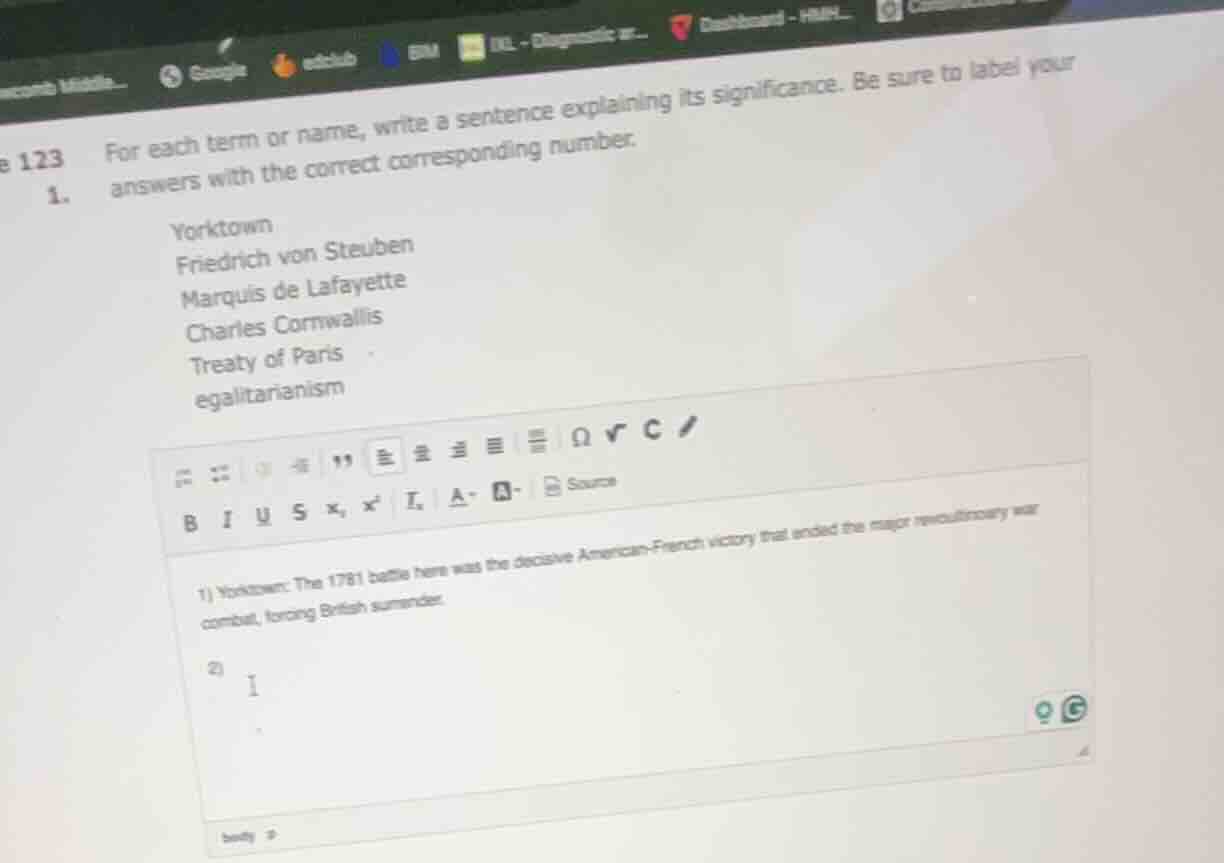
e 123 for each term or name, write a sentence explaining its significance. be sure to label your answers with the correct corresponding number. 1. yorktown friedrich von steuben marquis de lafayette charles cornwallis treaty of paris egalitarianism 1) yorktown: the 1781 battle here was the decisive american - french victory that ended the major revolutionary war combat, forcing british surrender. 2)
Brief Explanations
- Yorktown: The 1781 Battle of Yorktown was the decisive American-French victory that ended major combat in the American Revolutionary War, forcing British surrender.
- Friedrich von Steuben: A Prussian military officer who trained Continental Army troops at Valley Forge, drastically improving their discipline and combat effectiveness during the American Revolution.
- Marquis de Lafayette: A French nobleman who served as a key military commander and ally to the American colonists, providing critical military expertise and securing French support for the Revolutionary War.
- Charles Cornwallis: The British general who surrendered his army at Yorktown in 1781, effectively ending major fighting in the American Revolutionary War.
- Treaty of Paris (1783): The official agreement that ended the American Revolutionary War, recognizing U.S. independence and establishing its territorial boundaries.
- egalitarianism: A core ideal of the American Revolution that emphasized equal rights and opportunities, influencing the founding principles of the United States and challenging hierarchical European social structures.

Snap & solve any problem in the app
Get step-by-step solutions on Sovi AI
Photo-based solutions with guided steps
Explore more problems and detailed explanations
- Yorktown: The 1781 Battle of Yorktown was the decisive American-French victory that ended major combat in the American Revolutionary War, forcing British surrender.
- Friedrich von Steuben: A Prussian officer who trained Continental Army troops at Valley Forge, greatly boosting their military discipline and skill.
- Marquis de Lafayette: A French noble and military commander who provided vital leadership and helped secure French aid for American revolutionaries.
- Charles Cornwallis: The British general whose 1781 surrender at Yorktown effectively concluded major fighting in the American Revolutionary War.
- Treaty of Paris (1783): The official treaty that ended the American Revolution, formally recognizing U.S. independence and defining its early borders.
- egalitarianism: A foundational ideal of the American Revolution that promoted equal rights, shaping the U.S.'s founding principles and challenging traditional social hierarchies.