QUESTION IMAGE
Question
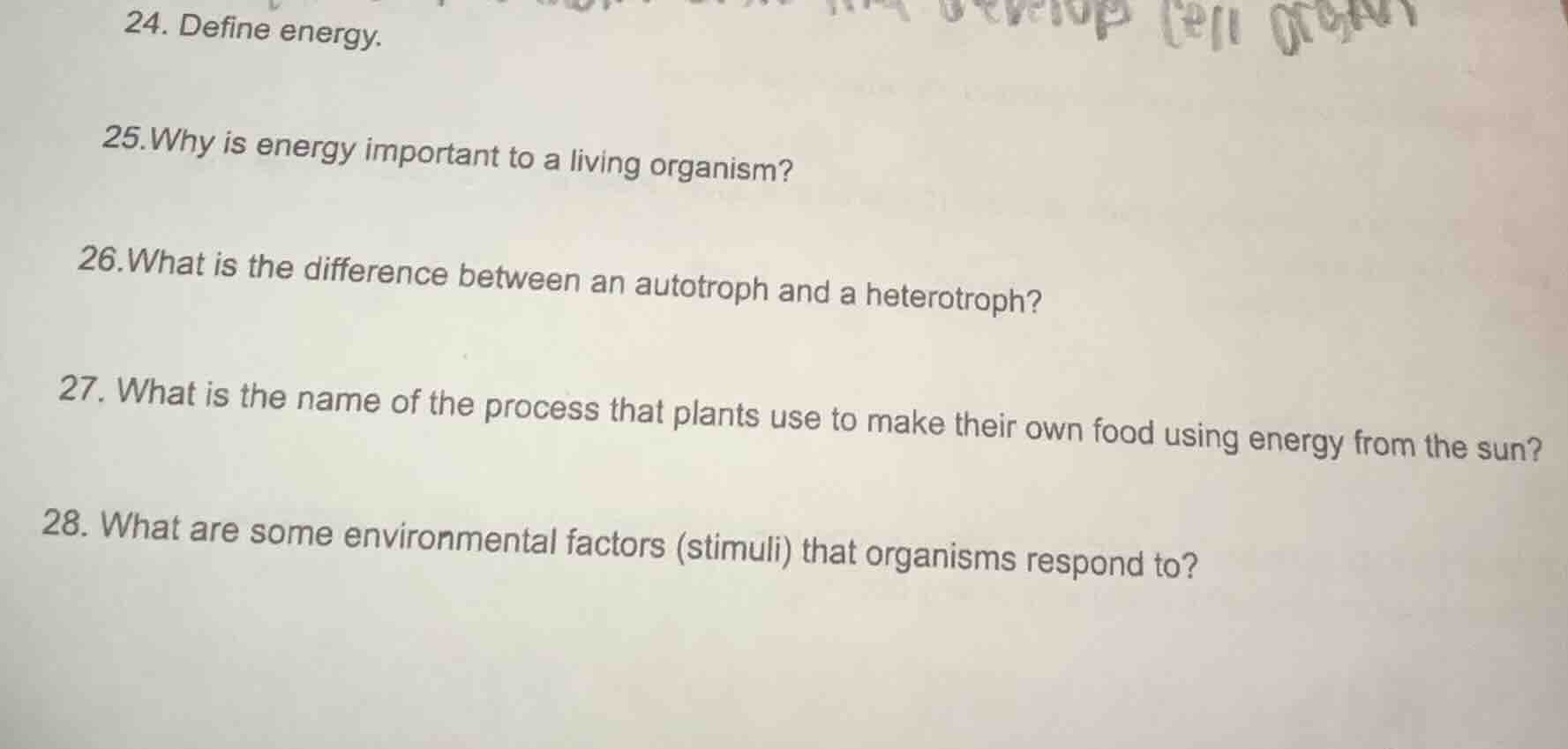
- define energy.
25.why is energy important to a living organism?
26.what is the difference between an autotroph and a heterotroph?
- what is the name of the process that plants use to make their own food using energy from the sun?
- what are some environmental factors (stimuli) that organisms respond to?
Question 24
Energy is the capacity to do work or cause change. In living organisms, it's used for processes like growth, reproduction, and maintaining homeostasis.
Living organisms need energy for essential life processes: growth (cell division, tissue development), reproduction (making offspring), metabolism (chemical reactions like digestion), maintaining homeostasis (regulating internal conditions), and responding to stimuli (moving from danger, seeking food). Without energy, these processes stop, and the organism can’t survive.
Autotrophs (e.g., plants, algae) make their own food using energy from sunlight (photosynthesis) or chemicals (chemosynthesis). Heterotrophs (e.g., animals, fungi) cannot make their own food and must consume other organisms (autotrophs or other heterotrophs) for energy and nutrients. The key difference is the source of food production.

Snap & solve any problem in the app
Get step-by-step solutions on Sovi AI
Photo-based solutions with guided steps
Explore more problems and detailed explanations
Energy is the ability to do work or bring about a change; it powers biological processes (e.g., growth, metabolism) in living organisms.