QUESTION IMAGE
Question
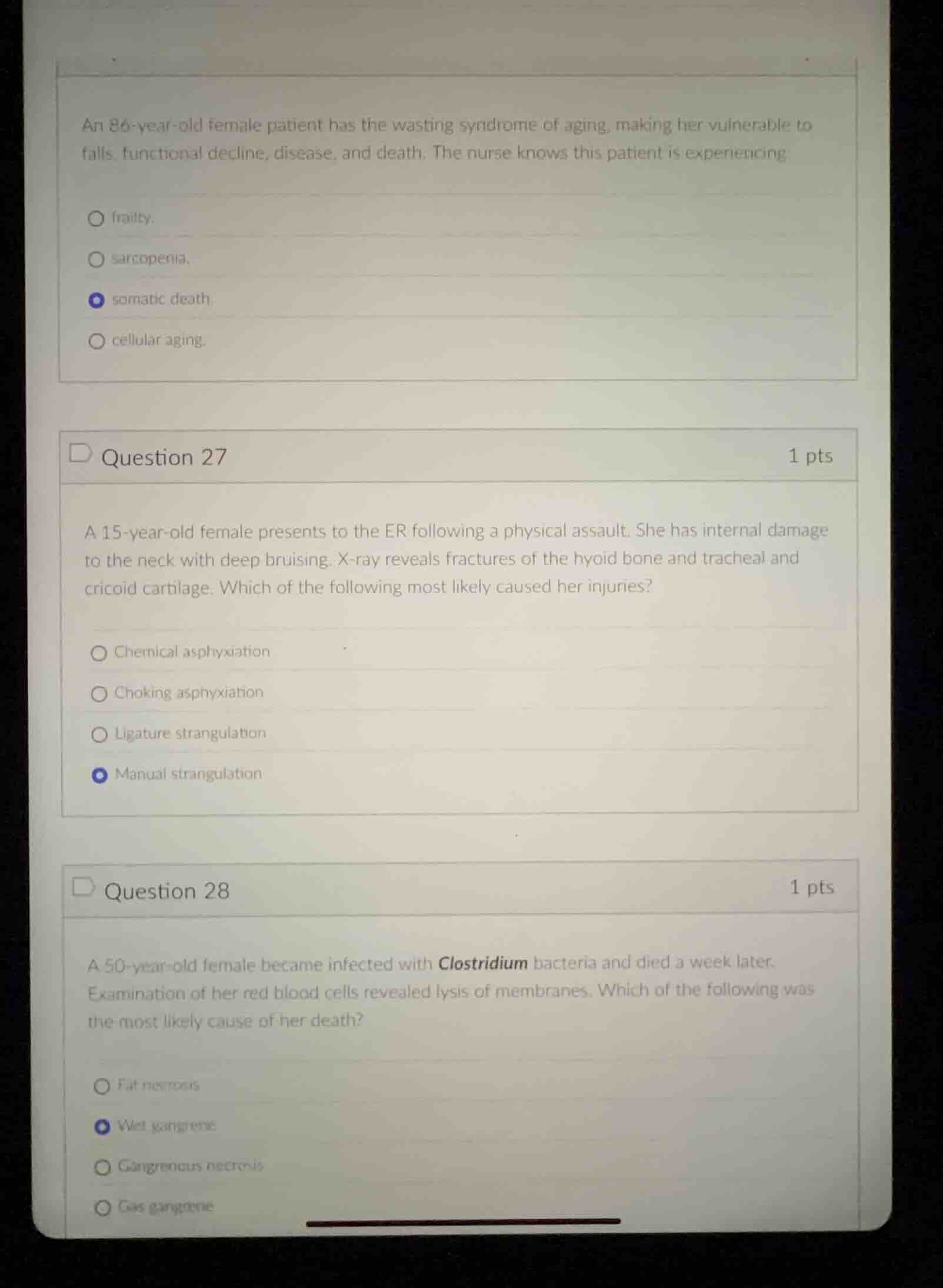
an 86-year-old female patient has the wasting syndrome of aging, making her vulnerable to falls, functional decline, disease, and death. the nurse knows this patient is experiencing
○ frailty.
○ sarcopenia.
● somatic death.
○ cellular aging.
question 27
1 pts
a 15-year-old female presents to the er following a physical assault. she has internal damage to the neck with deep bruising. x-ray reveals fractures of the hyoid bone and tracheal and cricoid cartilage. which of the following most likely caused her injuries?
○ chemical asphyxiation
○ choking asphyxiation
○ ligature strangulation
● manual strangulation
question 28
1 pts
a 50-year-old female became infected with clostridium bacteria and died a week later. examination of her red blood cells revealed lysis of membranes. which of the following was the most likely cause of her death?
○ fat necrosis
● wet gangrene
○ gangrenous necrosis
○ gas gangrene
Question 1 (about the 86-year-old patient)
Frailty in aging is a syndrome with wasting, increased vulnerability to falls, functional decline, etc. Sarcopenia is muscle loss, somatic death is whole - body death, and cellular aging is cell - level aging. The patient's symptoms match frailty. But the originally selected "somatic death" is incorrect. The correct answer should be frailty.
Manual strangulation often causes neck injuries including hyoid bone, tracheal, and cricoid cartilage fractures with bruising. Chemical asphyxiation is from chemicals, choking from foreign objects, ligature from a cord/ligature. The injuries match manual strangulation, and the selected option is correct.
Clostridium infection causing gas gangrene (due to gas production and tissue destruction, and red blood cell lysis can occur). Wet gangrene is from venous congestion, fat necrosis is fat - related, gangrenous necrosis is general. The correct answer should be gas gangrene, but the originally selected "Wet gangrene" is incorrect.

Snap & solve any problem in the app
Get step-by-step solutions on Sovi AI
Photo-based solutions with guided steps
Explore more problems and detailed explanations
A. frailty