QUESTION IMAGE
Question
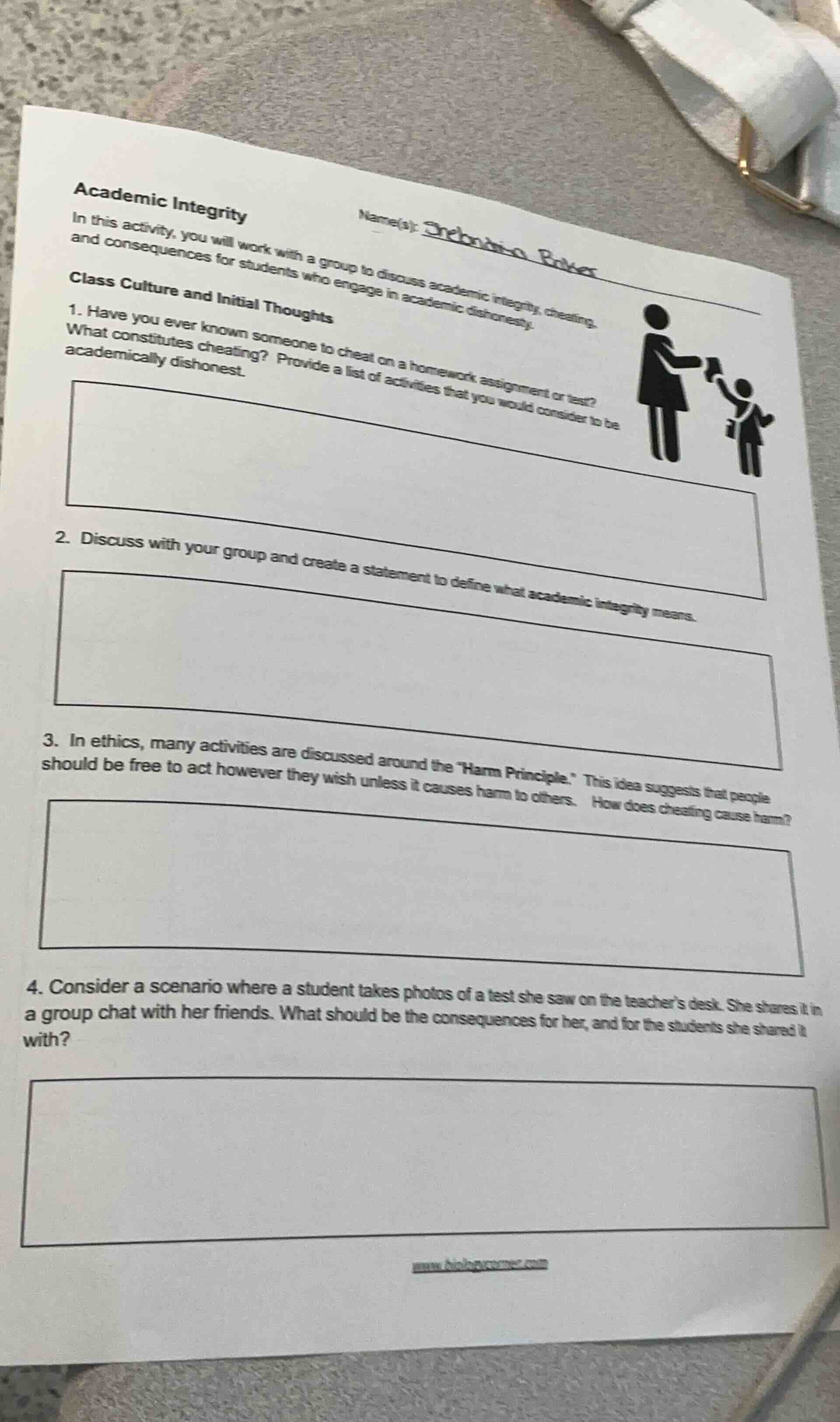
academic integrity
name(s): shebrina baker
in this activity, you will work with a group to discuss academic integrity, cheating, and consequences for students who engage in academic dishonesty.
class culture and initial thoughts
- have you ever known someone to cheat on a homework assignment or test? what constitutes cheating? provide a list of activities that you would consider to be academically dishonest.
- discuss with your group and create a statement to define what academic integrity means.
- in ethics, many activities are discussed around the \harm principle.\ this idea suggests that people should be free to act however they wish unless it causes harm to others. how does cheating cause harm?
- consider a scenario where a student takes photos of a test she saw on the teacher’s desk. she shares it in a group chat with her friends. what should be the consequences for her, and for the students she shared it with?
www.biologycorner.com
Question 1
- Known Cheaters: Yes, I've known classmates who cheated. For example, a student once copied answers from a friend's completed homework for a math assignment.
- Cheating Activities:
- Copying answers during a test (from a classmate, cheat sheet, or electronic device).
- Plagiarizing written work (copying from the internet, books, or other students without proper citation).
- Sharing test questions or answers with others before/after an exam (like the scenario in question 4).
- Fabricating data for a lab report or project.
- Having someone else complete an assignment (e.g., paying for a paper, asking a friend to write an essay).
These all involve dishonestly obtaining or providing academic credit/results.
Academic integrity means upholding honesty, responsibility, and fairness in all academic work. It involves doing your own work (without cheating, plagiarism, or unauthorized help), giving proper credit to sources, following academic rules (like test/exam guidelines), and acting ethically to maintain the value of education and your own learning. It’s about being truthful in how you earn knowledge and demonstrate your understanding.
Cheating causes harm in several ways:
- To the cheater: They don’t learn the material, which harms their long - term education (e.g., struggling in future courses that build on this knowledge) and undermines their personal integrity.
- To other students: It creates an unfair advantage—honest students’ hard work is devalued if cheaters get similar or better grades. This can cause stress, resentment, and a sense of unfairness in the learning environment.
- To the educational institution: It damages the school’s reputation (if cheating is widespread) and devalues the degrees/credentials awarded, as they no longer fully reflect true learning.
- To society: Graduates who cheated may lack necessary skills, which can harm their professional field (e.g., a doctor who cheated in medical school might make errors due to lack of knowledge).

Snap & solve any problem in the app
Get step-by-step solutions on Sovi AI
Photo-based solutions with guided steps
Explore more problems and detailed explanations
- Known cheaters: Yes, classmates who copied homework/test answers.
- Cheating activities: Copying test answers, plagiarism, sharing exam materials, fabricating data, having others do work.