QUESTION IMAGE
Question
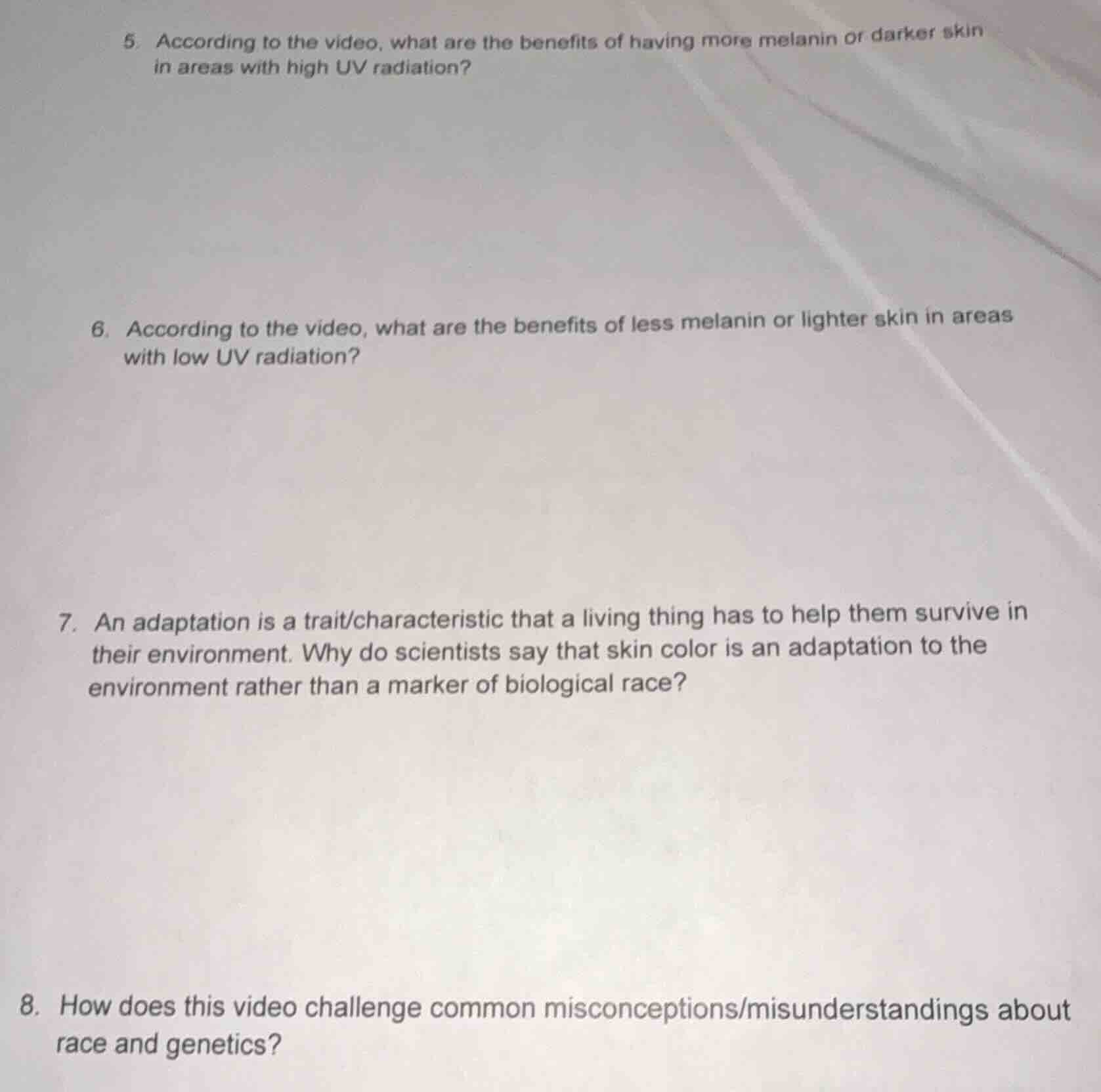
- according to the video, what are the benefits of having more melanin or darker skin in areas with high uv radiation?
- according to the video, what are the benefits of less melanin or lighter skin in areas with low uv radiation?
- an adaptation is a trait/characteristic that a living thing has to help them survive in their environment. why do scientists say that skin color is an adaptation to the environment rather than a marker of biological race?
- how does this video challenge common misconceptions/misunderstandings about race and genetics?
Question 5
In high UV radiation areas, more melanin (darker skin) protects against UV damage: reduces sunburn, lowers skin cancer risk, and prevents folate breakdown (critical for reproduction). Melanin absorbs UV, acting as a natural sunscreen.
In low UV radiation areas, less melanin (lighter skin) helps absorb more UV to synthesize vitamin D. Vitamin D is essential for bone health (calcium absorption) and immune function. Lighter skin allows sufficient UV penetration for vitamin D production, as UV levels are too low for darker skin to make enough.
Skin color correlates with UV levels (adaptation): darker skin in high UV (protect folate, prevent cancer), lighter in low UV (vitamin D). Race - based skin color ideas are social constructs; skin color varies along UV gradients (continuous, not discrete racial groups), and it evolves as an environmental adaptation, not a racial marker.

Snap & solve any problem in the app
Get step-by-step solutions on Sovi AI
Photo-based solutions with guided steps
Explore more problems and detailed explanations
Benefits include protection from UV - induced sunburn, reduced risk of skin cancer, and prevention of folate degradation (important for reproductive health) by absorbing and scattering UV radiation.