QUESTION IMAGE
Question
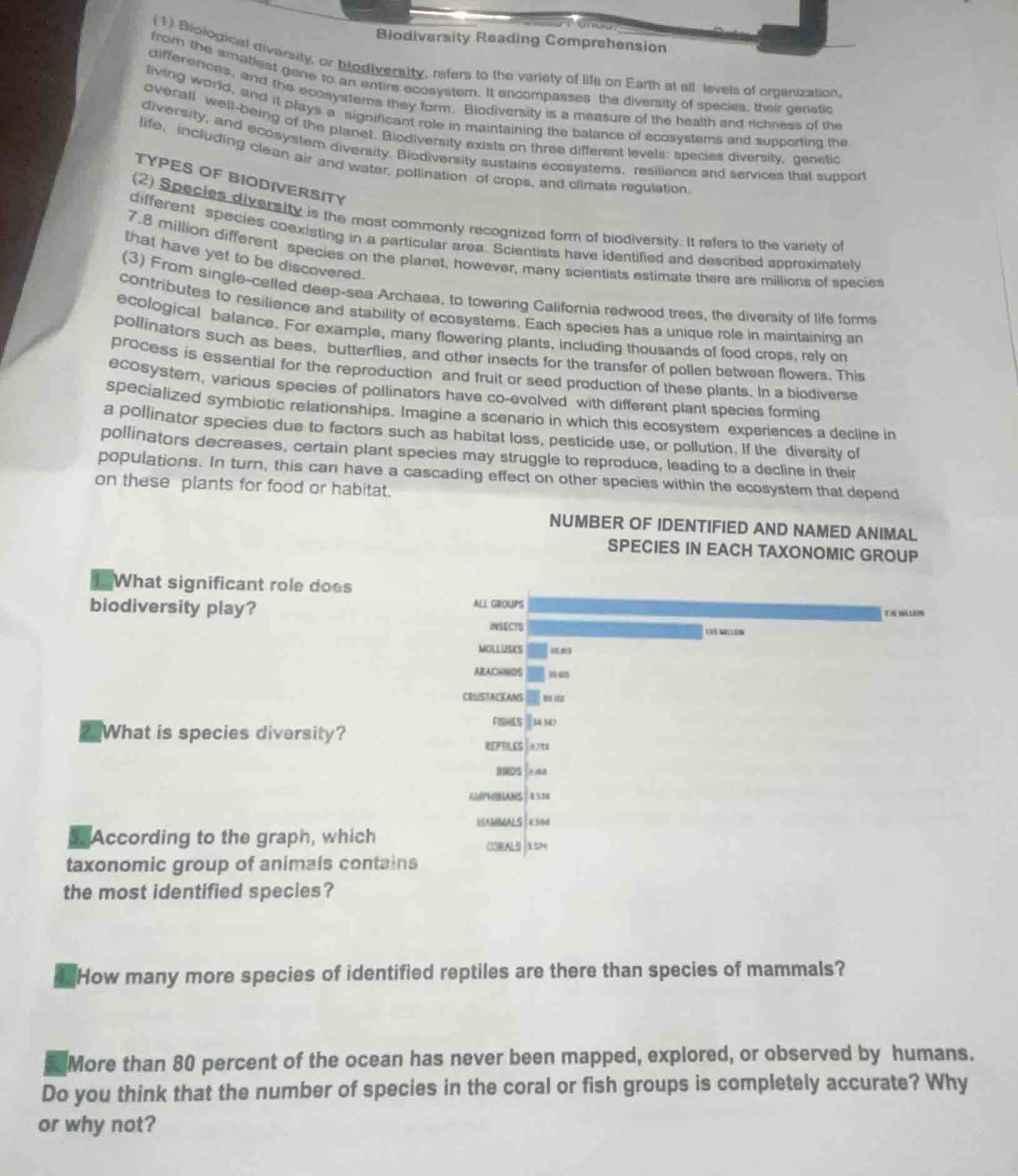
biodiversity reading comprehension(1) biological diversity, or biodiversity, refers to the variety of life on earth at all levels of organization, from the smallest gene to an entire ecosystem. it encompasses the diversity of species, their genetic differences, and the ecosystems they form. biodiversity is a measure of the health and richness of the living world, and it plays a significant role in maintaining the balance of ecosystems and supporting the overall well-being of the planet. biodiversity exists on three different levels: species diversity, genetic diversity, and ecosystem diversity. biodiversity sustains ecosystems, resilience and services that support life, including clean air and water, pollination of crops, and climate regulation.types of biodiversity(2) species diversity is the most commonly recognized form of biodiversity. it refers to the variety of different species coexisting in a particular area. scientists have identified and described approximately 7.8 million different species on the planet, however, many scientists estimate there are millions of species that have yet to be discovered.(3) from single-celled deep-sea archaea, to towering california redwood trees, the diversity of life forms contributes to resilience and stability of ecosystems. each species has a unique role in maintaining an ecological balance. for example, many flowering plants, including thousands of food crops, rely on pollinators such as bees, butterflies, and other insects for the transfer of pollen between flowers. this process is essential for the reproduction and fruit or seed production of these plants. in a biodiverse ecosystem, various species of pollinators have co-evolved with different plant species forming specialized symbiotic relationships. imagine a scenario in which this ecosystem experiences a decline in a pollinator species due to factors such as habitat loss, pesticide use, or pollution. if the diversity of pollinators decreases, certain plant species may struggle to reproduce, leading to a decline in their populations. in turn, this can have a cascading effect on other species within the ecosystem that depend on these plants for food or habitat.number of identified and named animal species in each taxonomic group1. what significant role does biodiversity play?2. what is species diversity?3. according to the graph, which taxonomic group of animals contains the most identified species?4. how many more species of identified reptiles are there than species of mammals?5. more than 80 percent of the ocean has never been mapped, explored, or observed by humans. do you think that the number of species in the coral or fish groups is completely accurate? why or why not?
- Pulled the core role from the first paragraph of the text.
- Defined species diversity using the exact description from section (2) of the text.
- Identified the longest bar in the provided bar graph.
- Subtracted the number of mammal species from reptile species using graph values.
- Connected the unexplored ocean to unrecorded species in marine groups.

Snap & solve any problem in the app
Get step-by-step solutions on Sovi AI
Photo-based solutions with guided steps
Explore more problems and detailed explanations
- It maintains ecosystem balance, supports overall planetary well-being, and sustains life-supporting ecosystem services like clean air/water, pollination, and climate regulation.
- It is the most commonly recognized form of biodiversity, referring to the variety of different species coexisting in a particular area; approximately 7.8 million have been identified, with millions more yet to be discovered.
- Insects
- $8,731 - 6,594 = 2,137$, so 2,137 more species.
- No, the number is not completely accurate. Since over 80% of the ocean remains unexplored, there are likely many undiscovered coral and fish species that have not been counted in the identified totals.