QUESTION IMAGE
Question
bird beak variation
bird beak size is often related to the type of food the bird eats and the size of the food source. some birds eat seeds as food. birds with large beaks are better able to eat larger seeds, while birds with small beaks typically eat smaller seeds.
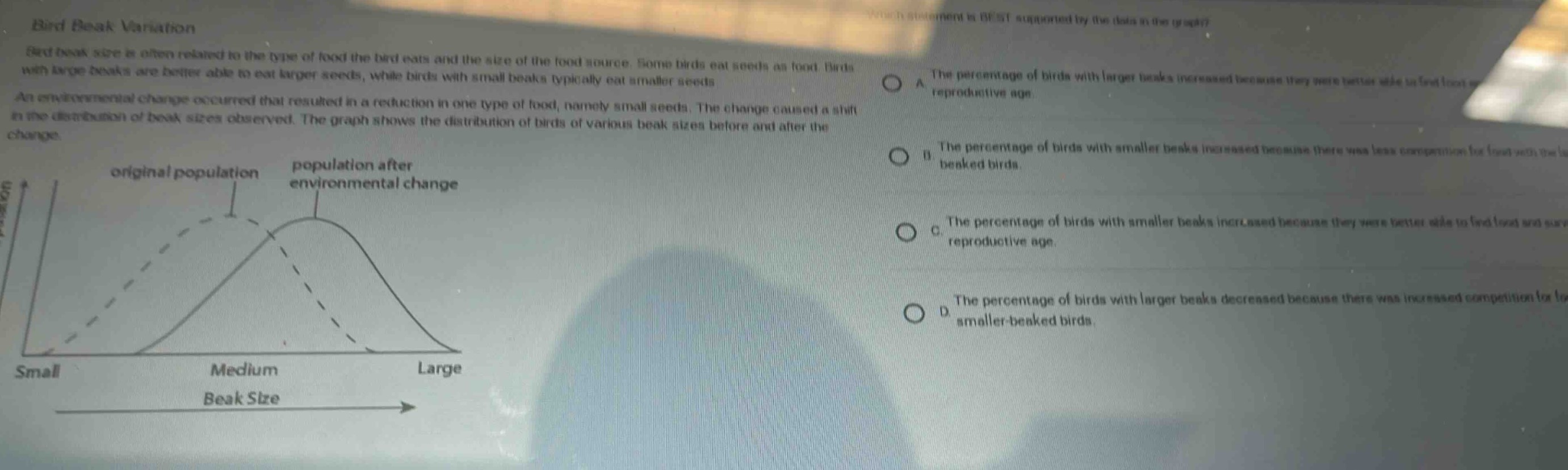
an environmental change occurred that resulted in a reduction in one type of food, namely small seeds. the change caused a shift in the distribution of beak sizes observed. the graph shows the distribution of birds of various beak sizes before and after the change.
graph: x - axis: beak size (small, medium, large); y - axis: (unclear, related to population); two curves: original population (dashed) and population after environmental change (solid).
which statement is best supported by the data in the graph?
a. the percentage of birds with larger beaks increased because they were better able to find food and reach reproductive age.
b. the percentage of birds with smaller beaks increased because there was less competition for food with the large - beaked birds.
c. the percentage of birds with smaller beaks increased because they were better able to find food and survive to reproductive age.
d. the percentage of birds with larger beaks decreased because there was increased competition for food with the smaller - beaked birds.
- The graph shows the original population (dashed line) had more small-beaked birds, while the post-change population (solid line) shifted to more medium and large-beaked birds.
- The text states small seeds (food for small-beaked birds) were reduced. Larger-beaked birds could eat larger remaining seeds, so they survived, reproduced, and their percentage increased, matching option A.
- Options B, C, D contradict the graph shift and the given food source change information.

Snap & solve any problem in the app
Get step-by-step solutions on Sovi AI
Photo-based solutions with guided steps
Explore more problems and detailed explanations
A. The percentage of birds with larger beaks increased because they were better able to find food and reach reproductive age.