QUESTION IMAGE
Question
6.1.2.4.5 body systems
step 2: activity 3 how the organ systems work together
read article
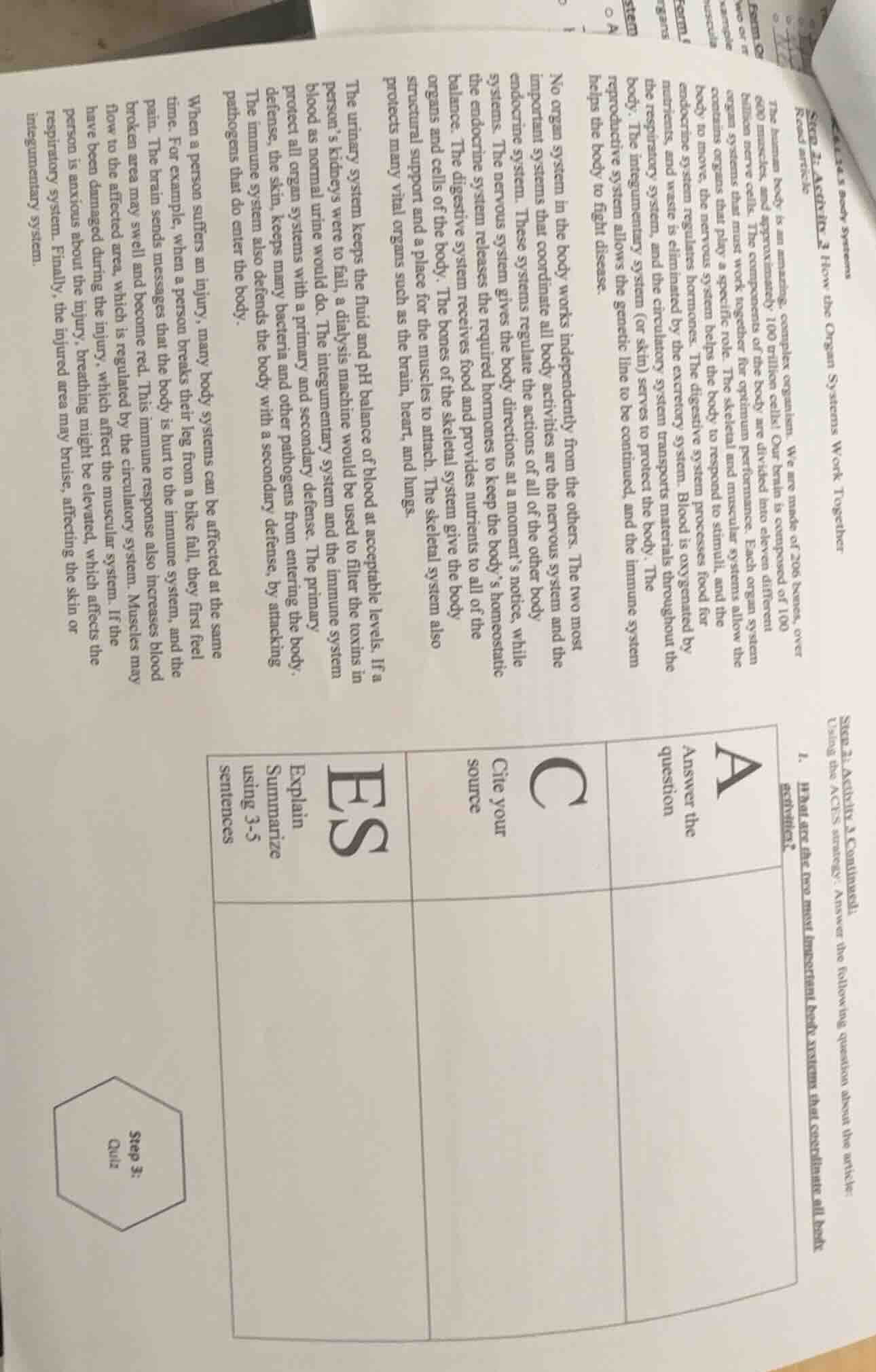
the human body is an amazing, complex organism. we are made of 206 bones, over 600 muscles, and approximately 100 trillion cells! our brain is composed of 100 billion nerve cells. the components of the body are divided into eleven different organ systems that must work together for optimum performance. each organ system contains organs that play a specific role. the skeletal and muscular systems allow the body to move, the nervous system helps the body to respond to stimuli, and the endocrine system regulates hormones. the digestive system processes food for nutrients, and waste is eliminated by the excretory system. blood is oxygenated by the respiratory system, and the circulatory system transports materials throughout the body. the integumentary system or skin serves to protect the body. the reproductive system allows the genetic line to be continued, and the immune system helps the body to fight disease.
no organ system in the body works independently from the others. the two most important systems that coordinate all body activities are the nervous system and the endocrine system. these systems regulate the actions of all of the other body systems. the nervous system gives the body directions at a moments notice, while the endocrine system releases the required hormones to keep the bodys homeostatic balance. the digestive system receives food and provides nutrients to all of the organs and cells of the body. the bones of the skeletal system give the body structural support and a place for the muscles to attach. the skeletal system also protects many vital organs such as the brain, heart, and lungs.
the urinary system keeps the fluid and ph balance of blood at acceptable levels. if a persons kidneys were to fail, a dialysis machine would be used to filter the toxins in blood as normal urine would do. the integumentary system and the immune system protect all organ systems with a primary and secondary defense. the primary defense, the skin, keeps many bacteria and other pathogens from entering the body. the immune system also defends the body with a secondary defense, by attacking pathogens that do enter the body.
when a person suffers an injury, many body systems can be affected at the same time. for example, when a person breaks their leg from a bike fall, they first feel pain. the brain sends messages that the body is hurt to the immune system, and the broken area may swell and become red. this immune response also increases blood flow to the affected area, which is regulated by the circulatory system. muscles may have been damaged during the injury, which affect the muscular system. if the person is anxious about the injury, breathing might be elevated, which affects the respiratory system. finally, the injured area may bruise, affecting the skin or integumentary system.
step 2: activity 3 continued:
using the aces strategy: answer the following question about the article:
- what are the two most important body systems that coordinate all body activities?
a answer the question
c cite your source
es explain
summarize using 3-5 sentences
step 3:
quiz
The article explicitly states the two systems that coordinate all body activities. The source is the provided reading text, specifically the section that notes these systems regulate the actions of all other body systems.

Snap & solve any problem in the app
Get step-by-step solutions on Sovi AI
Photo-based solutions with guided steps
Explore more problems and detailed explanations
The two most important body systems that coordinate all body activities are the nervous system and the endocrine system.
Cite your source:
The relevant text from the article: "The two most important systems that coordinate all body activities are the nervous system and the endocrine system. These systems regulate the actions of all of the other body systems. The nervous system gives the body directions at a moment's notice, while the endocrine system releases the required hormones to keep the body's homeostatic balance."
Explain Summarize using 3-5 sentences:
The nervous system and endocrine system are the body's primary coordinating systems. The nervous system delivers immediate, direct signals to control bodily functions in real time. The endocrine system maintains long-term balance by releasing hormones that regulate physiological processes. Together, these two systems oversee the function of all other body systems to ensure optimal performance and homeostasis. No other body systems take on this overarching regulatory role for the entire body's activities.