QUESTION IMAGE
Question
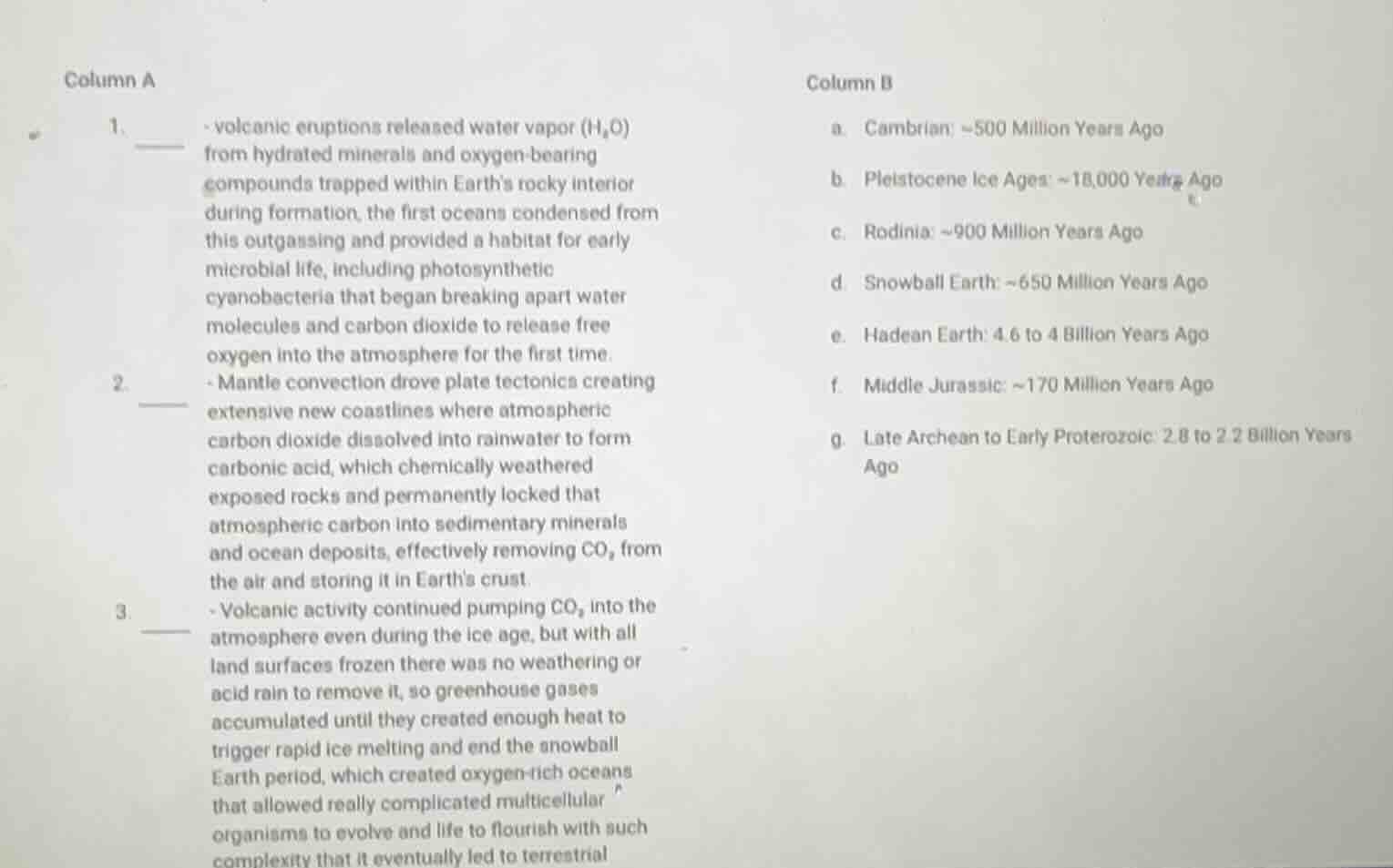
column a
1.
- volcanic eruptions released water vapor (h₂o) from hydrated minerals and oxygen - bearing compounds trapped within earths rocky interior during formation, the first oceans condensed from this outgassing and provided a habitat for early microbial life, including photosynthetic cyanobacteria that began breaking apart water molecules and carbon dioxide to release free oxygen into the atmosphere for the first time.
2.
- mantle convection drove plate tectonics creating extensive new coastlines where atmospheric carbon dioxide dissolved into rainwater to form carbonic acid, which chemically weathered exposed rocks and permanently locked that atmospheric carbon into sedimentary minerals and ocean deposits, effectively removing co₂ from the air and storing it in earths crust.
3.
- volcanic activity continued pumping co₂ into the atmosphere even during the ice age, but with all land surfaces frozen there was no weathering or acid rain to remove it, so greenhouse gases accumulated until they created enough heat to trigger rapid ice melting and end the snowball earth period, which created oxygen - rich oceans that allowed really complicated multicellular organisms to evolve and life to flourish with such complexity that it eventually led to terrestrial
column b
a. cambrian: ~500 million years agob. pleistocene ice ages: ~18,000 years agoc. rodinia: ~900 million years agod. snowball earth: ~650 million years age. hadean earth: 4.6 to 4 billion years agof. middle jurassic: ~170 million years agog. late archean to early proterozoic: 2.8 to 2.2 billion years ago
Brief Explanations
- The description covers the formation of Earth's first oceans and the rise of photosynthetic cyanobacteria that first oxygenated the atmosphere, events that occurred in the Hadean to early Archean, matching option e.
- This describes the process of carbon sequestration via plate tectonics and chemical weathering, which was a key process during the Late Archean to Early Proterozoic as the atmosphere stabilized, matching option g.
- The description refers to the end of a fully frozen "Snowball Earth" event, which is associated with the ~650 Million Years Ago timeframe, matching option d.

Snap & solve any problem in the app
Get step-by-step solutions on Sovi AI
Photo-based solutions with guided steps
Explore more problems and detailed explanations
- e. Hadean Earth: 4.6 to 4 Billion Years Ago
- g. Late Archean to Early Proterozoic: 2.8 to 2.2 Billion Years Ago
- d. Snowball Earth: ~650 Million Years Ago