QUESTION IMAGE
Question
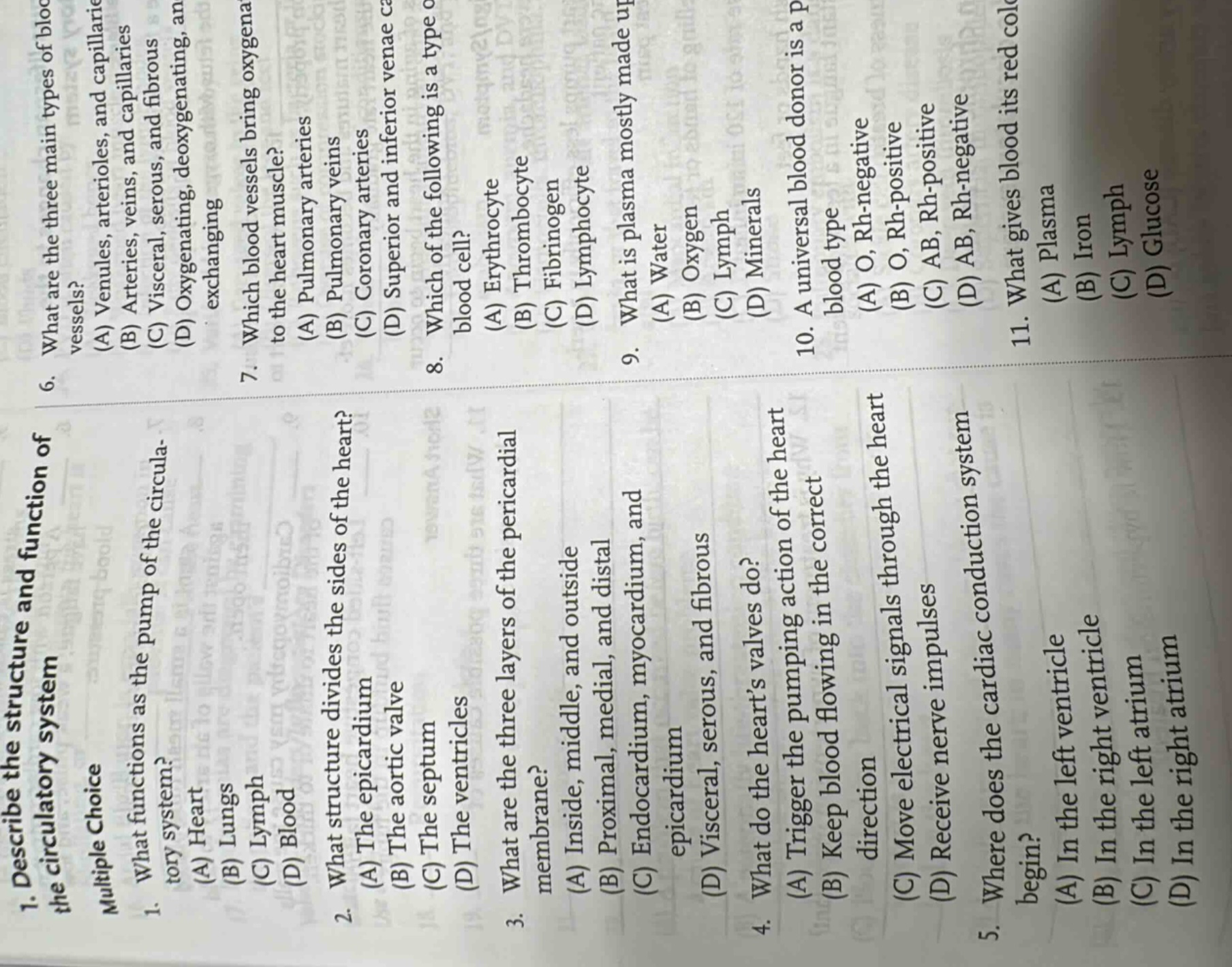
describe the structure and function of the circulatory system
multiple choice
- what functions as the pump of the circulatory system?
(a) heart
(b) lungs
(c) lymph
(d) blood
- what structure divides the sides of the heart?
(a) the epicardium
(b) the aortic valve
(c) the septum
(d) the ventricles
- what are the three layers of the pericardial membrane?
(a) inside, middle, and outside
(b) proximal, medial, and distal
(c) endocardium, myocardium, and epicardium
(d) visceral, serous, and fibrous
- what do the heart’s valves do?
(a) trigger the pumping action of the heart
(b) keep blood flowing in the correct direction
(c) move electrical signals through the heart
(d) receive nerve impulses
- where does the cardiac conduction system begin?
(a) in the left ventricle
(b) in the right ventricle
(c) in the left atrium
(d) in the right atrium
- what are the three main types of blood vessels?
(a) venules, arterioles, and capillaries
(b) arteries, veins, and capillaries
(c) visceral, serous, and fibrous
(d) oxygenating, deoxygenating, and exchanging
- which blood vessels bring oxygen to the heart muscle?
(a) pulmonary arteries
(b) pulmonary veins
(c) coronary arteries
(d) superior and inferior venae cavae
- which of the following is a type of blood cell?
(a) erythrocyte
(b) thrombocyte
(c) fibrinogen
(d) lymphocyte
- what is plasma mostly made up of?
(a) water
(b) oxygen
(c) lymph
(d) minerals
- a universal blood donor is a person with which blood type?
(a) o, rh-negative
(b) o, rh-positive
(c) ab, rh-positive
(d) ab, rh-negative
- what gives blood its red color?
(a) plasma
(b) iron
(c) lymph
(d) glucose
Multiple Choice Answers (with explanations for each):
1. What functions as the pump of the circulatory system?
- Explanation: The heart is the muscular organ that pumps blood throughout the circulatory system. Lungs are for respiration, lymph is part of the lymphatic system, and blood is the fluid being pumped.
- Answer: A. Heart
2. What structure divides the sides of the heart?
- Explanation: The septum (interatrial and interventricular) separates the left and right sides of the heart to prevent mixing of oxygenated and deoxygenated blood. The epicardium is a heart layer, the aortic valve is a valve, and ventricles are heart chambers.
- Answer: C. The septum
3. What are the three layers of the pericardial membrane?
- Explanation: The pericardium has three layers: visceral (epicardium), serous (parietal), and fibrous (outermost). Option D matches this description.
- Answer: D. Visceral, serous, and fibrous
4. What do the heart’s valves do?
- Explanation: Heart valves (e.g., atrioventricular, semilunar) prevent backflow of blood, ensuring it flows in one direction. They do not trigger pumping, move electrical signals, or receive nerve impulses.
- Answer: B. Keep blood flowing in the correct direction
5. Where does the cardiac conduction system begin?
- Explanation: The cardiac conduction system starts with the sinoatrial (SA) node, located in the right atrium. It initiates electrical signals to coordinate heart contractions.
- Answer: D. In the right atrium
6. What are the three main types of blood vessels?
- Explanation: Arteries (carry oxygenated blood away from the heart), veins (carry deoxygenated blood to the heart), and capillaries (site of gas/nutrient exchange) are the three main blood vessel types. Venules/arterioles are smaller vessels, visceral/serous refer to membrane layers, and “oxygenating/deoxygenating” describes blood, not vessel types.
- Answer: B. Arteries, veins, and capillaries
7. Which blood vessels bring oxygenated blood to the heart muscle?
- Explanation: Coronary arteries supply oxygenated blood to the heart muscle (myocardium). Pulmonary arteries carry deoxygenated blood to the lungs, pulmonary veins return oxygenated blood to the heart (not to the heart muscle), and superior/inferior venae cavae carry deoxygenated blood to the heart.
- Answer: C. Coronary arteries
8. Which of the following is a type of blood cell?
- Explanation: Erythrocytes (red blood cells) are blood cells. Thrombocytes (platelets) and lymphocytes are also blood cells, but “fibrinogen” is a plasma protein, not a cell. Among the options, erythrocyte is a blood cell.
- Answer: A. Erythrocyte
9. What is plasma mostly made up of?
- Explanation: Plasma (the liquid component of blood) is ~90% water. Oxygen is a gas in blood, lymph is a separate fluid, and minerals are minor components.
- Answer: A. Water
10. A universal blood donor is a person with which blood type?
- Explanation: Type O, Rh-negative blood is the universal donor because it has neither A/B antigens nor Rh factor, so it can be given to any blood type without triggering an immune reaction.
- Answer: A. O, Rh-negative
11. What gives blood its red color?
- Explanation: Hemoglobin, a protein in red blood cells, contains iron. Iron binds to oxygen, and this interaction gives blood its red color. Plasma is colorless, lymph is clear, and glucose is a sugar (not related to blood color).
- Answer: B. Iron

Snap & solve any problem in the app
Get step-by-step solutions on Sovi AI
Photo-based solutions with guided steps
Explore more problems and detailed explanations
Multiple Choice Answers (with explanations for each):
1. What functions as the pump of the circulatory system?
- Explanation: The heart is the muscular organ that pumps blood throughout the circulatory system. Lungs are for respiration, lymph is part of the lymphatic system, and blood is the fluid being pumped.
- Answer: A. Heart
2. What structure divides the sides of the heart?
- Explanation: The septum (interatrial and interventricular) separates the left and right sides of the heart to prevent mixing of oxygenated and deoxygenated blood. The epicardium is a heart layer, the aortic valve is a valve, and ventricles are heart chambers.
- Answer: C. The septum
3. What are the three layers of the pericardial membrane?
- Explanation: The pericardium has three layers: visceral (epicardium), serous (parietal), and fibrous (outermost). Option D matches this description.
- Answer: D. Visceral, serous, and fibrous
4. What do the heart’s valves do?
- Explanation: Heart valves (e.g., atrioventricular, semilunar) prevent backflow of blood, ensuring it flows in one direction. They do not trigger pumping, move electrical signals, or receive nerve impulses.
- Answer: B. Keep blood flowing in the correct direction
5. Where does the cardiac conduction system begin?
- Explanation: The cardiac conduction system starts with the sinoatrial (SA) node, located in the right atrium. It initiates electrical signals to coordinate heart contractions.
- Answer: D. In the right atrium
6. What are the three main types of blood vessels?
- Explanation: Arteries (carry oxygenated blood away from the heart), veins (carry deoxygenated blood to the heart), and capillaries (site of gas/nutrient exchange) are the three main blood vessel types. Venules/arterioles are smaller vessels, visceral/serous refer to membrane layers, and “oxygenating/deoxygenating” describes blood, not vessel types.
- Answer: B. Arteries, veins, and capillaries
7. Which blood vessels bring oxygenated blood to the heart muscle?
- Explanation: Coronary arteries supply oxygenated blood to the heart muscle (myocardium). Pulmonary arteries carry deoxygenated blood to the lungs, pulmonary veins return oxygenated blood to the heart (not to the heart muscle), and superior/inferior venae cavae carry deoxygenated blood to the heart.
- Answer: C. Coronary arteries
8. Which of the following is a type of blood cell?
- Explanation: Erythrocytes (red blood cells) are blood cells. Thrombocytes (platelets) and lymphocytes are also blood cells, but “fibrinogen” is a plasma protein, not a cell. Among the options, erythrocyte is a blood cell.
- Answer: A. Erythrocyte
9. What is plasma mostly made up of?
- Explanation: Plasma (the liquid component of blood) is ~90% water. Oxygen is a gas in blood, lymph is a separate fluid, and minerals are minor components.
- Answer: A. Water
10. A universal blood donor is a person with which blood type?
- Explanation: Type O, Rh-negative blood is the universal donor because it has neither A/B antigens nor Rh factor, so it can be given to any blood type without triggering an immune reaction.
- Answer: A. O, Rh-negative
11. What gives blood its red color?
- Explanation: Hemoglobin, a protein in red blood cells, contains iron. Iron binds to oxygen, and this interaction gives blood its red color. Plasma is colorless, lymph is clear, and glucose is a sugar (not related to blood color).
- Answer: B. Iron