QUESTION IMAGE
Question
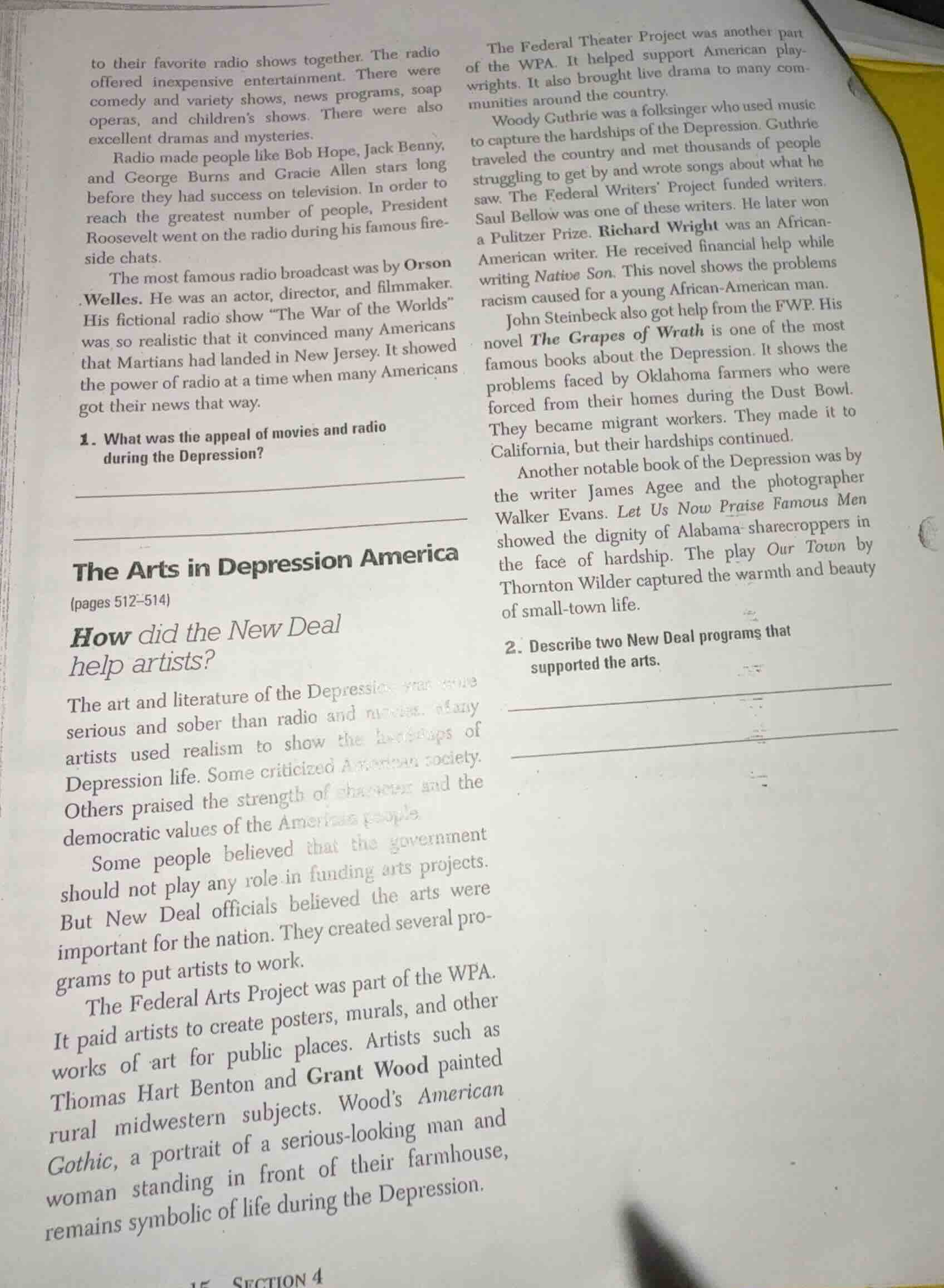
to their favorite radio shows together. the radio offered inexpensive entertainment. there were comedy and variety shows, news programs, soap operas, and children’s shows. there were also excellent dramas and mysteries.
radio made people like bob hope, jack benny, and george burns and gracie allen stars long before they had success on television. in order to reach the greatest number of people, president roosevelt went on the radio during his famous fireside chats.
the most famous radio broadcast was by orson welles. he was an actor, director, and filmmaker. his fictional radio show “the war of the worlds” was so realistic that it convinced many americans that martians had landed in new jersey. it showed the power of radio at a time when many americans got their news that way.
- what was the appeal of movies and radio during the depression?
the arts in depression america
(pages 512–514)
how did the new dealhelp artists?
the art and literature of the depression were more serious and sober than radio and movies. many artists used realism to show the hardships of depression life. some criticized american society. others praised the strength of character and the democratic values of the american people.
some people believed that the government should not play any role in funding arts projects. but new deal officials believed the arts were important for the nation. they created several programs to put artists to work.
the federal arts project was part of the wpa. it paid artists to create posters, murals, and other works of art for public places. artists such as thomas hart benton and grant wood painted rural midwestern subjects. wood’s american gothic, a portrait of a serious - looking man and woman standing in front of their farmhouse, remains symbolic of life during the depression.
the federal theater project was another part of the wpa. it helped support american playwrights. it also brought live drama to many communities around the country.
woody guthrie was a folksinger who used music to capture the hardships of the depression. guthrie traveled the country and met thousands of people struggling to get by and wrote songs about what he saw. the federal writers’ project funded writers. saul bellow was one of these writers. he later won a pulitzer prize. richard wright was an african - american writer. he received financial help while writing native son. this novel shows the problems racism caused for a young african - american man.
john steinbeck also got help from the fwp. his novel the grapes of wrath is one of the most famous books about the depression. it shows the problems faced by oklahoma farmers who were forced from their homes during the dust bowl. they became migrant workers. they made it to california, but their hardships continued.
another notable book of the depression was by the writer james agee and the photographer walker evans. let us now praise famous men showed the dignity of alabama sharecroppers in the face of hardship. the play our town by thornton wilder captured the warmth and beauty of small - town life.
- describe two new deal programs that supported the arts.
Sub - Question 1: What was the appeal of movies and radio during the Depression?
From the text, radio offered inexpensive entertainment with various shows (comedy, variety, news, soap operas, children’s shows, dramas, mysteries). It also made stars and was used for important communications (like Roosevelt's fireside chats). For movies (implied by the context of entertainment during Depression), along with radio, they provided an escape from the hardships of the Depression, offering entertainment, a chance to see stars, and a way to connect with others or get news/important messages.
- Federal Arts Project: Part of the WPA, it paid artists to create posters, murals, and other artworks for public places. Artists like Thomas Hart Benton and Grant Wood were involved, creating art that reflected rural midwestern life during the Depression.
- Federal Theater Project: Another part of the WPA, it helped support American playwrights and brought live drama to many communities around the country.
- Federal Writers’ Project: Funded writers (e.g., Saul Bellow, Richard Wright, John Steinbeck) who created works that captured the Depression - era experiences. (Choose two from these three as per the question's request for two programs)

Snap & solve any problem in the app
Get step-by-step solutions on Sovi AI
Photo-based solutions with guided steps
Explore more problems and detailed explanations
They offered inexpensive entertainment, a chance to escape from Depression - era hardships, featured various shows (radio) and stars, and radio was used for important communications (e.g., Roosevelt's fireside chats).