QUESTION IMAGE
Question
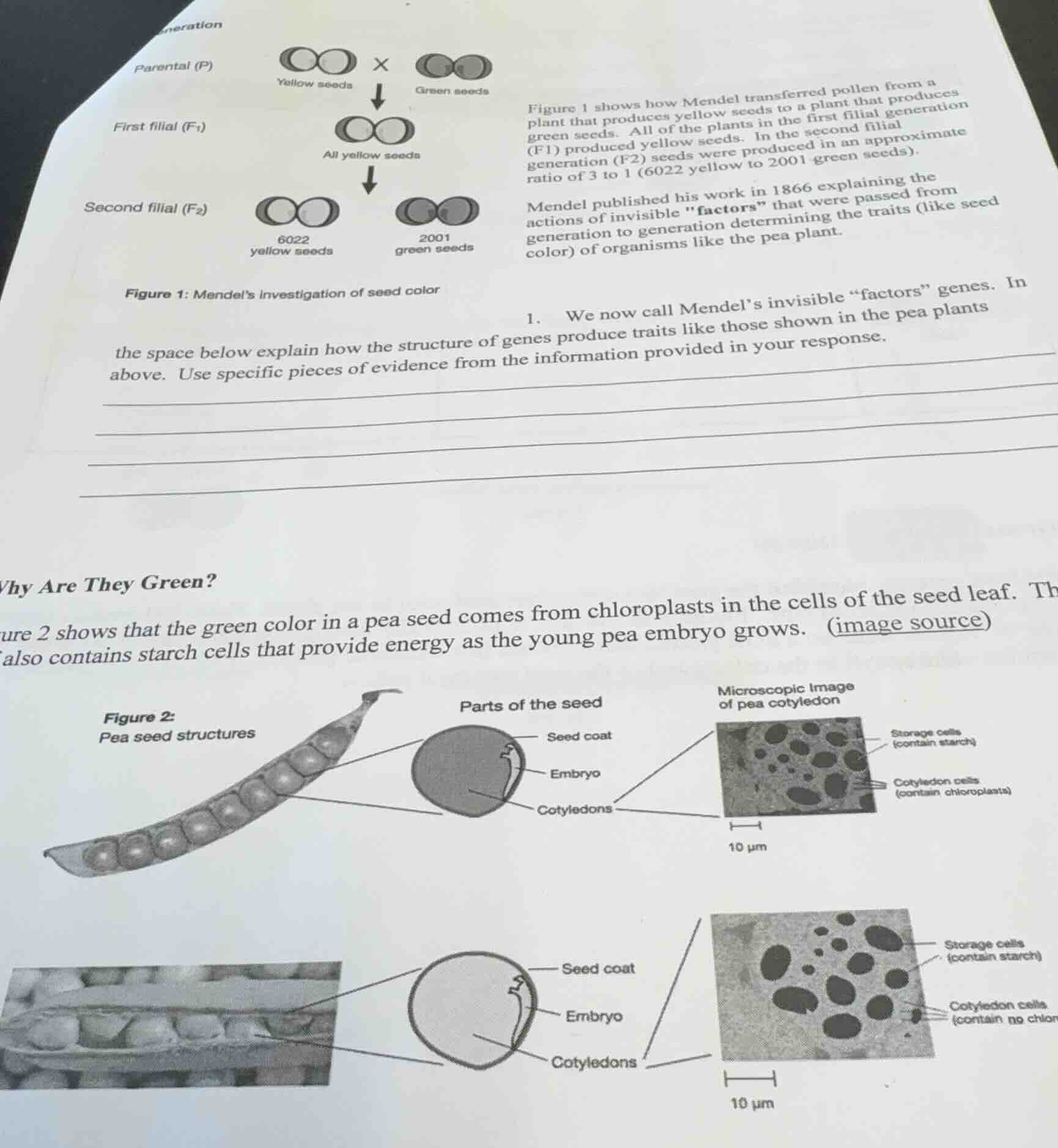
figure 1 shows how mendel transferred pollen from a plant that produces yellow seeds to a plant that produces green seeds. all of the plants in the first filial generation (f1) produced yellow seeds. in the second filial generation (f2) seeds were produced in an approximate ratio of 3 to 1 (6022 yellow to 2001 green seeds). mendel published his work in 1866 explaining the actions of invisible \factors\ that were passed from generation to generation determining the traits (like seed color) of organisms like the pea plant. 1. we now call mendel’s invisible “factors” genes. in the space below explain how the structure of genes produce traits like those shown in the pea plants above. use specific pieces of evidence from the information provided in your response. why are they green? ure 2 shows that the green color in a pea seed comes from chloroplasts in the cells of the seed leaf. th also contains starch cells that provide energy as the young pea embryo grows. (image source)
Genes are segments of DNA that code for proteins. In Mendel's experiment, the yellow seed trait was dominant (F₁ all yellow) and green recessive. Genes have different forms (alleles); the yellow allele likely codes for a protein that influences seed color (e.g., related to chloroplast presence/function as seen in Figure 2—green seeds have chloroplasts in cotyledon cells, yellow may have a protein affecting chloroplast development or pigment production). In F₂, the 3:1 ratio shows alleles segregate (Mendel's law), so each plant has two alleles (one from each parent). The dominant allele (yellow) is expressed over recessive (green) when present, explaining the trait variation.

Snap & solve any problem in the app
Get step-by-step solutions on Sovi AI
Photo-based solutions with guided steps
Explore more problems and detailed explanations
Genes (Mendel’s “factors”) are DNA segments coding for proteins that determine traits. In the pea seed color example: 1. Dominance/Recessiveness: F₁ plants (from yellow × green parents) all had yellow seeds, so yellow is dominant (its allele codes for a protein that “overrides” the green allele). 2. Allele Segregation: In F₂, the 3:1 ratio (6022 yellow : 2001 green) matches Mendel’s law of segregation—each parent passes one allele, and dominant alleles (for yellow) are expressed over recessive (green) when present. 3. Molecular Link to Trait: Figure 2 shows green seeds have chloroplasts in cotyledon cells (producing green color). The yellow allele likely codes for a protein that affects chloroplast development, pigment production, or cellular processes (e.g., yellow seeds’ cotyledon cells lack chloroplasts, as seen in the microscopic image). Thus, gene structure (alleles, DNA coding for proteins) controls whether a seed is yellow (dominant allele expressed) or green (recessive allele expressed when no dominant allele is present).