QUESTION IMAGE
Question
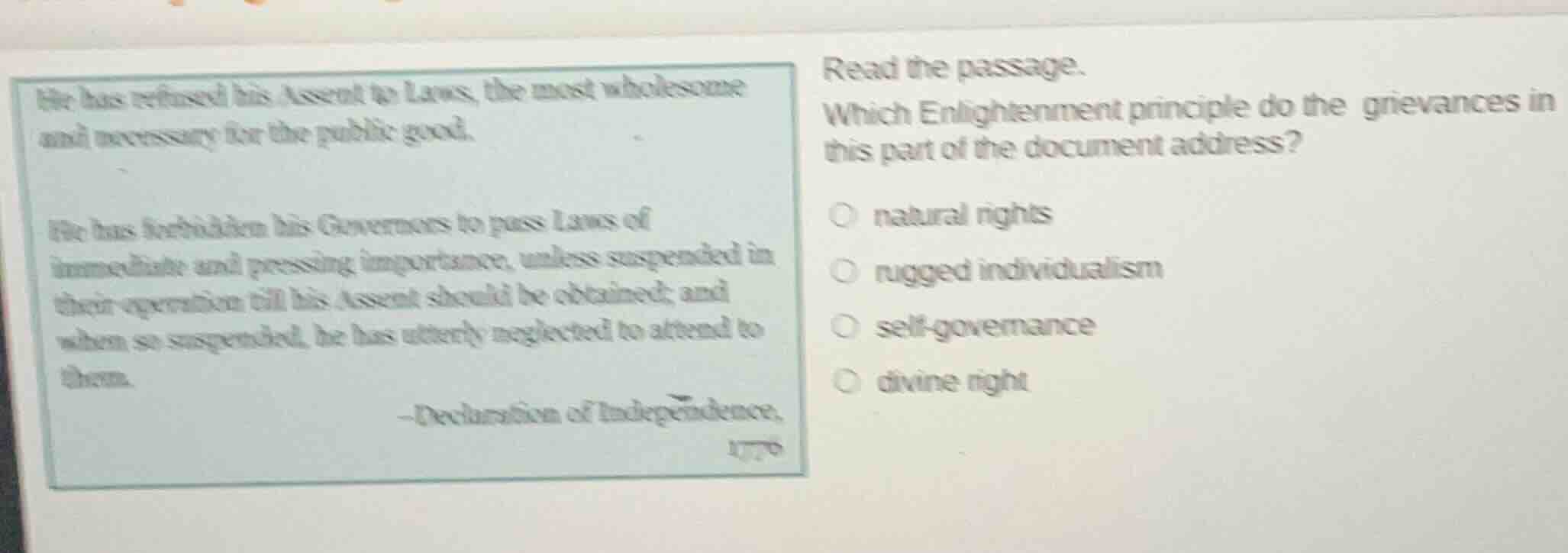
he has refused his assent to laws, the most wholesome and necessary for the public good.
he has forbidden his governors to pass laws of immediate and pressing importance, unless suspended in their operation till his assent should be obtained; and when so suspended, he has utterly neglected to attend to them.
--declaration of independence, 1776
read the passage.
which enlightenment principle do the grievances in this part of the document address?
○ natural rights
○ rugged individualism
○ self - governance
○ divine right
The passage from the Declaration of Independence complains about the king's interference with the colonial governments' ability to make laws. Self - governance is the idea that a people should be able to govern themselves, including making their own laws. The king's refusal to assent to necessary laws and his interference with the governors' law - making shows a violation of the colonists' right to self - govern. "Natural rights" are rights like life, liberty, and property, and this passage is not about those. "Rugged individualism" is a more modern, non - Enlightenment - era concept about self - reliance. "Divine right" is the idea that a monarch's power comes from God, which is the opposite of what the colonists were fighting against here.

Snap & solve any problem in the app
Get step-by-step solutions on Sovi AI
Photo-based solutions with guided steps
Explore more problems and detailed explanations
C. self - governance