QUESTION IMAGE
Question
Question was provided via image upload.
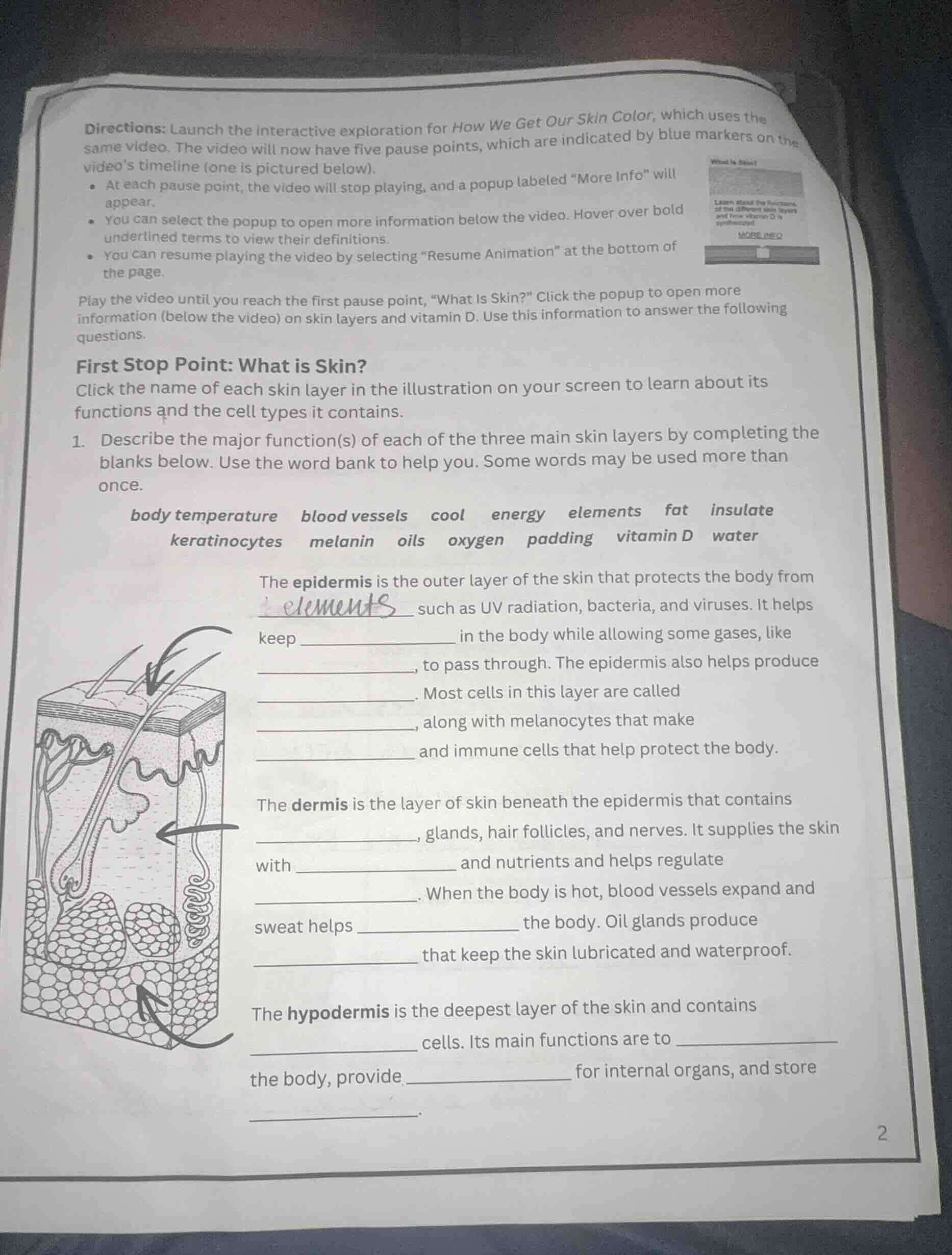
The answers are based on standard biological knowledge of skin layers and their functions, matching the provided word bank:
- Epidermis: This outer layer retains bodily fluids, allows gas exchange, produces vitamin D, is primarily made of keratinocytes, and melanocytes produce melanin for protection.
- Dermis: This middle layer contains blood vessels that deliver oxygen, regulates body temperature, uses sweat to cool the body, and oil glands produce oils for skin barrier function.
- Hypodermis: The deepest layer is made of fat cells, which insulate the body, act as padding for organs, and store energy.

Snap & solve any problem in the app
Get step-by-step solutions on Sovi AI
Photo-based solutions with guided steps
Explore more problems and detailed explanations
The completed text is as follows:
The epidermis is the outer layer of the skin that protects the body from elements such as UV radiation, bacteria, and viruses. It helps keep water in the body while allowing some gases, like oxygen, to pass through. The epidermis also helps produce vitamin D. Most cells in this layer are called keratinocytes, along with melanocytes that make melanin and immune cells that help protect the body.
The dermis is the layer of skin beneath the epidermis that contains blood vessels, glands, hair follicles, and nerves. It supplies the skin with oxygen and nutrients and helps regulate body temperature. When the body is hot, blood vessels expand and sweat helps cool the body. Oil glands produce oils that keep the skin lubricated and waterproof.
The hypodermis is the deepest layer of the skin and contains fat cells. Its main functions are to insulate the body, provide padding for internal organs, and store energy.