QUESTION IMAGE
Question
human blood cell typing
c. draw the resulting mixture if the donor blood was type o.
- why would hospitals and blood banks need to be absolutely certain that blood is typed correctly before being used for transfusions?
- in emergency situations when the supply of blood runs short or when the need for blood is critical, type o blood can be given. use your knowledge of blood typing from model 1 to explain why persons with type o blood are called universal donors.
- persons with type ab blood, which is rarest, are often referred to as universal recipients. use your knowledge from model 1 to explain why people with type ab blood can receive any blood type.
- people with type o blood are universal donors but can only receive blood from other type o donors. use your knowledge of blood typing from model 1 to explain why they cannot receive blood of any other types.
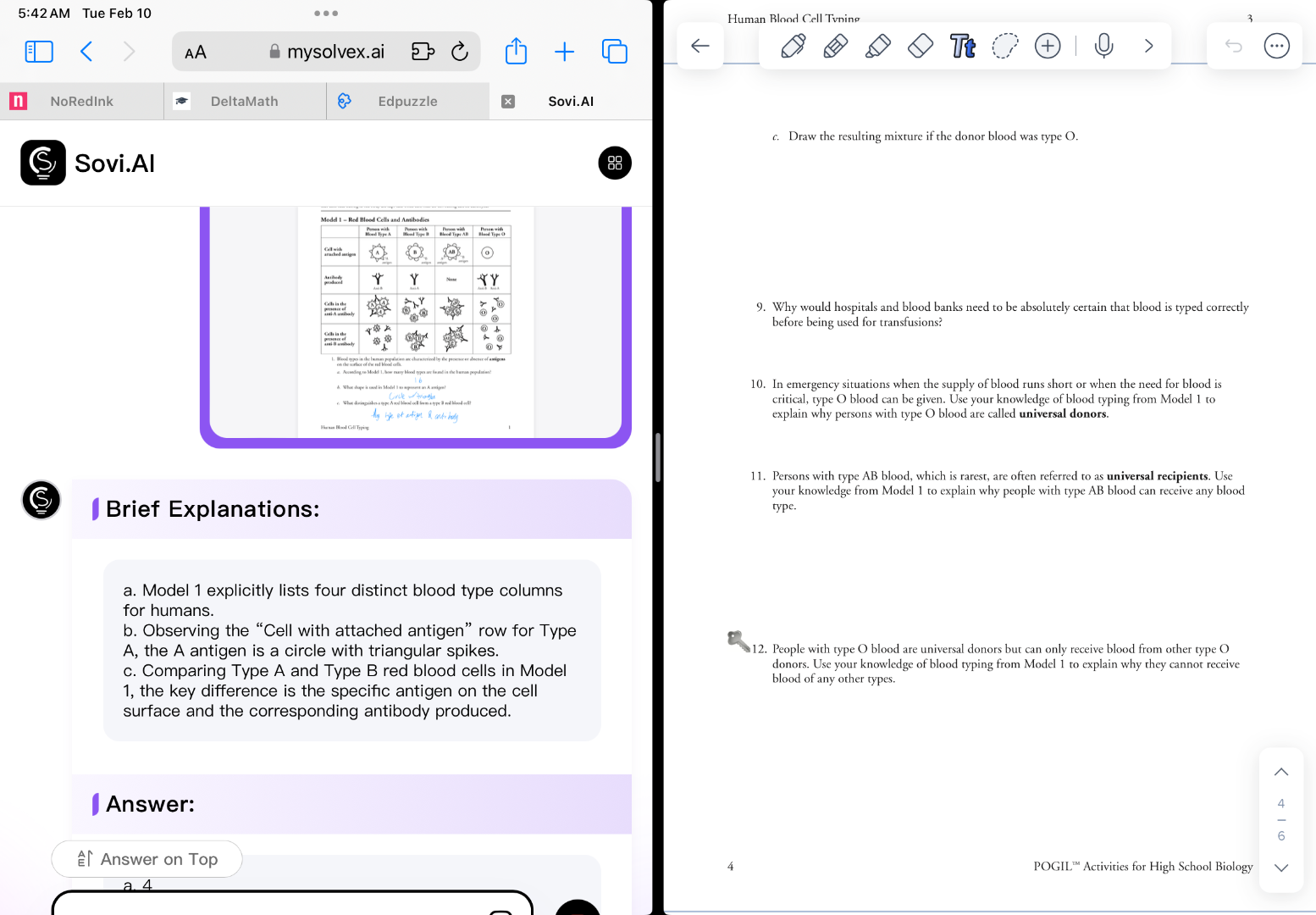
model 1 - red blood cells and antibodies
| persons with blood type a | persons with blood type b | persons with blood type ab | persons with blood type o | --- | --- | --- | --- | --- | cell surface antigen | ⚫ with triangular spikes | ⚫ with round spikes | ⚫ with triangular spikes and round spikes | ⚪ | antibody produced | y-shaped antibody against b antigen | y-shaped antibody against a antigen | none | y-shaped antibody against a antigen and y-shaped antibody against b antigen | cells in the presence of anti-a antibody | agglutination | no agglutination | agglutination | no agglutination | cells in the presence of anti-b antibody | no agglutination | agglutination | agglutination | no agglutination | 1. blood types in the human population are characterized by the presence or absence of antigens. |
a. according to model 1, how many blood types are found in the human population?
b. what shape is used in model 1 to represent an antigen?
c. what distinguishes a type a red blood cell from a type o red blood cell?
brief explanations:
a. model 1 explicitly lists four distinct blood type columns for humans.
b. observing the \cell with attached antigen\ row for type a, the a antigen is a circle with triangular spikes.
c. comparing type a and type b red blood cells in model 1, the key difference is the specific antigen on the cell surface and the corresponding antibody produced.
- Q9: Mismatched blood causes recipient antibodies to attack donor red blood cells, leading to clumping, organ damage, or death. Accurate typing avoids this.
- Q10: Without A/B antigens, type O red blood cells are not recognized as foreign by any recipient's immune system, making it safe for all.
- Q11: Without anti-A/anti-B antibodies, the AB recipient's plasma cannot attack antigens on donor red blood cells from any type.
- Q12: The anti-A and anti-B antibodies in type O plasma will bind to A/B antigens on non-O donor red blood cells, causing dangerous clumping.
- Part c: Type O red blood cells lack A and B antigens, so when mixed with any recipient's blood, no antibody-antigen reaction (clumping) occurs, leaving only smooth, unclumped red blood cells.

Snap & solve any problem in the app
Get step-by-step solutions on Sovi AI
Photo-based solutions with guided steps
Explore more problems and detailed explanations
- Question 9: Hospitals and blood banks must ensure correct blood typing to prevent life-threatening transfusion reactions caused by antibody-antigen clumping.
- Question 10: Type O blood has no A or B antigens on its red blood cells, so it does not trigger an immune reaction in recipients with any blood type.
- Question 11: Type AB blood has no anti-A or anti-B antibodies in the plasma, so it does not attack the antigens on red blood cells from any blood type donor.
- Question 12: Type O blood has both anti-A and anti-B antibodies in its plasma, which will clump red blood cells from A, B, or AB type donors.
- Part c (Drawing): A diagram showing only unclumped, antigen-free (smooth circle) red blood cells (no clumping, as type O has no antigens to react with recipient antibodies).